Characteristics of living beings (Living & Non-Living Things)
Watch this topic in 60 seconds
Free preview · Lesson 1
Understanding Characteristics of living beings (Living & Non-Living Things)
Exploring the World: Living vs. Non-Living Things!
Hello, young explorers! Have you ever looked around your room, your backyard, or even a park and wondered about all the different things you see? Some things are super active, like your pet dog running around, or a tiny ant marching in a line. Other things just sit there, like your favorite teddy bear or a big, smooth rock. What makes them different? Today, we're going on an adventure to discover the amazing characteristics that help us tell if something is living or non-living!
Imagine you have two friends: one is a fluffy puppy, and the other is a brand new toy car. The puppy wags its tail, eats food, runs, and grows bigger every day. The toy car, however, only moves when you push it, never eats, and stays the same size. These differences are key to understanding living and non-living things!
What Makes Something a Living Thing?
Living things are special! They have a set of unique qualities that non-living things don't. Think of these qualities as a checklist. If something ticks most or all of these boxes, it's probably alive! Let's explore them:
1. Living Things GROW!
This is one of the easiest ways to spot a living thing! Think about yourself. You weren't always as tall as you are now, right? You started as a baby and grew bigger and stronger. Just like you, a tiny acorn grows into a huge oak tree, and a small kitten grows into a big cat. Non-living things, like your toy car or a rock, don't grow on their own. They stay the same size unless something breaks a piece off or adds a piece to them.
Analogy: Imagine your favorite superhero action figure. No matter how long you keep it, it will always be the same size. But your little brother or sister? They keep needing new, bigger clothes because they are growing!
2. Living Things MOVE!
Living things can move on their own. You can run, jump, and walk. Birds fly, fish swim, and worms wiggle. Even plants, which might seem still, move by growing towards the sun or turning their leaves. Non-living things, like a table or a book, can only move if something else pushes or pulls them.
Analogy: Think about a kite. It flies high in the sky, but only because the wind carries it. A bird, on the other hand, flaps its wings and flies wherever it wants!
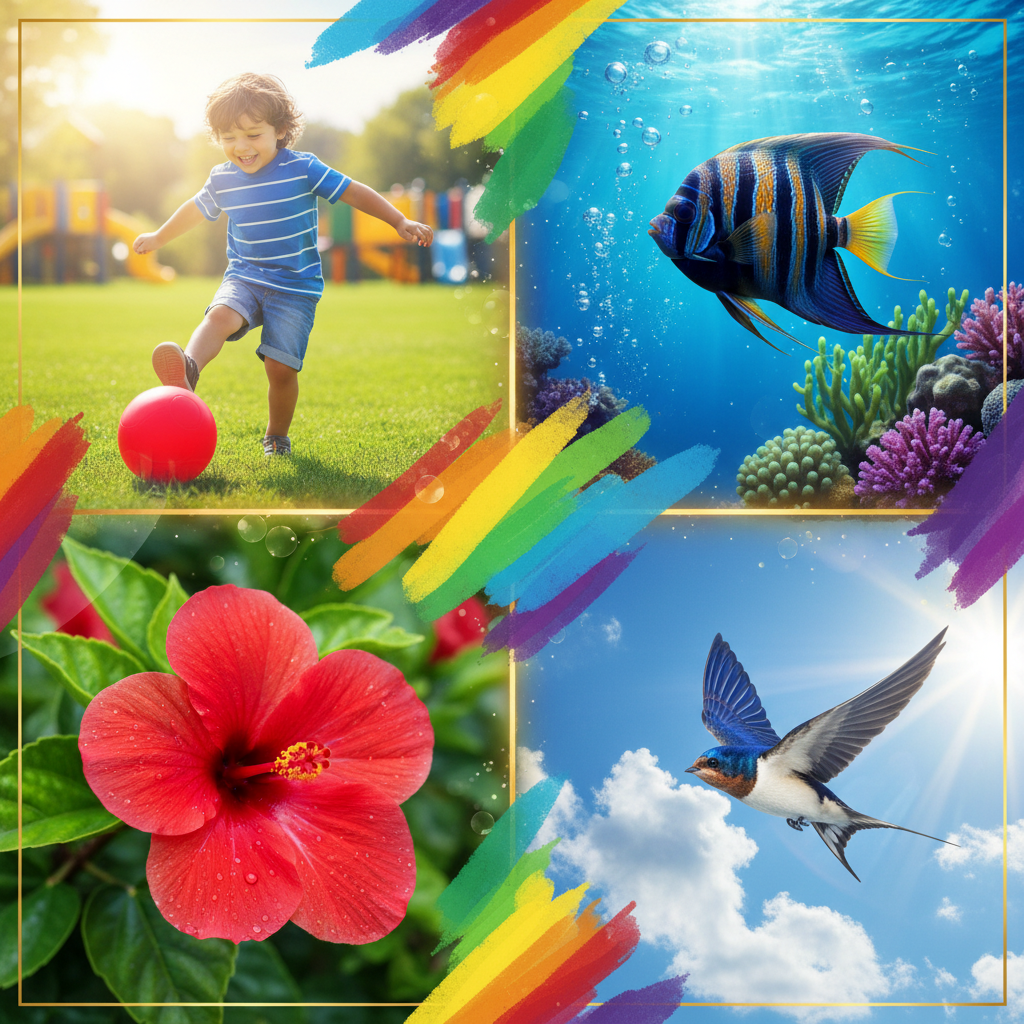
3. Living Things Need Food and Energy!
Just like you get hungry and need to eat breakfast, lunch, and dinner to have energy, all living things need food! Animals eat plants or other animals. Plants make their own food using sunlight, water, and air – it's like magic! This food gives them the energy to grow, move, and do everything else a living thing does. Non-living things don't get hungry and don't need to eat.
Analogy: Think of a car. It needs gasoline to run and move. Without gas, it just sits there. Similarly, living things need food for their 'fuel' to work!
4. Living Things BREATHE!
You breathe in air, right? All living things need to take in and give out gases to stay alive. We breathe in oxygen and breathe out carbon dioxide. Fish use gills to take oxygen from water. Plants 'breathe' in carbon dioxide and give out oxygen. This process helps living things use the energy from their food. Non-living things don't breathe.
Analogy: Imagine blowing up a balloon. You put air into it, and then let it out. Living things are constantly doing a similar, tiny 'blowing up and letting out' of gases to keep going.
5. Living Things Reproduce (Make More of Themselves)!
One of the most amazing things living creatures do is make more of their own kind! A cat has kittens, a bird lays eggs that hatch into baby birds, and a tiny seed grows into a plant that can produce more seeds. This is called reproduction. It's how life continues on Earth! Non-living things cannot make copies of themselves.
Analogy: If you build a LEGO house, it can't magically build another LEGO house on its own. But a mommy duck can lay eggs that become little ducklings!
6. Living Things Respond to Their Environment!
Living things can react to changes around them. If you touch something hot, you quickly pull your hand away. That's responding! A plant will bend its leaves towards the sunlight. A flower might close its petals at night and open them in the morning. This ability to sense and react helps living things stay safe and find what they need. Non-living things don't react to what's happening around them.
Analogy: Think about a robot toy. You might program it to move when it bumps into something. But a real animal, like your pet, will react to a loud noise or a friendly pat all on its own, based on its feelings and senses.
7. Living Things Get Rid of Waste!
After living things use food for energy, they produce waste – things their body doesn't need anymore. You go to the bathroom to get rid of waste from your body. Plants might shed old leaves or release gases. Animals also get rid of waste. This helps keep their bodies healthy. Non-living things don't produce waste in this way.
Analogy: When you finish building with LEGOs, you might have some extra pieces or packaging that you don't need anymore, so you put them away or throw them out. Living things do something similar with the parts of their food they don't use.
What About Non-Living Things?
Non-living things are all the objects that do NOT have these seven characteristics. They don't grow, they don't move on their own, they don't need food, they don't breathe, they can't make copies of themselves, they don't respond to their environment, and they don't get rid of waste. Rocks, water, air, toys, cars, books, and houses are all non-living. Some non-living things, like a car, can move, but only because a living thing (you!) makes it move, or it needs fuel from us to operate, but it doesn't do these things by itself like a living thing would.
 ⚠️ This picture may have spelling mistakes. Trust the words in the lesson.
Putting It All Together!
So, the next time you see something, ask yourself: Does it grow? Does it move on its own? Does it need food? Does it breathe? Can it make babies? Does it react to things around it? Does it get rid of waste? If the answer is mostly 'yes,' then you've found a living thing! If the answer is mostly 'no,' it's a non-living thing. The world is full of amazing living and non-living things, and now you have the tools to tell the difference!
Keep exploring and observing the world around you – it's full of wonders!
Keep learning, free
Create a free Syllabax account to unlock practice questions and games for this topic.
Visual Learning Enhanced! 🚀
To help you master this topic, we use Advanced Syllabax AI to generate detailed diagrams and visual models.
Note on Visuals: The AI sometimes makes spelling errors in image labels. Please refer to the lesson text for the correct terminology.