Calendar reading (days, months, years) (Time)
Watch this topic in 60 seconds
Free preview · Lesson 1
Understanding Calendar reading (days, months, years) (Time)
Understanding Our Calendar: Days, Months, and Years!
Hello Super Learners! Today, we're going on an exciting adventure to explore something we use every single day, but sometimes don't think too much about: the calendar! Think of the calendar as a special map that helps us understand and organize time. It's like a clock for longer periods, telling us not just what time it is right now, but also what day it is, what month we're in, and even what year it is!
What is a Calendar? A Time Map!
Imagine you're planning a birthday party. You need to know which day to have it, right? Or maybe you're waiting for a special holiday. The calendar is our guide. It breaks down time into easy-to-understand pieces: days, weeks, months, and years. It's like a big puzzle of time, and each piece fits together perfectly.
The Smallest Piece: The Day
The most basic building block of our calendar is the day. A day is a full cycle of light and darkness. It's like one complete turn of a spinning top. When you wake up in the morning, a new day has begun! We have special names for each day of the week: Monday, Tuesday, Wednesday, Thursday, Friday, Saturday, and Sunday. Think of these names like labels on different colored LEGO bricks. Each day has its own label and its own personality. Some days are for school, some are for playing, and Sunday is often a day to rest and get ready for the week ahead. A week is a group of 7 days, all lined up like a little train.
Grouping Days: The Month
Now, imagine you have several LEGO trains (weeks) and you want to put them together to build something bigger. That's like a month! A month is a longer period of time, made up of about four weeks. Months have special names, too: January, February, March, April, May, June, July, August, September, October, November, and December. There are 12 months in a full year. Each month is like a chapter in a book. Some chapters might be shorter, and some might be longer. February is a special, shorter chapter in our book of time!
Think of the months like different seasons for activities:
- January and February are like cozy winter chapters, good for staying inside and reading.
- March, April, and May are like springtime chapters, where flowers start to bloom and new life begins.
- June, July, and August are like sunny summer chapters, perfect for playing outside and vacations.
- September, October, and November are like colorful autumn chapters, with falling leaves and crisp air.
- December is like a festive winter chapter, often filled with holidays and a sense of wonder.
The number of days in each month can be a little tricky, like a small puzzle. Most months have 30 or 31 days. But remember February? It usually has 28 days, and sometimes, just sometimes, it has 29 days! This special extra day happens every four years and is called a leap year. It's like a bonus day added to the calendar to keep everything in sync with the Earth's journey around the sun.
Putting it All Together: The Year
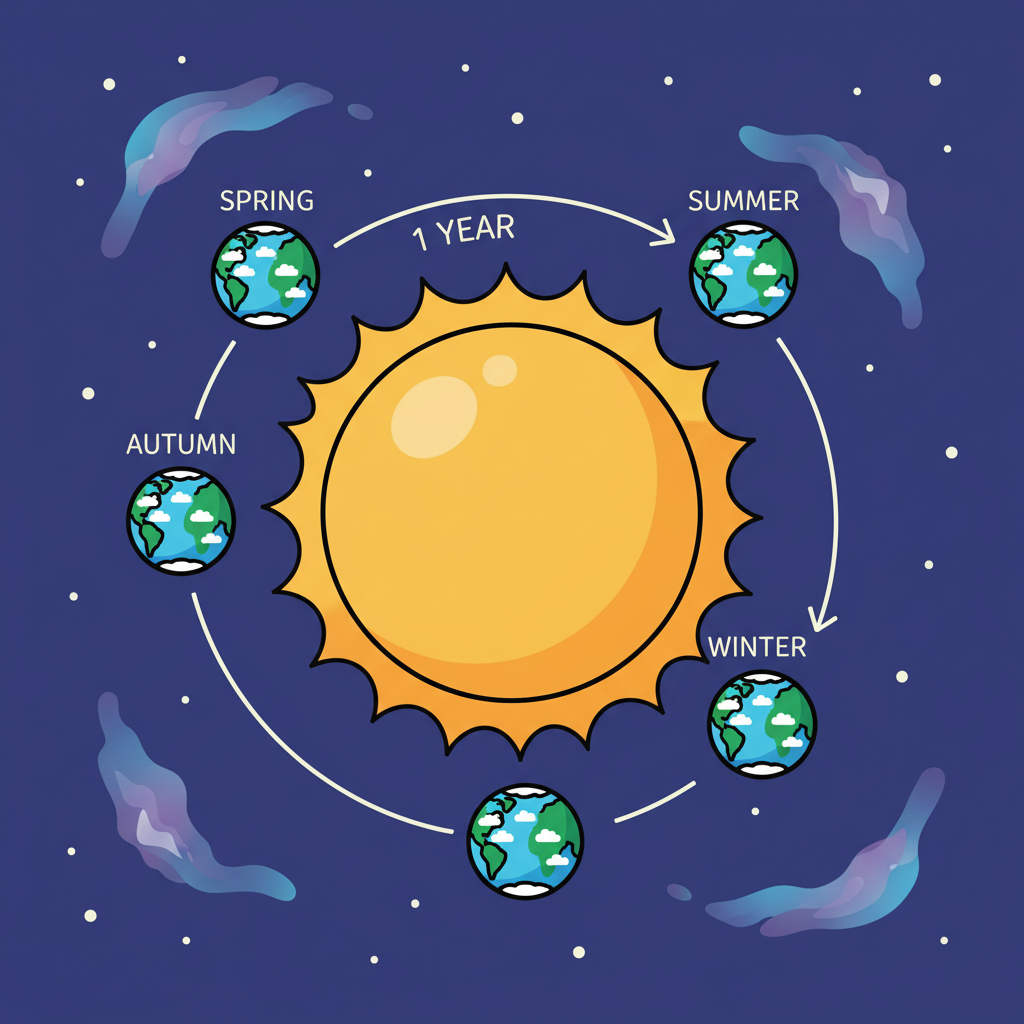
When we gather all 12 months together, we have a year. A year is like a whole complete storybook! It represents one full trip the Earth takes around the Sun. We celebrate birthdays, holidays, and other special events within a year. The year also has a number, like 2023, 2024, or 2025. This number tells us where we are in our ongoing journey through time. Think of it like different levels in a video game. Each year is a new level, with new challenges and new adventures!
We can also group years together. A decade is 10 years, like a collection of 10 storybooks. A century is 100 years, a whole library of storybooks!
Why Do We Need Calendars?
Calendars are super important because they help us:
- Plan ahead: Like planning that birthday party or a school project.
- Remember important dates: Like your best friend's birthday or national holidays.
- Understand history: Knowing when events happened in the past.
- Organize our lives: Keeping track of appointments, school terms, and seasons.
The calendar is a tool that helps us make sense of the flow of time. It’s like a big, organized toolbox for managing our days, weeks, months, and years. Without it, everything would feel a bit jumbled, like trying to build a house without a blueprint!
Let's Recap!
So, remember:
- A day is the shortest piece, like a single LEGO brick.
- A week is 7 days, like a small LEGO train.
- A month is about 4 weeks, like a bigger LEGO structure.
- A year is 12 months, like a whole LEGO castle!
Keep practicing reading your calendar, and you'll become a time master in no time!
Keep learning, free
Create a free Syllabax account to unlock practice questions and games for this topic.
Visual Learning Enhanced! 🚀
To help you master this topic, we use Advanced Syllabax AI to generate detailed diagrams and visual models.
Note on Visuals: The AI sometimes makes spelling errors in image labels. Please refer to the lesson text for the correct terminology.