Modal Verbs
Watch this topic in 60 seconds
Free preview · Lesson 1
Modal Verbs (Foundational)
Modal Verbs (Foundational)
Hey explorers! Today, we're diving into the exciting world of modal verbs. These are special helper words that add extra meaning to other verbs. Think of them as the secret agents of grammar, changing the way we talk about possibility, ability, permission, and more!
What are Modal Verbs?
Modal verbs are words like can, could, may, might, must, should, will, would. They always go before another verb (the main verb). For example: I can swim. (Here, 'can' is the modal verb, and 'swim' is the main verb.)
Let's look at some common modal verbs and their meanings:
- Can/Could: Shows ability or possibility. I can ride a bike. She could sing beautifully.
- May/Might: Shows permission or possibility. May I go to the restroom? It might rain later.
- Must: Shows obligation or strong possibility. I must finish my homework. He must be tired.
- Should: Shows advice or suggestion. You should eat your vegetables. We should leave now.
- Will/Would: Shows future actions or polite requests. I will help you. Would you like some tea?
Important Note: Modal verbs don't change their form. You don't add '-s', '-ed', or '-ing' to them. For example, you say 'I can,' not 'I cans' or 'I canned'.
Let's Practice!
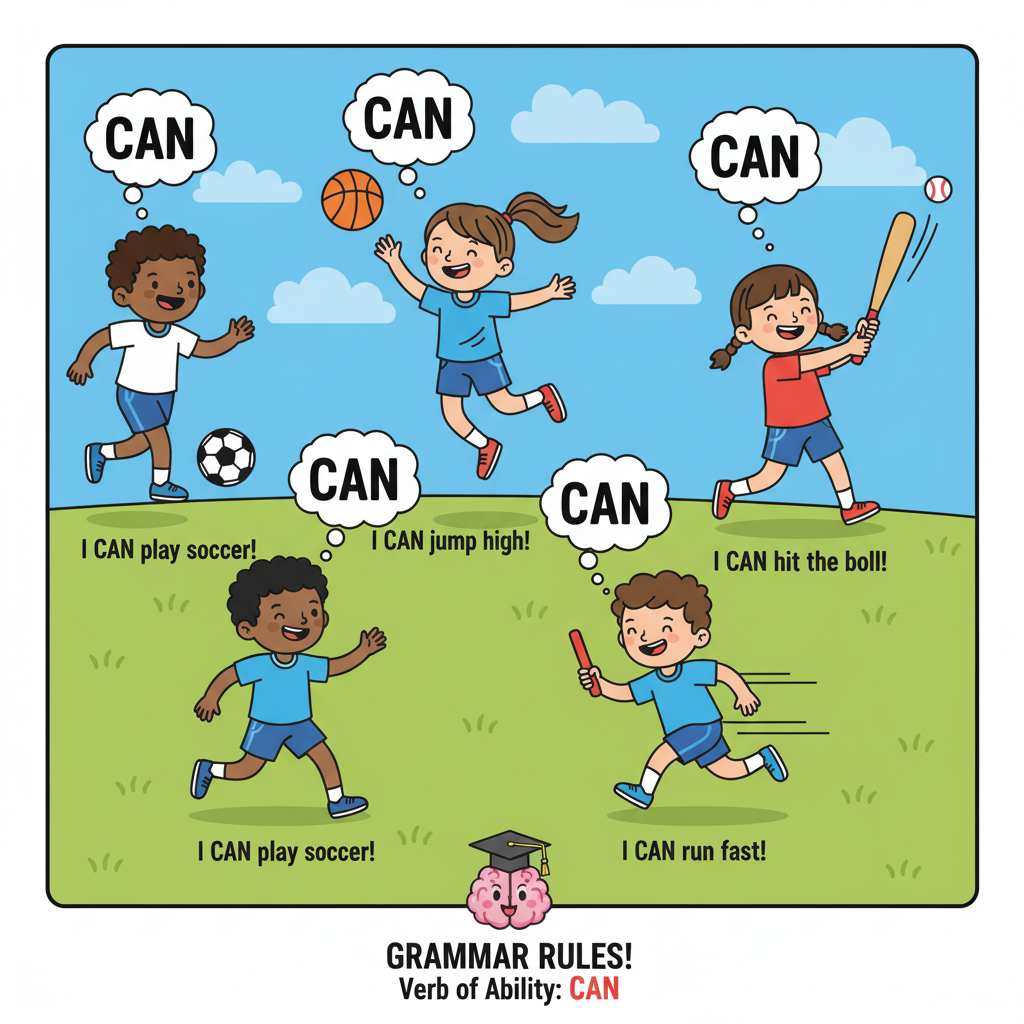 ⚠️ This picture may have spelling mistakes. Trust the words in the lesson.Try using modal verbs in your own sentences! It's super fun and will help you become a grammar ninja!
Keep learning, free
Create a free Syllabax account to unlock practice questions and games for this topic.
Visual Learning Enhanced! 🚀
To help you master this topic, we use Advanced Syllabax AI to generate detailed diagrams and visual models.
Note on Visuals: The AI sometimes makes spelling errors in image labels. Please refer to the lesson text for the correct terminology.