Academic & Subject Vocabulary
Watch this topic in 60 seconds
Free preview · Lesson 1
Academic & Subject Vocabulary (Foundational)
Academic & Subject Vocabulary (Foundational)
Hey there, future scientists! Let's talk about a secret weapon that will help you understand and rock your science classes: vocabulary! Think of vocabulary as the building blocks for understanding anything new.
What is Academic Vocabulary?
Academic vocabulary are words that are used often in school, no matter what subject you're studying. These are the words teachers and textbooks use to explain things. They might not be words you use every day with your friends, but they are super important for learning!
Examples of academic vocabulary include:
- Analyze: To look at something carefully and in detail.
- Compare: To find the similarities between two or more things.
- Contrast: To find the differences between two or more things.
- Evaluate: To judge the value or importance of something.
- Summarize: To give a short version of the main points.
What is Subject Vocabulary?
Subject vocabulary are words that are specific to a particular subject, like science, math, or history. In science, we have special words that help us talk about the natural world accurately.
Let's look at some science-specific words:
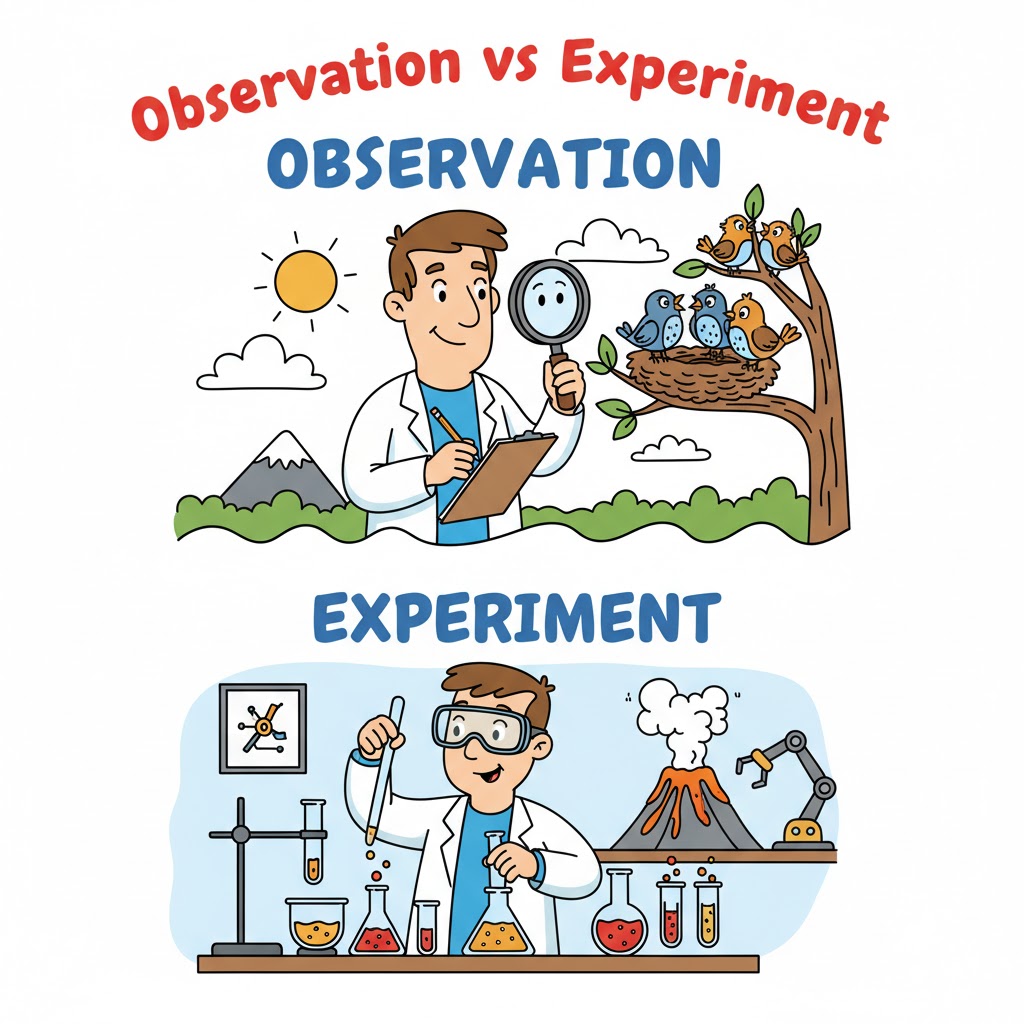
- Hypothesis: An educated guess or prediction that can be tested.
- Variable: Something that can change or be changed in an experiment.
- Data: Information collected during an experiment or observation.
- Experiment: A test or procedure done to prove or disprove something.
- Observation: Watching something carefully to gather information.
 Why is Vocabulary Important?
- Understanding: Knowing the words helps you understand what you read and hear in class.
- Communication: It helps you explain your ideas clearly.
- Confidence: The more words you know, the more confident you'll feel in science class!
Tips for Learning Vocabulary
- Write it down: Keep a vocabulary notebook and write down new words you learn.
- Use it: Try to use the new words when you talk or write about science.
- Ask questions: Don't be afraid to ask your teacher or classmates what a word means if you're not sure.
- Practice: Use flashcards, online quizzes, or games to practice your vocabulary.
Keep learning, free
Create a free Syllabax account to unlock practice questions and games for this topic.
Visual Learning Enhanced! 🚀
To help you master this topic, we use Advanced Syllabax AI to generate detailed diagrams and visual models.
Note on Visuals: The AI sometimes makes spelling errors in image labels. Please refer to the lesson text for the correct terminology.