Habitat & food habits (BIOLOGY)
Watch this topic in 60 seconds
Free preview · Lesson 1
Understanding Habitat & food habits (BIOLOGY)
Our Amazing Homes: Habitats and What Animals Eat!
Welcome, young scientists, to an exciting journey into the world of biology! Today, we're going to explore two super important ideas: **habitats** and **food habits**. Think of these as the address and the menu for every living thing on Earth!
What is a Habitat?
Imagine you're an animal. Where do you live? You need a place that gives you everything you need to survive and be happy. That special place is called a **habitat**. It's like an animal's home, but it's much more than just a house. A habitat provides:
- Shelter: A safe place to rest, hide from danger, and raise young ones.
- Food: Something to eat so they can grow and have energy.
- Water: Essential for drinking and staying healthy.
- Space: Enough room to move around, find food, and play!
Every living thing, from the tiniest ant to the biggest whale, has a habitat. These habitats can be very different from each other!
Types of Habitats: Nature's Neighborhoods
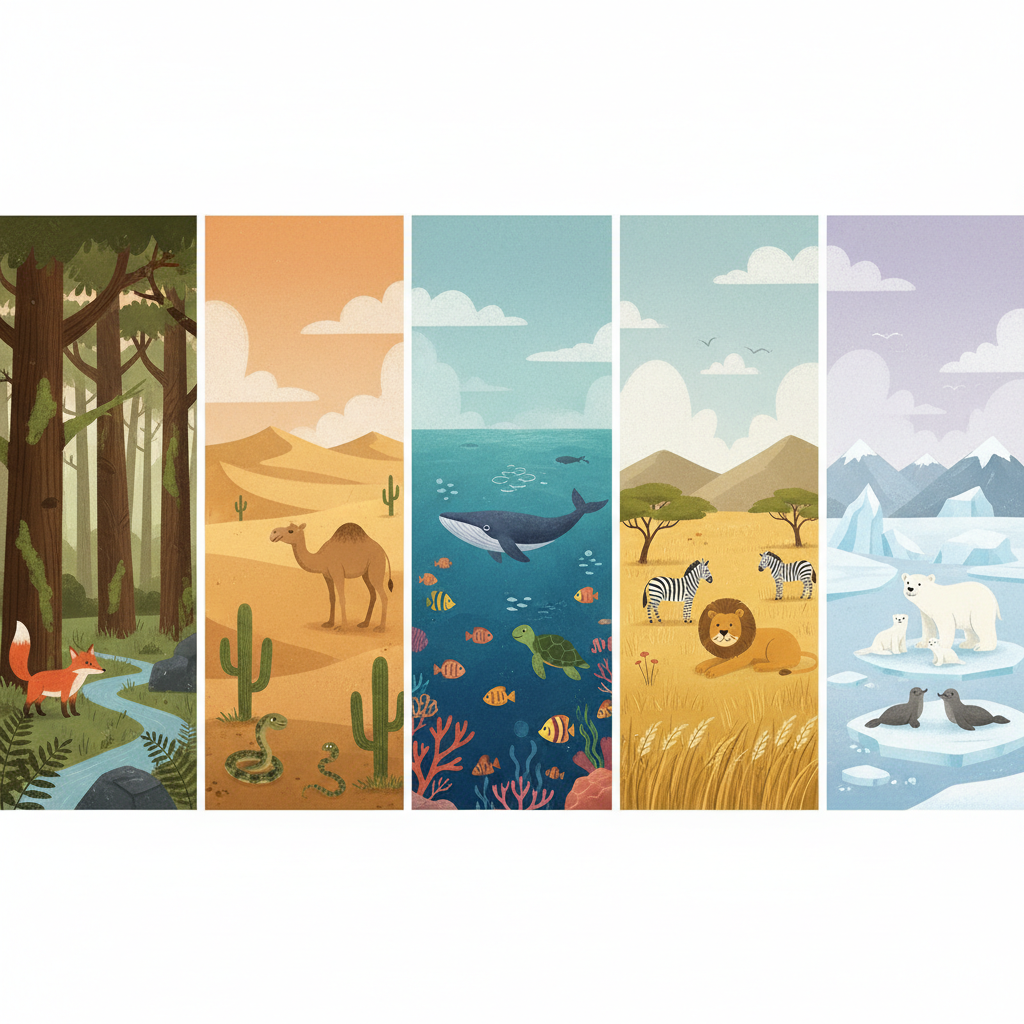
Let's look at some examples of different habitats:
1. Forests: The Green Cities
Forests are full of trees, plants, and shade. Many animals live here, like squirrels, bears, deer, and colorful birds. Think of a forest as a big apartment building made of trees, where each animal has its own special floor or den. The trees provide shelter, acorns and berries provide food, and there are usually streams or puddles for water.
2. Deserts: The Sunny, Sandy Spots
Deserts are very dry places with lots of sand and rocks, and not much rain. It might seem like nobody could live here, but many amazing animals do! Camels store water in their humps, snakes burrow underground to stay cool, and cacti store water in their stems. A desert is like a cozy, warm house with very few windows – you have to be clever to find what you need! The sun provides warmth, but animals often sleep during the hottest part of the day.
3. Oceans: The Big Blue World
Oceans are huge bodies of saltwater. They are home to fish, dolphins, whales, sharks, and even tiny plankton. The ocean is like a giant swimming pool for some animals and a whole city for others. Coral reefs are like colorful underwater neighborhoods with lots of nooks and crannies for small fish to hide. The water provides everything: a place to swim, food to eat (like smaller fish or seaweed), and shelter among the rocks and corals.
4. Grasslands: The Wide-Open Plains
Grasslands are areas with lots of grass and very few trees. Think of the African savanna or the prairies in North America. Animals like zebras, lions, and bison roam these areas. A grassland is like a huge backyard where animals can run and play. The grass is food for animals like zebras, and the zebras are food for animals like lions. There are usually rivers or watering holes where animals can drink.
5. Arctic/Antarctic: The Icy Lands
These are the coldest places on Earth, covered in ice and snow. Polar bears, penguins, and seals live here. These habitats are like giant refrigerators where animals have thick fur or blubber to stay warm. They find food in the icy waters or by hunting other animals that have adapted to the cold.
 ⚠️ This picture may have spelling mistakes. Trust the words in the lesson.
What are Food Habits?
Now that we know about habitats, let's talk about **food habits**. This is simply what an animal eats! Just like you have your favorite foods, animals have their own special diets. Food habits tell us how animals get their energy to live, grow, and move.
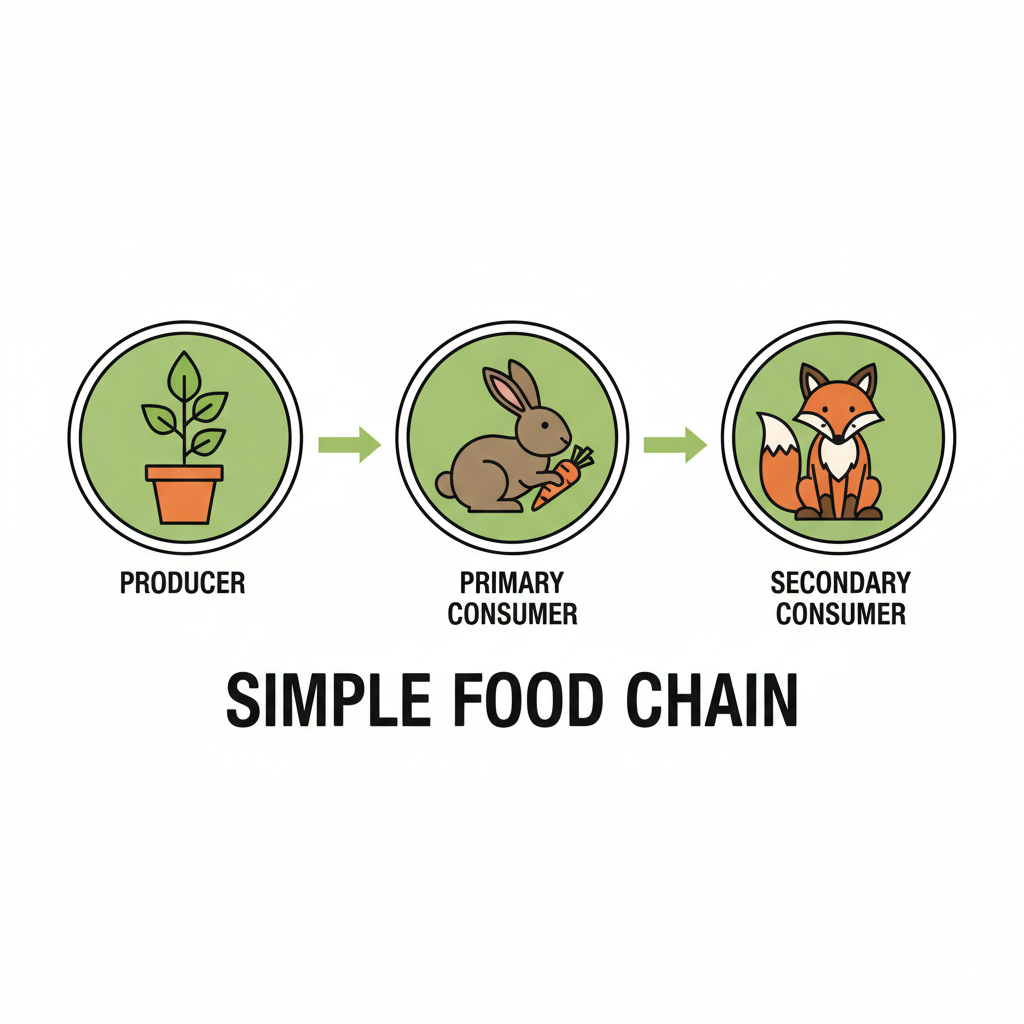
Animals can be put into groups based on what they eat:
1. Herbivores: The Plant Eaters
Herbivores are animals that only eat plants. Think of cows, sheep, rabbits, and giraffes. They are like the gardeners of the animal world, munching on leaves, grass, fruits, and vegetables! Their bodies are built to digest tough plant material.
2. Carnivores: The Meat Eaters
Carnivores are animals that only eat meat. Lions, tigers, sharks, and eagles are good examples. These animals are like the hunters and chefs of the animal kingdom, looking for other animals to eat. They often have sharp teeth, claws, or beaks to help them catch and eat their prey.
3. Omnivores: The Everything Eaters
Omnivores are animals that eat both plants and meat. Humans, bears, pigs, and chickens are omnivores. They are like adventurous eaters who will try a little bit of everything! They can adapt to different food sources, which helps them survive in many different habitats.
How Habitats and Food Habits Work Together
Habitats and food habits are like best friends – they always go together! An animal's habitat provides the food it eats. For example:
- In the ocean habitat, fish eat smaller fish or plants like algae.
- In the grassland habitat, zebras (herbivores) eat grass, and lions (carnivores) eat zebras.
- In the forest habitat, squirrels (omnivores) eat nuts (from plants) and sometimes insects (animals).
If a habitat changes, it can affect the food habits of the animals living there. If there's a drought (no rain) in the grassland, the grass might die. This means herbivores won't have enough to eat, and then carnivores that eat the herbivores will also have trouble finding food.
It's a delicate balance, like a carefully built tower of blocks. If one block is removed, the whole tower can tumble!
Recap!
So, remember:
- A **habitat** is an animal's home, providing shelter, food, water, and space.
- **Food habits** describe what an animal eats (plants, meat, or both).
- Habitats and food habits are connected! The habitat provides the food.
You are now super-smart about habitats and food habits! Keep observing the amazing world around you and see where animals live and what they eat!
Keep learning, free
Create a free Syllabax account to unlock practice questions and games for this topic.
Visual Learning Enhanced! 🚀
To help you master this topic, we use Advanced Syllabax AI to generate detailed diagrams and visual models.
Note on Visuals: The AI sometimes makes spelling errors in image labels. Please refer to the lesson text for the correct terminology.