Classical Dances of India – Arts, Culture & Literature
Watch this topic in 60 seconds
Free preview · Lesson 1
Classical Dances of India – Arts, Culture & Literature (Foundational)
Classical Dances of India: A Journey Through Art, Culture, and Literature
Namaste, young explorer! Get ready to embark on a fascinating journey into the world of Indian classical dances. These dances aren't just movements; they are stories told through graceful gestures, expressive eyes, and vibrant costumes. They are deeply connected to Indian art, culture, and literature.
What are Classical Dances?
Classical dances are special dance forms that follow strict rules and have a long history. They are like a type of art that has been carefully passed down through generations.
- Classical: Something traditional, with rules and history.
- Dance: Moving your body to music in a special way.
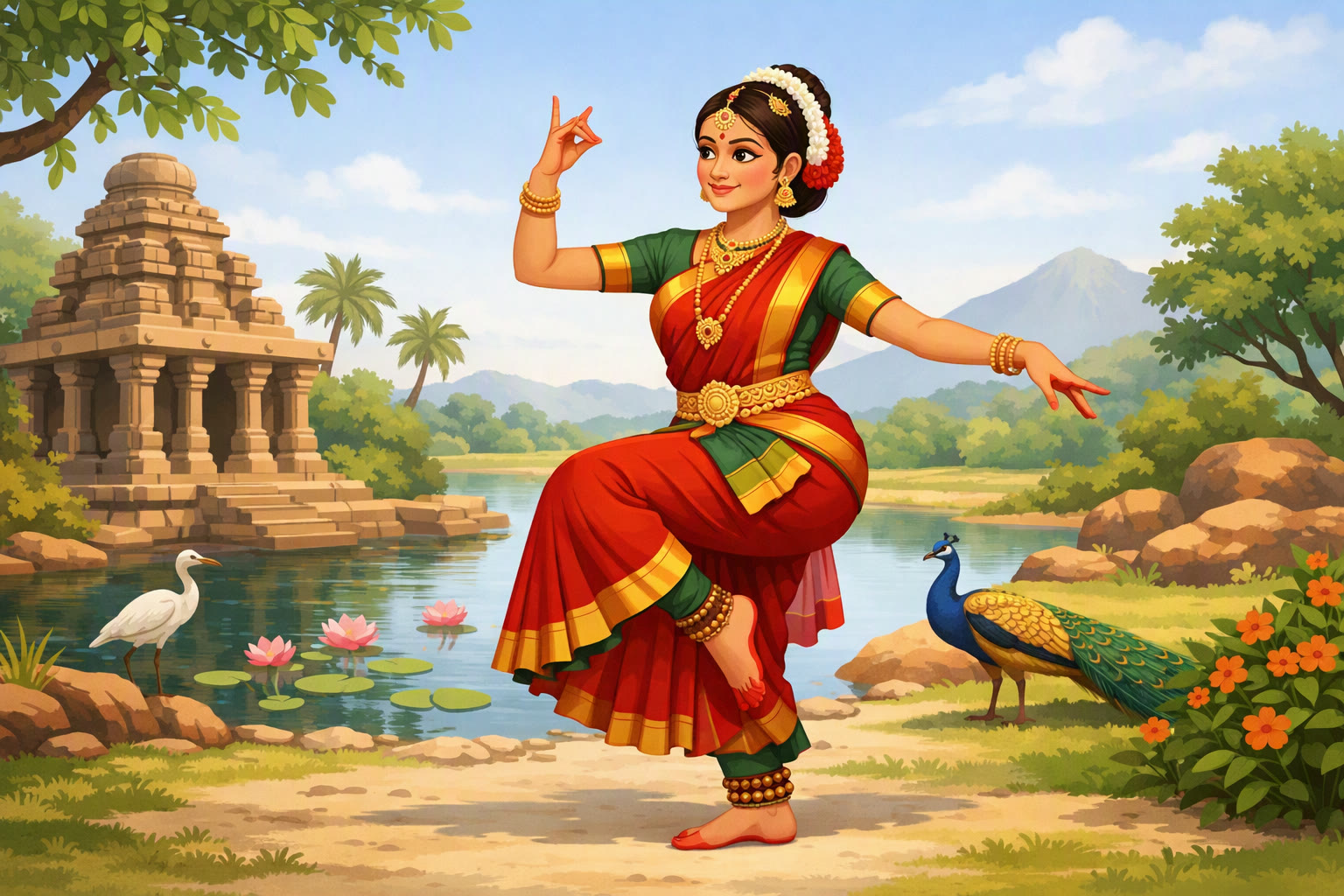
The Eight Major Classical Dance Forms
India has eight major classical dance forms, each with its own unique style and origin. Let's take a quick look at them:
- Bharatanatyam (Tamil Nadu): Known for its precise footwork and hand gestures.
- Kathak (North India): Characterized by rhythmic footwork and spins.
- Kathakali (Kerala): A dramatic dance-drama with elaborate costumes and makeup.
- Kuchipudi (Andhra Pradesh): A lively dance form that often includes singing and dialogue.
- Odissi (Odisha): Graceful and fluid movements inspired by temple sculptures.
- Manipuri (Manipur): Known for its gentle and swaying movements.
- Sattriya (Assam): A dance form associated with Vaishnavite monasteries.
- Mohiniyattam (Kerala): A lyrical dance form performed by women, known for its swaying movements.
Elements of Classical Dance
Classical dances use different elements to tell a story:
- Mudras: Hand gestures that have specific meanings.
- Facial Expressions: Using your face to show emotions.
- Costumes: Special clothes that help tell the story.
- Music: Traditional Indian music that sets the mood.
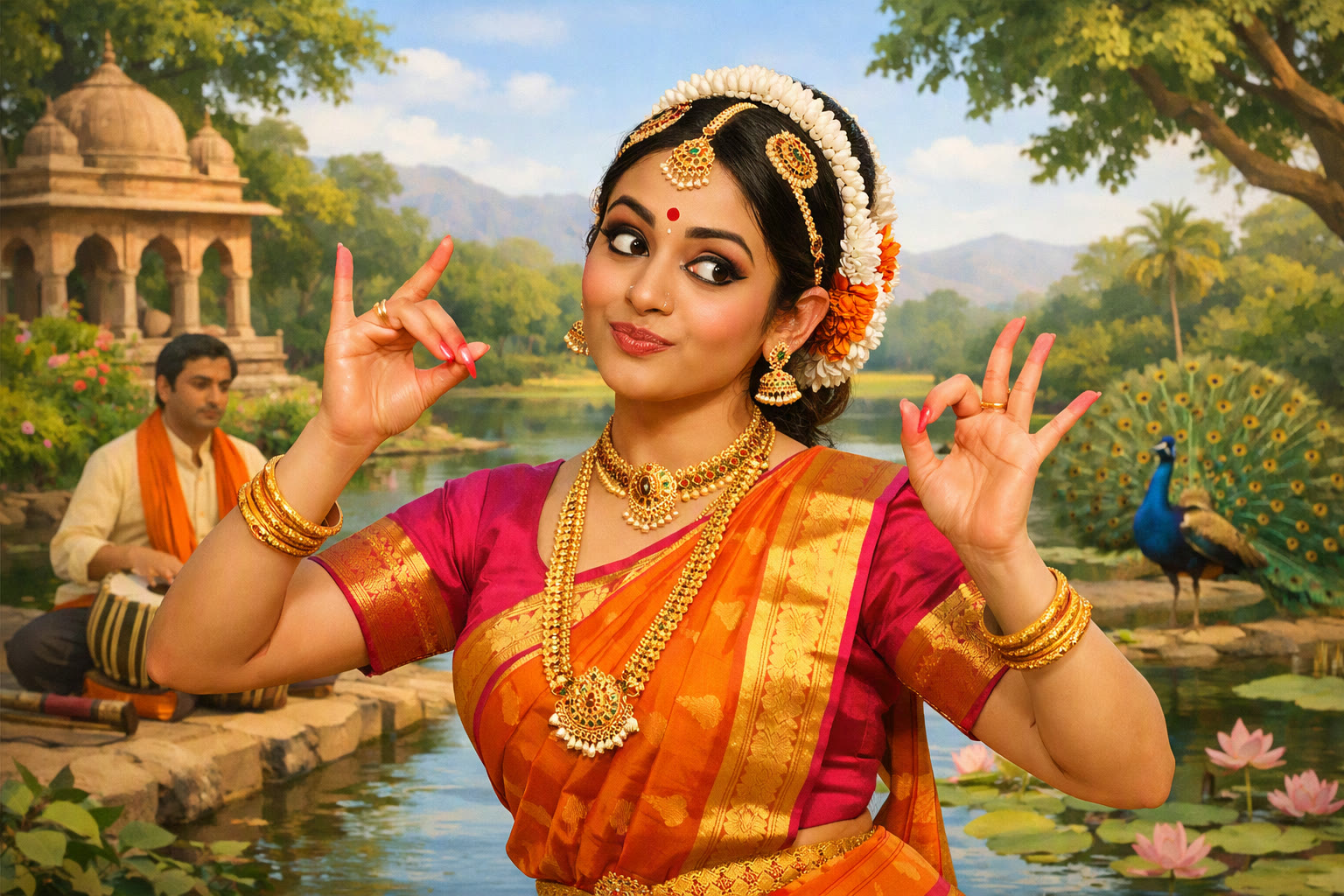
Connection to Art, Culture, and Literature
These dances are deeply rooted in Indian culture and literature. The stories they tell often come from ancient epics like the Ramayana and Mahabharata.
Let's Learn More!
This is just a peek into the beautiful world of Indian classical dances. There is so much more to explore! Keep learning and discovering!
Keep learning, free
Create a free Syllabax account to unlock practice questions and games for this topic.
Visual Learning Enhanced! 🚀
To help you master this topic, we use Advanced Syllabax AI to generate detailed diagrams and visual models.
Note on Visuals: The AI sometimes makes spelling errors in image labels. Please refer to the lesson text for the correct terminology.