3D shapes & their properties [Visual Understanding]
Watch this topic in 60 seconds
Free preview · Lesson 1
Understanding 3D shapes & their properties [Visual Understanding]
Exploring the World of 3D Shapes!
Welcome, super-sleuths of shapes! Today, we're going on an exciting adventure into the world of 3D shapes. You know how everything around you isn't flat like a drawing on paper? That's because most things are 3D! Think about your favorite toy, a yummy slice of pizza, or even the Earth we live on – they all have depth, width, and height. They take up space!
What Makes a Shape 3D?
3D shapes, also called solids, have three dimensions: length, width, and height. Flat shapes, like squares and circles, only have two dimensions (length and width) and are called 2D shapes. Imagine trying to build a house with only flat drawings – it wouldn't stand up! 3D shapes are the building blocks of our real world.
Let's Meet Some Famous 3D Shapes!
1. The Cube: A Perfectly Balanced Box!
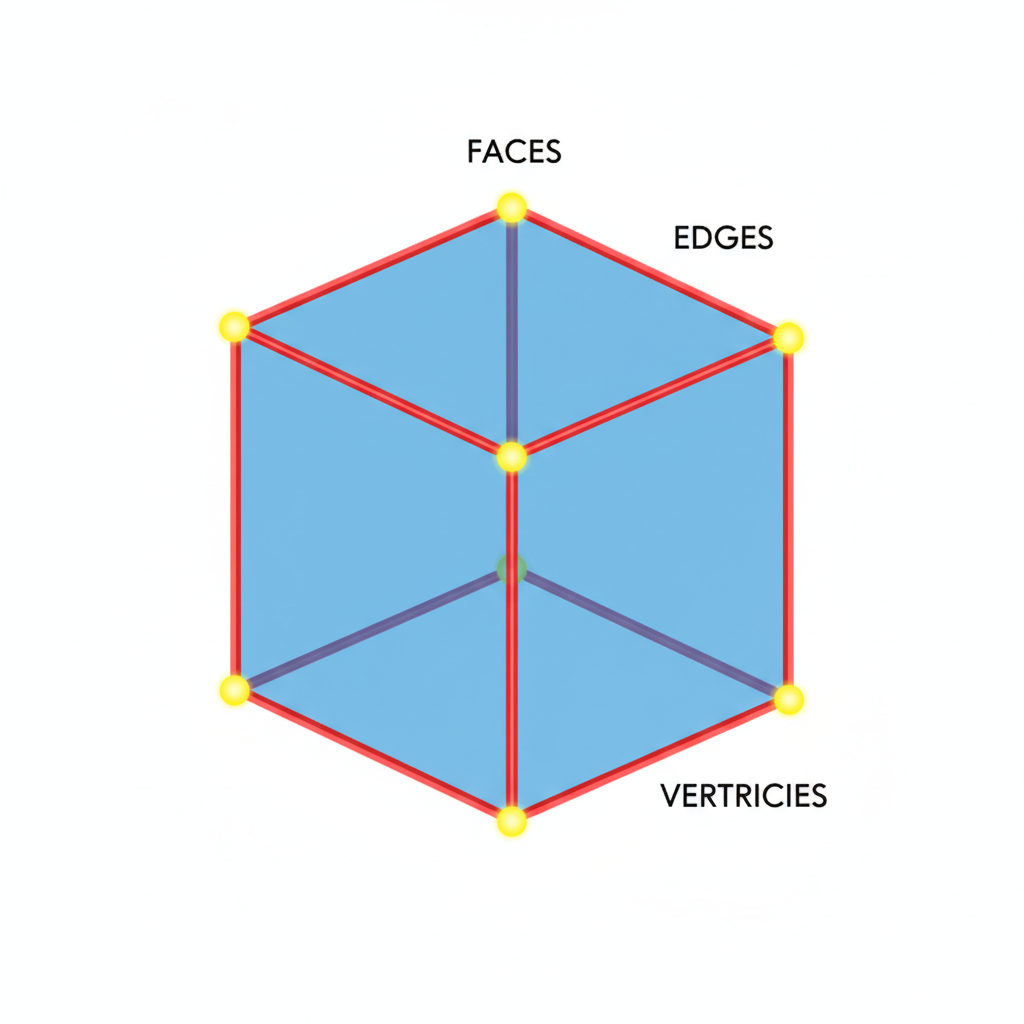
Have you ever played with dice? Or maybe seen a sugar cube? Those are perfect examples of cubes! A cube is like a box where all sides are perfectly square and the same size. Imagine a Rubik's Cube – each little square section is a face of the cube!
- Faces: These are the flat surfaces of the shape. A cube has 6 square faces. Think of them as the sides of the box.
- Edges: These are where two faces meet. They are the straight lines of the shape. A cube has 12 edges. Imagine the lines where the sides of the box connect.
- Vertices: These are the pointy corners where edges meet. A cube has 8 vertices. Think of the corners of the box.
Analogy: A cube is like a perfectly cut slice of cheese that's shaped like a box, or a perfectly balanced domino!
2. The Rectangular Prism: A Stretchy Cube!
What about a cereal box? Or a brick? Those are rectangular prisms. They look a lot like cubes, but their faces are rectangles instead of squares. Some sides might be longer than others. Think of it as a cube that you've stretched out a bit!
- Faces: A rectangular prism also has 6 faces, but they are all rectangles (and squares are special types of rectangles!). The top and bottom faces are the same, and the front and back faces are the same, and the left and right faces are the same.
- Edges: It has 12 edges, just like a cube.
- Vertices: It also has 8 vertices, or corners.
Analogy: A rectangular prism is like a shoebox, a book, or a door.
3. The Sphere: The Perfect Round Ball!
Think of a basketball, a marble, or the sun. These are all spheres! A sphere is a perfectly round shape with no flat surfaces, no edges, and no corners. It's just smooth and round all the way around.
- Faces: A sphere has 1 face, which is its entire curved surface.
- Edges: A sphere has 0 edges.
- Vertices: A sphere has 0 vertices.
Analogy: A sphere is like a perfectly round ball of playdough, or a bubble floating in the air.
4. The Cone: A Pointy Hat!
Remember those party hats you wear on birthdays? Or an ice cream cone? That's a cone! A cone has a flat, circular base and then tapers up to a single point called a vertex.
- Faces: A cone has 2 faces: one flat circular base and one curved surface.
- Edges: A cone has 1 edge, which is the circle where the curved surface meets the flat base.
- Vertices: A cone has 1 vertex, which is the pointy top.
Analogy: A cone is like a traffic cone, a wizard's hat, or a funnel.
5. The Cylinder: A Can of Fun!
Think about a soup can, a soda can, or a toilet paper roll. These are all examples of cylinders! A cylinder has two flat, circular bases and a curved surface connecting them.
- Faces: A cylinder has 3 faces: two flat circles (the top and bottom) and one curved surface.
- Edges: A cylinder has 2 edges, where the curved surface meets each of the flat circular bases.
- Vertices: A cylinder has 0 vertices.
Analogy: A cylinder is like a can of soup, a water bottle, or a log of wood.
6. The Pyramid: A Pointy Mountain!
Ancient Egyptians built amazing pyramids! A pyramid has a base that is a polygon (like a square or a triangle) and triangular faces that meet at a single point (a vertex) at the top. The most common one you'll see is a square pyramid, which has a square base.
- Faces: A square pyramid has 5 faces: 1 square base and 4 triangular sides.
- Edges: A square pyramid has 8 edges: 4 around the base and 4 going up to the top vertex.
- Vertices: A square pyramid has 5 vertices: 4 at the base and 1 at the top.
Analogy: A pyramid is like a pointy mountain, a triangular tent, or a slice of cake shaped like a triangle.
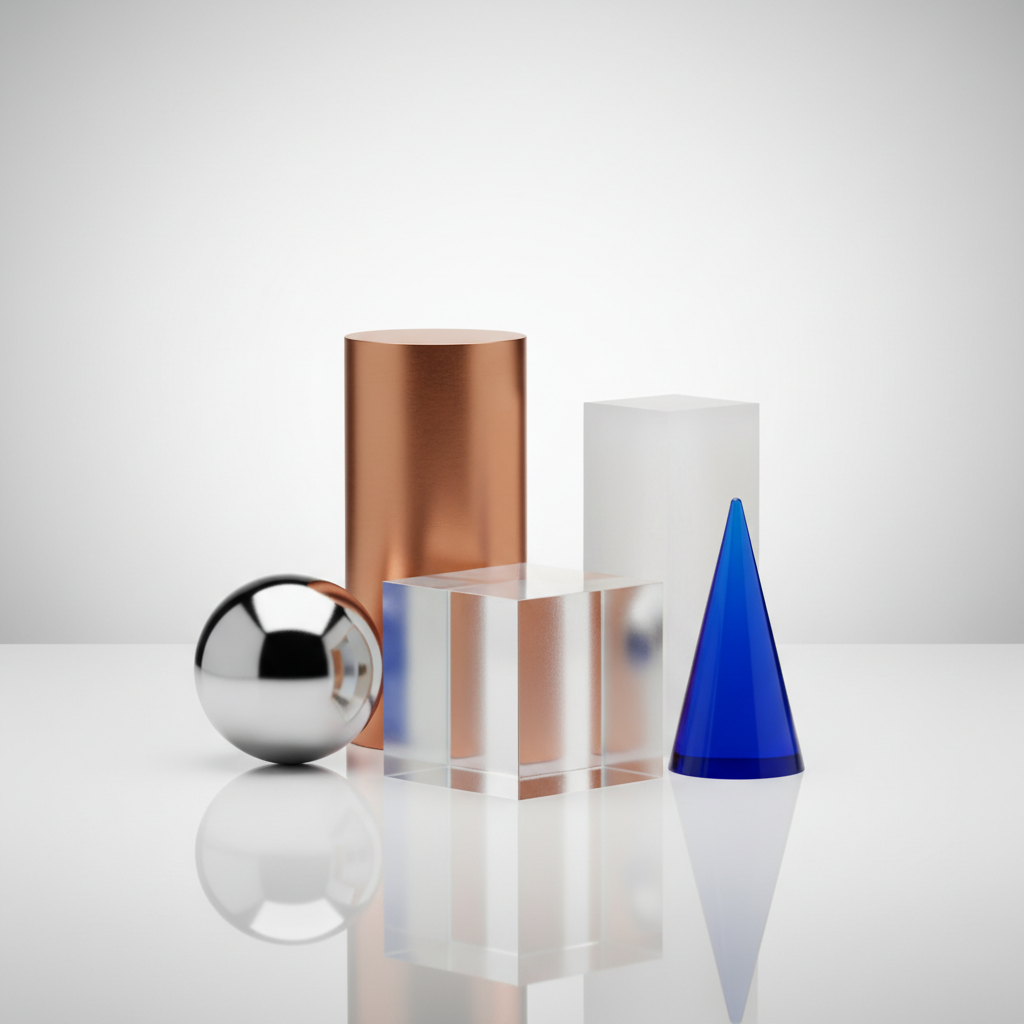 ⚠️ This picture may have spelling mistakes. Trust the words in the lesson.
Putting It All Together: Faces, Edges, and Vertices
Remember those special words: faces (flat surfaces), edges (where faces meet), and vertices (corners)? They help us describe and understand 3D shapes. Each type of 3D shape has a specific number of faces, edges, and vertices. It's like their unique fingerprint!
Why Are 3D Shapes Important?
3D shapes are everywhere! Architects use them to design buildings, artists use them to create sculptures, and scientists use them to understand the universe. Even when you're playing with building blocks, you're using your understanding of 3D shapes to create amazing structures.
 ⚠️ This picture may have spelling mistakes. Trust the words in the lesson.
Keep your eyes open for these shapes in your everyday life. You'll be surprised how many you can spot!
Keep learning, free
Create a free Syllabax account to unlock practice questions and games for this topic.
Visual Learning Enhanced! 🚀
To help you master this topic, we use Advanced Syllabax AI to generate detailed diagrams and visual models.
Note on Visuals: The AI sometimes makes spelling errors in image labels. Please refer to the lesson text for the correct terminology.