World Climate Patterns – World Geography
Free preview · Lesson 1
World Climate Patterns – World Geography (Foundational)
World Climate Patterns - World GeographyWorld Climate Patterns - Let's Explore!
Hey there, future geographers! Get ready to discover the amazing climates of our planet. Climate is more than just the weather outside your window; it's the average weather pattern in a place over a long period of time. Ready to dive in?
What is Climate?
- Weather: What's happening outside right now (sunny, rainy, windy).
- Climate: The usual weather in a place over many years (hot and dry, cold and snowy).
Imagine you visit a new city. Weather is what you experience that day, but the climate is what you'd expect if you lived there for years!
Factors Affecting Climate
Several things determine a region's climate. The most important are:
- Latitude: How far north or south a place is from the Equator. Places near the Equator are generally warmer because they get more direct sunlight.
- Altitude: How high a place is above sea level. Higher places are usually colder. Think of mountains!
- Proximity to Water: Large bodies of water (oceans and big lakes) can affect temperature and rainfall. Water heats up and cools down slower than land, so coastal areas have milder climates.
- Wind Patterns: Winds distribute heat and moisture around the globe.
Major Climate Zones
Because of these factors, the world is divided into different climate zones. Here are a few main ones:
- Tropical: Hot and humid, near the Equator. Think rainforests!
- Temperate: Moderate temperatures with distinct seasons. Where many people live!
- Polar: Cold and icy, near the North and South Poles. Home to penguins (South Pole) and polar bears (North Pole)!
- Dry: Very little rainfall. Deserts!
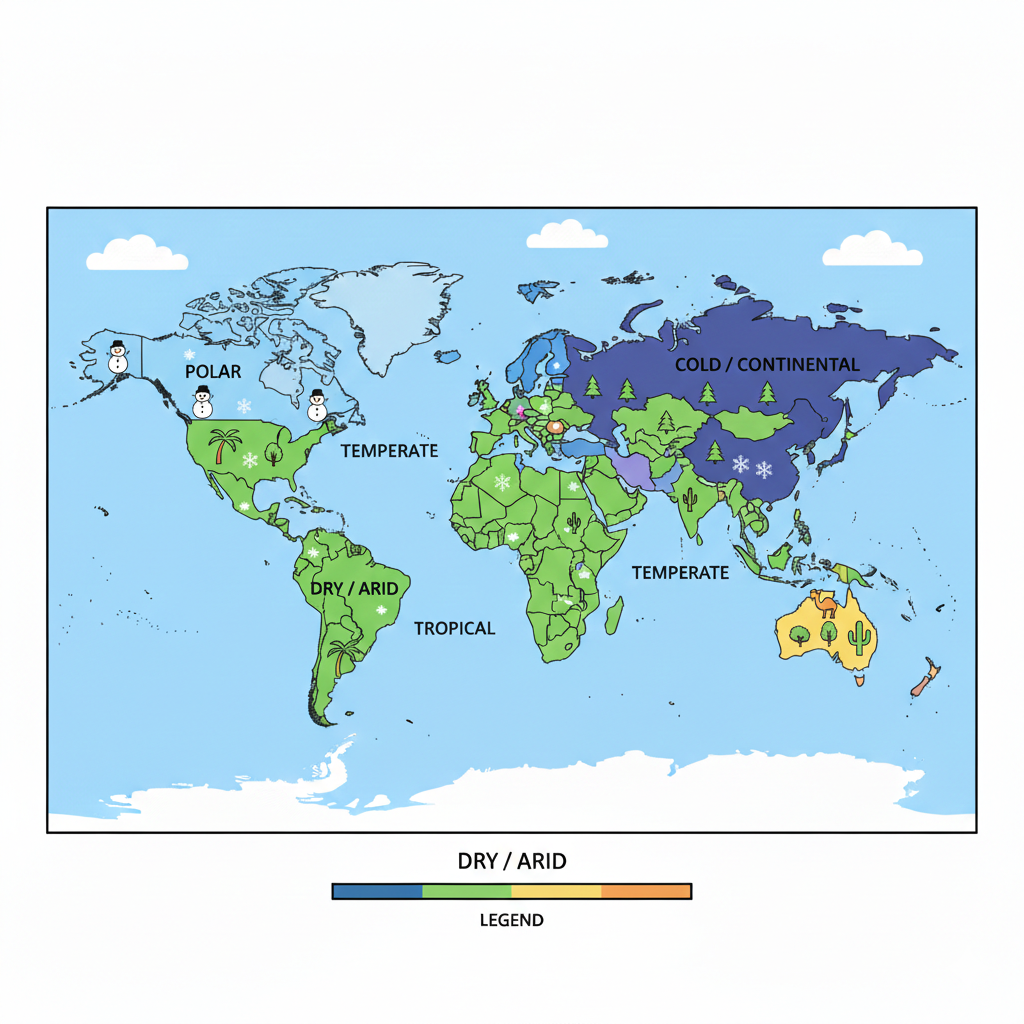 Each climate zone has its own unique characteristics and supports different types of plants and animals.
Why Climate Matters
Climate affects everything! It influences what we can grow, how we build our homes, and even the clothes we wear. Understanding climate patterns helps us predict weather events, plan for the future, and appreciate the diversity of our planet.
Keep learning, free
Create a free Syllabax account to unlock practice questions and games for this topic.
Visual Learning Enhanced! 🚀
To help you master this topic, we use Advanced Syllabax AI to generate detailed diagrams and visual models.
Note on Visuals: The AI sometimes makes spelling errors in image labels. Please refer to the lesson text for the correct terminology.