Forms of water(Water)
Watch this topic in 60 seconds
Free preview · Lesson 1
Understanding Forms of water(Water)
Exploring the Amazing Forms of Water!
Hello, young explorers! Today, we're going on an exciting adventure to discover something truly amazing: water! You see water every day – when you drink it, when it rains, or even when you see ice in a drink. But did you know that water can look and act very differently? It's like water has a few different costumes it can wear! These different costumes are called 'forms' or 'states' of water. Let's dive in and meet them!
What is Water?
First, let's remember what water is. Water is a very special liquid that we need to live. It's in our bodies, in the oceans, rivers, and lakes, and even in the air around us! It doesn't have a color, a smell, or a taste, but it's super important for plants, animals, and us.
The Three Main Forms of Water
Water can appear in three main forms: solid, liquid, and gas. Think of it like this: water molecules are tiny, tiny building blocks. How they stick together changes water's form!
1. Solid: Ice, Snow, and More! (The 'Frozen Block Party')
Imagine all the tiny water molecules holding hands very, very tightly. They're so close and squeezed together that they can't move much. This is what happens when water gets really, really cold! When water becomes very cold, it freezes and turns into its solid form. We call this ice!
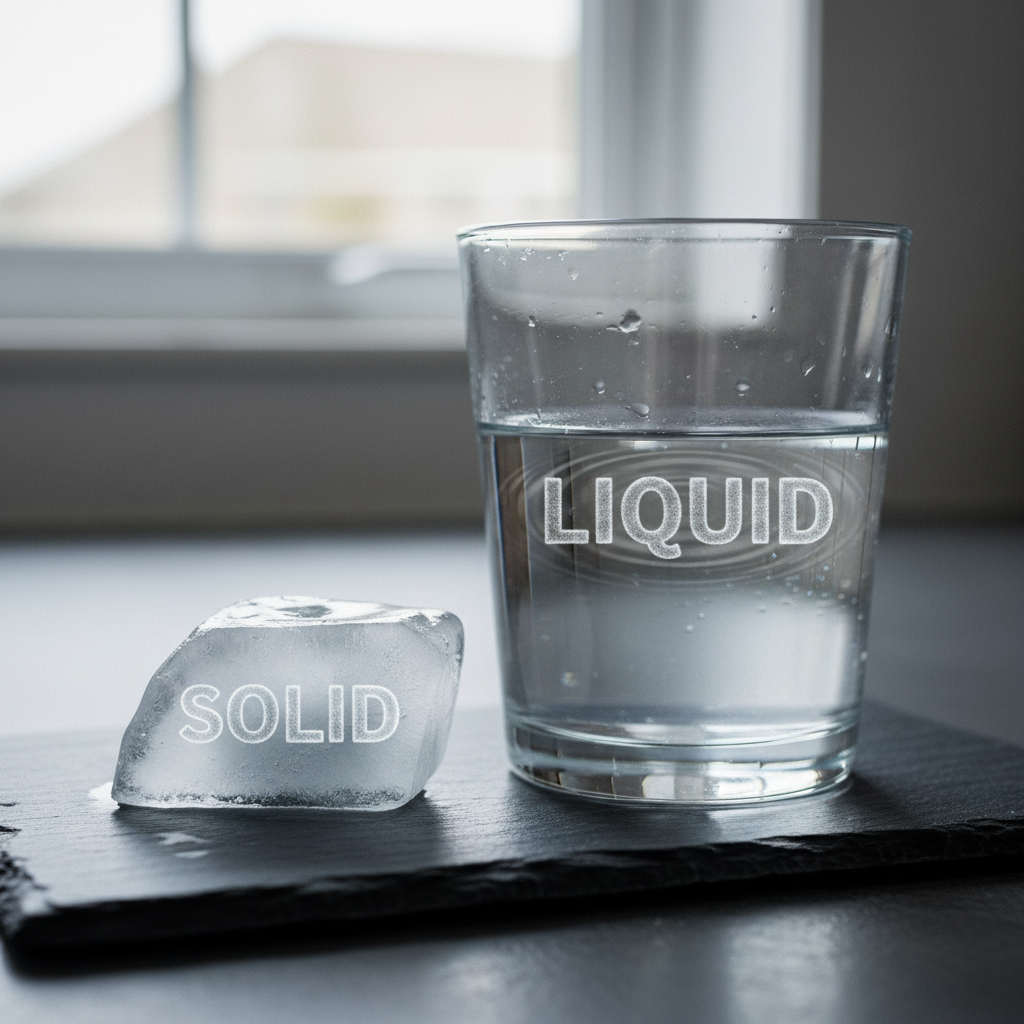
- What it looks like: Ice is hard, firm, and keeps its shape. Think of an ice cube in your drink. It stays a cube until it melts.
- Where you see it:
- Ice cubes in your juice.
- Snowflakes falling from the sky – each one is a tiny piece of frozen water!
- Icebergs in the ocean, which are giant chunks of frozen fresh water.
- Popsicles! That's frozen, flavored water!
- How it changes: If you give ice some warmth (like leaving an ice cube out on a table), the water molecules start to loosen their grip. They get a little energy and start to wiggle. This is when ice melts and turns back into liquid water.
Think of solid water like a 'frozen block party' where everyone is standing still and holding hands tightly, unable to move around!
2. Liquid: The Water We Drink! (The 'Dancing Water')
This is the form of water you probably know best! When water is warm enough (above freezing but not too hot), it's in its liquid form. The tiny water molecules are still close to each other, but they've let go of each other's hands. They can slide and glide past one another, like children playing in a playground, not holding hands but still close together.
- What it looks like: Liquid water flows and can take the shape of any container you put it in. Pour water into a glass, and it becomes glass-shaped. Pour it into a bowl, and it becomes bowl-shaped!
- Where you see it:
- Water flowing from your faucet.
- Rain falling from the sky.
- The vast oceans, rivers, and lakes.
- The water you drink every day!
- How it changes:
- If you make liquid water very, very cold, it will freeze and become solid (ice).
- If you make liquid water very, very hot, it will start to turn into gas (water vapor).
Think of liquid water like a 'dancing water' where the molecules are moving and sliding around each other, but still staying together as a group.
3. Gas: Water Vapor (The 'Invisible Superheroes')
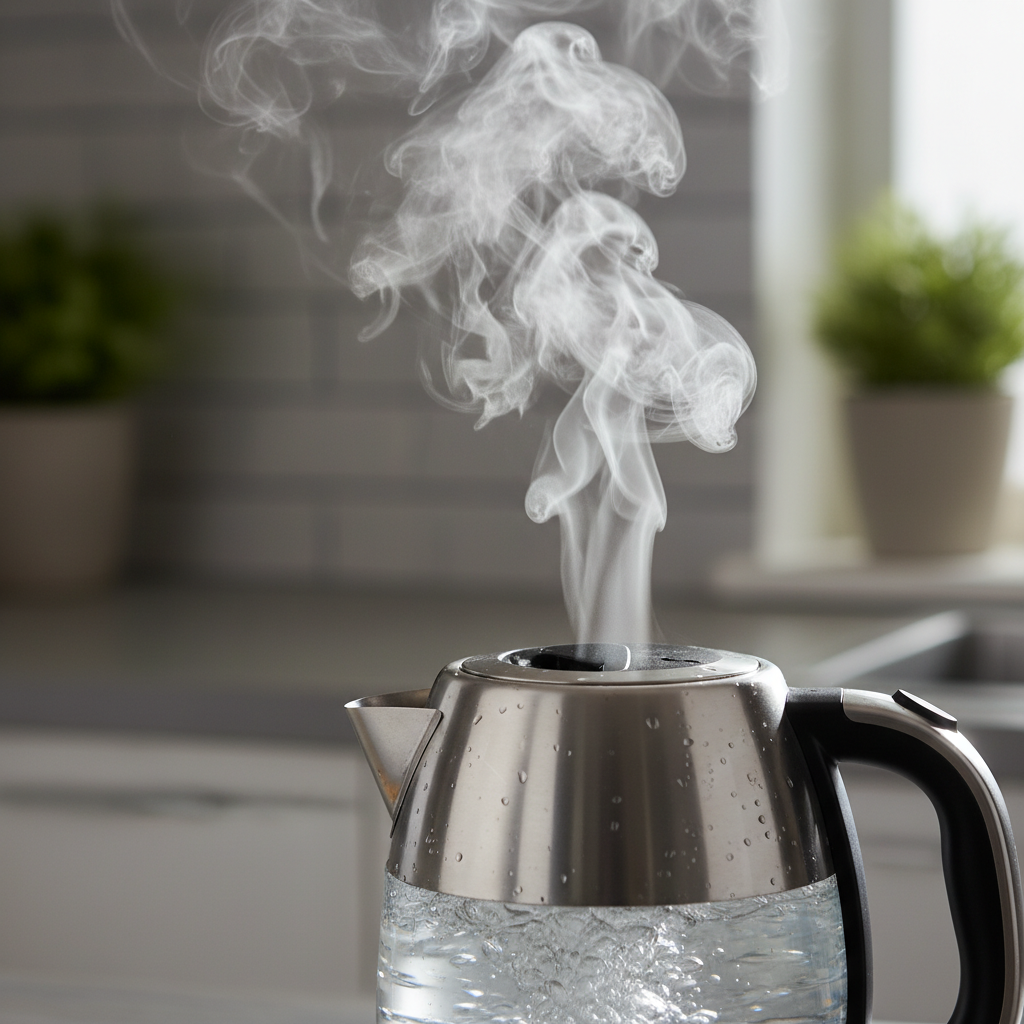
Now for the trickiest form to see! When water gets very, very hot, the tiny water molecules get super energetic! They let go of each other completely and start zooming around all over the place, bouncing off walls and flying free. They spread out so much that you can't even see them anymore! This invisible form of water is called water vapor (or steam when it's just leaving a hot surface).
- What it looks like: Water vapor is invisible! When you see 'steam' coming out of a kettle, that misty cloud isn't the vapor itself; it's actually tiny, tiny droplets of liquid water that have cooled down a little after being vapor. The actual water vapor is the clear, invisible air right above the spout.
- Where you find it:
- In the air all around you, even though you can't see it. This is why clothes dry outside! The water from the clothes turns into vapor and goes into the air.
- When you boil water in a kettle, the steam (which turns into vapor) rises.
- When water evaporates from puddles or the ocean, it turns into invisible water vapor and rises into the sky to form clouds!
- How it changes: If water vapor gets cold, the super energetic molecules start to slow down. They get closer together again and turn back into tiny liquid water droplets (or even tiny ice crystals if it's super cold high in the sky), which we then see as clouds, or it can even turn back into rain!
Think of gaseous water (water vapor) like 'invisible superheroes' flying everywhere, very far apart from each other!
 ⚠️ This picture may have spelling mistakes. Trust the words in the lesson.
The Water Cycle: A Never-Ending Journey!
The amazing thing is that water is always changing forms! It's like water loves to put on different costumes and go on adventures. This continuous journey of water changing from liquid to gas to liquid (and sometimes solid) and back again is called the Water Cycle. It's how we always have water on Earth!
- Sun heats liquid water (like in an ocean), turning it into invisible water vapor (gas) that rises into the sky. (Evaporation)
- The water vapor in the sky gets cold, turns back into tiny liquid droplets or ice crystals, and forms clouds. (Condensation)
- When the clouds get too heavy, the water falls back to Earth as rain, snow, or hail. (Precipitation)
- The water then flows into rivers, lakes, and oceans, ready to start the journey all over again!
Why is it Important to Know About These Forms?
Understanding the forms of water helps us understand so much about our world! It helps us know why it snows, why rivers flow, how clouds form, and why our clothes dry in the sun. Water is truly a miracle, and its ability to change forms makes it even more special!
So, the next time you see ice, drink water, or even feel the humidity in the air (that's water vapor!), remember the three amazing forms of water: solid, liquid, and gas!
Keep learning, free
Create a free Syllabax account to unlock practice questions and games for this topic.
Visual Learning Enhanced! 🚀
To help you master this topic, we use Advanced Syllabax AI to generate detailed diagrams and visual models.
Note on Visuals: The AI sometimes makes spelling errors in image labels. Please refer to the lesson text for the correct terminology.