• Independence & Partition – Indian History
Watch this topic in 60 seconds
Free preview · Lesson 1
Independence & Partition – Indian History (Foundational)
Independence & Partition – Indian History (Foundational)
This lesson introduces the key events surrounding India's independence and the subsequent partition. We will explore the reasons for independence, the challenges faced during the transition, and the impact of partition on the newly formed nations.
Background to Independence
For many years, India was under British rule. Many Indians wanted their country to be free and self-governing. This desire for freedom grew stronger after World War II.
- British Rule: India was ruled by the British government.
- Nationalism: A strong feeling of pride and loyalty to one's country grew among Indians.
- Demand for Freedom: Indian leaders and people demanded independence from British rule.
Key Figures in the Independence Movement
Several influential leaders played crucial roles in India's struggle for independence. Some key figures include:
- Mahatma Gandhi: Advocated for non-violent resistance and played a central role in leading the independence movement.
- Jawaharlal Nehru: A prominent leader and the first Prime Minister of India.
- Sardar Vallabhbhai Patel: Known for his role in integrating the princely states into India.
The Decision for Partition
The decision to partition India was a complex one, driven by various factors including religious differences and political considerations. The main reason was conflict between the Hindu and Muslim populations of India. Some leaders believed that creating separate nations for Hindus and Muslims would prevent further violence and ensure the safety of both communities.
- Religious Differences: Tensions between Hindus and Muslims existed.
- Political Considerations: Some leaders believed a separate Muslim nation was necessary.
- The Two-Nation Theory: This idea proposed that Hindus and Muslims were two distinct nations and should have separate countries.
The Partition of India
The partition of India in 1947 led to the creation of two independent nations: India and Pakistan. This involved dividing the country based on religious majority areas.
- Creation of India and Pakistan: The British government divided India into two countries.
- Division of Territory: The border was drawn based on the religious majority in different regions.
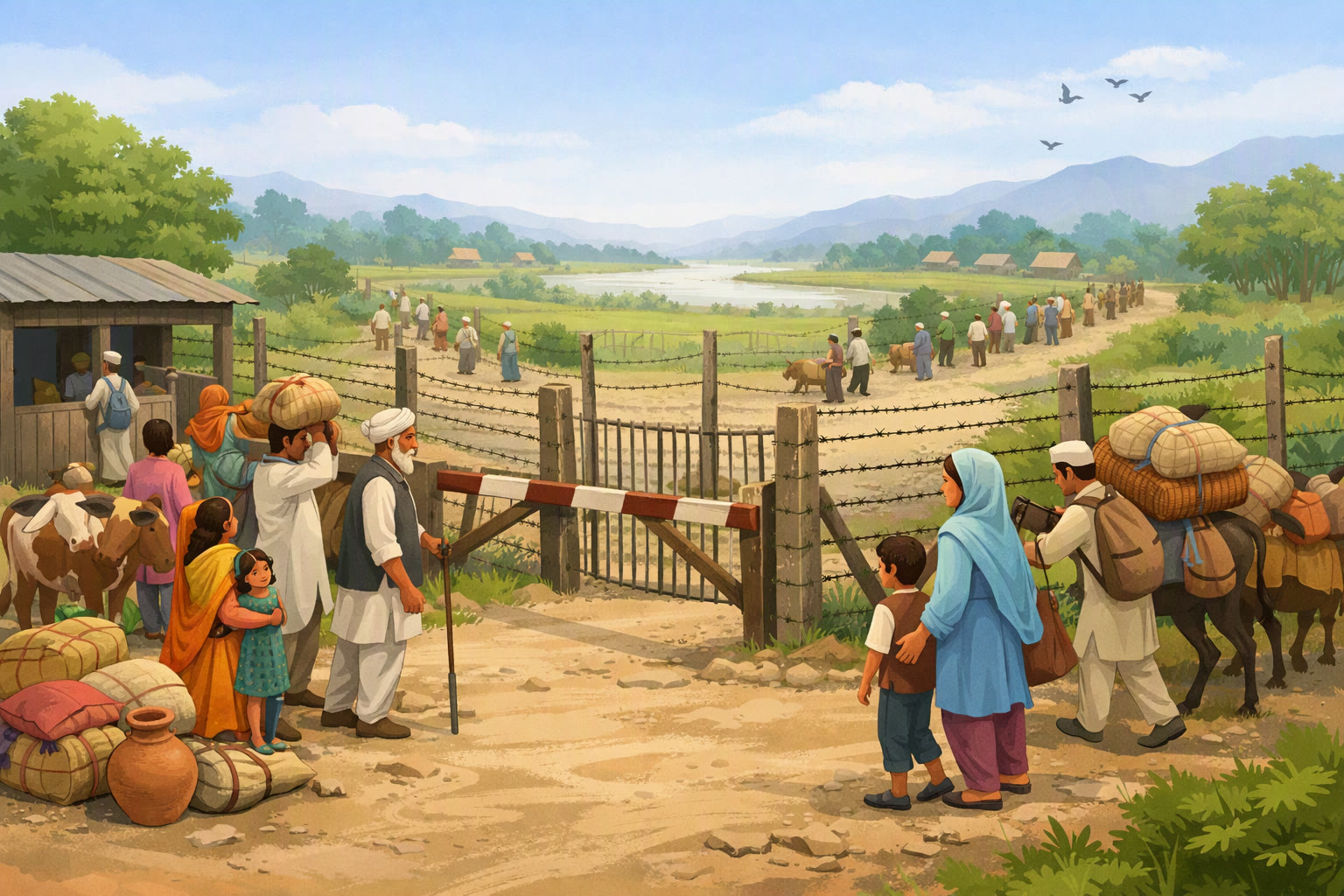
- Mass Migration: Millions of people migrated across the new borders, with Hindus and Sikhs moving to India and Muslims moving to Pakistan.
Consequences of Partition
The partition was a period of immense upheaval and tragedy. It resulted in widespread violence, displacement, and loss of life. Millions of people were forced to leave their homes and cross the border, often facing extreme hardship and violence.
- Violence and Riots: Widespread communal violence occurred during and after the partition.
- Displacement: Millions of people were forced to leave their homes and become refugees.
- Loss of Life: Hundreds of thousands, perhaps millions, of people died in the violence.
The Radcliffe Line
The border between India and Pakistan was drawn by a commission led by Sir Cyril Radcliffe. The line became known as the Radcliffe Line. It was created quickly, often without considering local realities, which contributed to the problems during partition.
 Aftermath and Legacy
The partition had a lasting impact on both India and Pakistan. It led to ongoing tensions and conflicts between the two countries. It also shaped the social and political landscape of the region for decades to come.
Keep learning, free
Create a free Syllabax account to unlock practice questions and games for this topic.
Visual Learning Enhanced! 🚀
To help you master this topic, we use Advanced Syllabax AI to generate detailed diagrams and visual models.
Note on Visuals: The AI sometimes makes spelling errors in image labels. Please refer to the lesson text for the correct terminology.