Learning Journey
Watch this topic in 60 seconds
Free preview · Lesson 1
Understanding Properties of magnets (PHYSICS)
Properties of Magnets: A Fun Exploration!
Have you ever played with magnets? They're those fascinating objects that can stick to your refrigerator or make toys move all by themselves! Magnets have special superpowers that we call their 'properties'. Let's dive into what makes these amazing objects tick!
What is a Magnet?
A magnet is a material or object that produces a magnetic field. This magnetic field is an invisible force, like a hidden hand, that can pull or push on other magnetic materials. Think of it like the invisible strings that make a puppet dance – you can't see the strings, but you see the puppet moving!
Magnets aren't just the bar magnets you see in science class. They can be found in many everyday things, like in the speakers of your headphones, in electric motors that make fans spin, and even in the locks that keep doors shut!
Magnetic Materials: Who Can Play?
Not everything can be picked up by a magnet. Only certain materials are attracted to magnets. These are called magnetic materials. The most common magnetic materials are iron, nickel, and cobalt. Steel, which is made mostly of iron, is also magnetic.
Think of a magnet like a super-popular kid at school. Only certain friends (magnetic materials) want to hang out with them. Other materials, like plastic, wood, or aluminum foil, are like the kids who aren't interested in playing the magnet's game. They simply don't get pulled.
Attraction and Repulsion: The Push and Pull!
Magnets have two ends, called poles. We call these the North pole (N) and the South pole (S). These poles have a special relationship with each other and with other magnets.
Here's the secret code of poles:
- Opposite poles attract: If you bring a North pole of one magnet close to the South pole of another magnet, they will pull towards each other. It's like a friendly hug!
- Like poles repel: If you try to bring two North poles together, or two South poles together, they will push away from each other. It's like they're saying, "Stay back! I don't want to play with you!"
Imagine you have two friends, Alex (North pole) and Ben (South pole). If Alex (N) and Ben (S) meet, they'll happily go play together (attract). But if you have two Alexes (N and N) or two Bens (S and S), they'll want to play on opposite sides of the playground (repel).
This push and pull is the magic that makes magnetic toys work! When you play with magnetic building blocks, the magnets inside are either attracting or repelling to snap together or push apart.
The Magnetic Field: The Invisible Force Field
Even though we can't see it, every magnet has an invisible area around it where its magnetic force works. This is called the magnetic field. You can think of it as the magnet's personal bubble of influence.
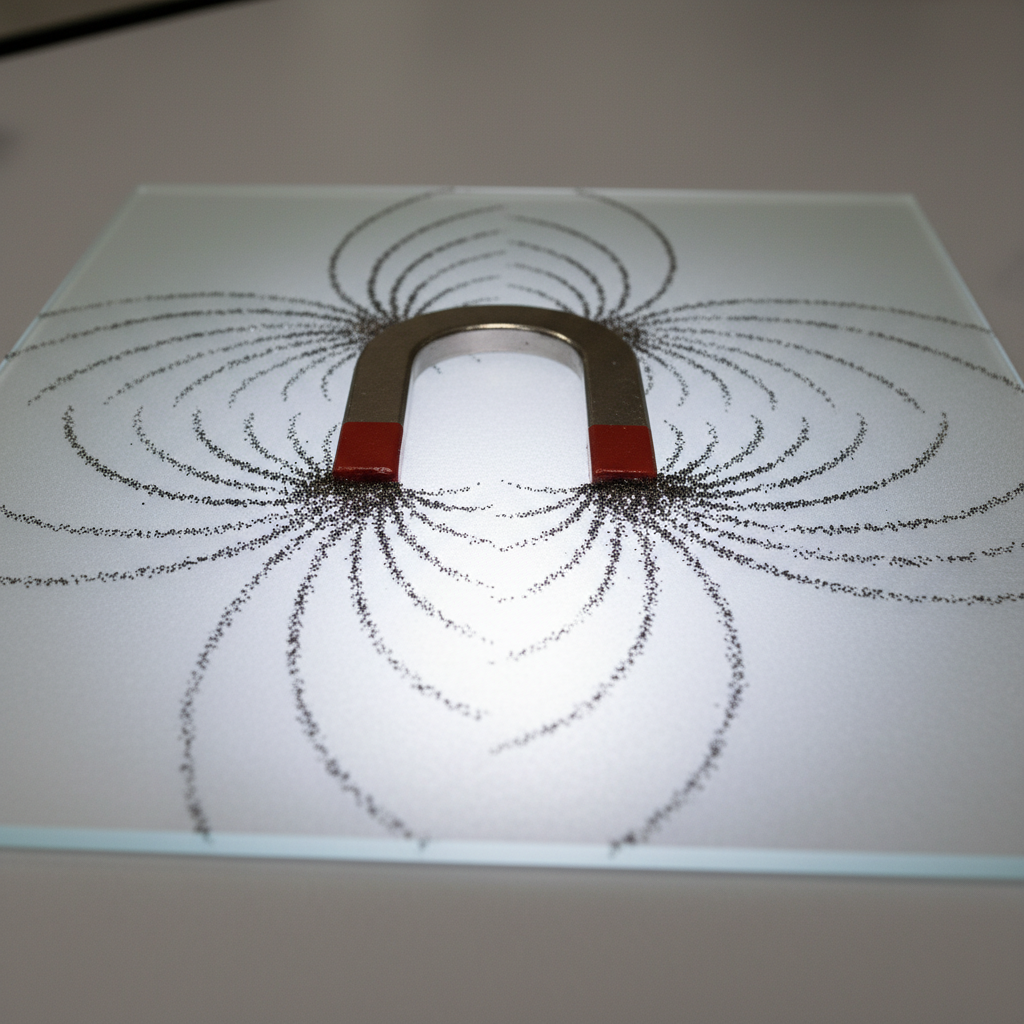
The magnetic field lines start at the North pole and loop around to the South pole. These lines show the direction and strength of the magnetic force. The closer the lines are, the stronger the magnetic field. It's like ripples spreading out from a stone dropped in water – the effect is strongest near the stone and gets weaker further away.
You can even see this invisible field if you sprinkle iron filings around a magnet! The tiny iron pieces will line up along the magnetic field lines, showing you exactly where the force is strongest. It's like drawing invisible lines with real tiny arrows!
 ⚠️ This picture may have spelling mistakes. Trust the words in the lesson.
Temporary vs. Permanent Magnets: Some Are Stronger Than Others!
There are two main types of magnets:
- Permanent Magnets: These magnets keep their magnetism for a very long time. The magnets in your refrigerator or the ones used in compasses are usually permanent magnets. They are always "on" and ready to attract. Temporary Magnets: These magnets only become magnetic when they are near a strong magnet or when an electric current flows through them. Once the magnet or electricity is removed, they lose their magnetism. Think of a paperclip that sticks to a strong magnet. The paperclip becomes a temporary magnet! When you take the strong magnet away, the paperclip stops being magnetic. It's like a shy friend who only acts brave when their best friend is around.
What Makes Something Magnetic?
Inside every material, there are tiny particles called atoms. And inside atoms are even tinier things called electrons. Electrons are always spinning, and this spinning creates a tiny magnetic field. In most materials, these tiny magnetic fields point in random directions, so they cancel each other out, and the material isn't magnetic.
However, in magnetic materials like iron, these tiny magnetic fields (called magnetic domains) can line up and point in the same direction. When lots of these domains line up, the whole material becomes a magnet! It's like a group of dancers who all start doing the same move – suddenly, you see a clear pattern!
Summary of Key Properties
Let's recap the awesome properties of magnets:
- Magnets have an invisible force called a magnetic field.
- Magnets have two poles: North (N) and South (S).
- Opposite poles attract (N and S pull together).
- Like poles repel (N and N, or S and S push apart).
- Only certain materials (like iron, nickel, cobalt) are attracted to magnets.
- Magnets can be permanent (always magnetic) or temporary (magnetic only under certain conditions).
Magnets are all around us, making our lives more interesting and functional. Keep exploring and see where you can find magnets next!
Keep learning, free
Create a free Syllabax account to unlock practice questions and games for this topic.
Visual Learning Enhanced! 🚀
To help you master this topic, we use Advanced Syllabax AI to generate detailed diagrams and visual models.
Note on Visuals: The AI sometimes makes spelling errors in image labels. Please refer to the lesson text for the correct terminology.