Digestive system basics (Human Body )
Watch this topic in 60 seconds
Free preview · Lesson 1
Understanding Digestive system basics (Human Body )
Your Body's Amazing Food Factory: The Digestive System!
Hey there, future scientists! Have you ever wondered what happens to that yummy sandwich or crunchy apple after you swallow it? It doesn't just disappear! Your body has an incredible, super-smart Food Factory working hard inside you right now. This factory is called the Digestive System, and its big job is to break down all the food you eat into tiny pieces so your body can use it for energy, growth, and to stay healthy!
Imagine a Journey!
Think of your food's journey through your digestive system like a trip on a special assembly line or a long roller coaster ride! Each part of the system is like a different station with a unique job to do.
1. The Mouth: The Grinder and Mixer!
The journey starts in your mouth. This is like the front door and the first processing station! When you take a bite, your teeth act like tiny grinders, mashing and crushing your food into smaller, easier-to-swallow pieces. This is called chewing.
- Analogy: Your teeth are like little shredders or a food processor breaking down big ingredients.
But wait, there's more! Your mouth also produces something called saliva (that's your spit!). Saliva is like a special liquid that helps wet the food, making it slippery and easier to swallow. It also has special chemicals that start to break down some of the food even before you swallow it. Think of it as the first step of melting your food!
- Analogy: Saliva is like a little slip-and-slide for your food, and also a mild soap that starts cleaning and softening things up.
2. The Esophagus: The Slippery Slide!
Once you swallow your food (which is now called a 'bolus' – fancy word for a chewed-up ball of food), it goes down a muscular tube called the esophagus. This tube connects your mouth to your stomach.
- Analogy: The esophagus is like a slippery slide or a secret tunnel that pushes your food down to the next stop. It uses gentle muscle waves, like squeezing a tube of toothpaste, to move the food along.
3. The Stomach: The Mighty Mixer and Blender!
Next stop: the stomach! Your stomach is like a stretchy bag or a super-strong blender. When food arrives, your stomach muscles start churning and squeezing like a washing machine, mixing the food around. It also releases strong acids and special liquids (called digestive juices) that work like super-strong cleaning agents to break the food down even further into a soupy mixture.
- Analogy: The stomach is a powerful blender that mashes everything into a thick soup, and a washing machine that tumbles and mixes with strong detergent (stomach acid!).
4. The Small Intestine: The Super Sponge!
After a few hours in the stomach, the soupy food moves into the small intestine. Don't let the name fool you – it's actually super long, about 20 feet for an adult, which is longer than a school bus! It's all folded up inside you. This is where most of the magic happens!
- Analogy: The small intestine is like a very long, winding garden hose with tiny, tiny sponges (called villi) all along its inside walls.
As the soupy food slowly moves through this long tube, these tiny sponges soak up all the good stuff – the nutrients (like vitamins, proteins, and energy-giving sugars) – from the food. These nutrients then go into your bloodstream and are carried all over your body to give you energy to run, play, think, and grow!
- Analogy: The nutrients are like tiny power-ups or building blocks that your body needs, and the small intestine's tiny sponges grab them and send them off to build your body and give you fuel.
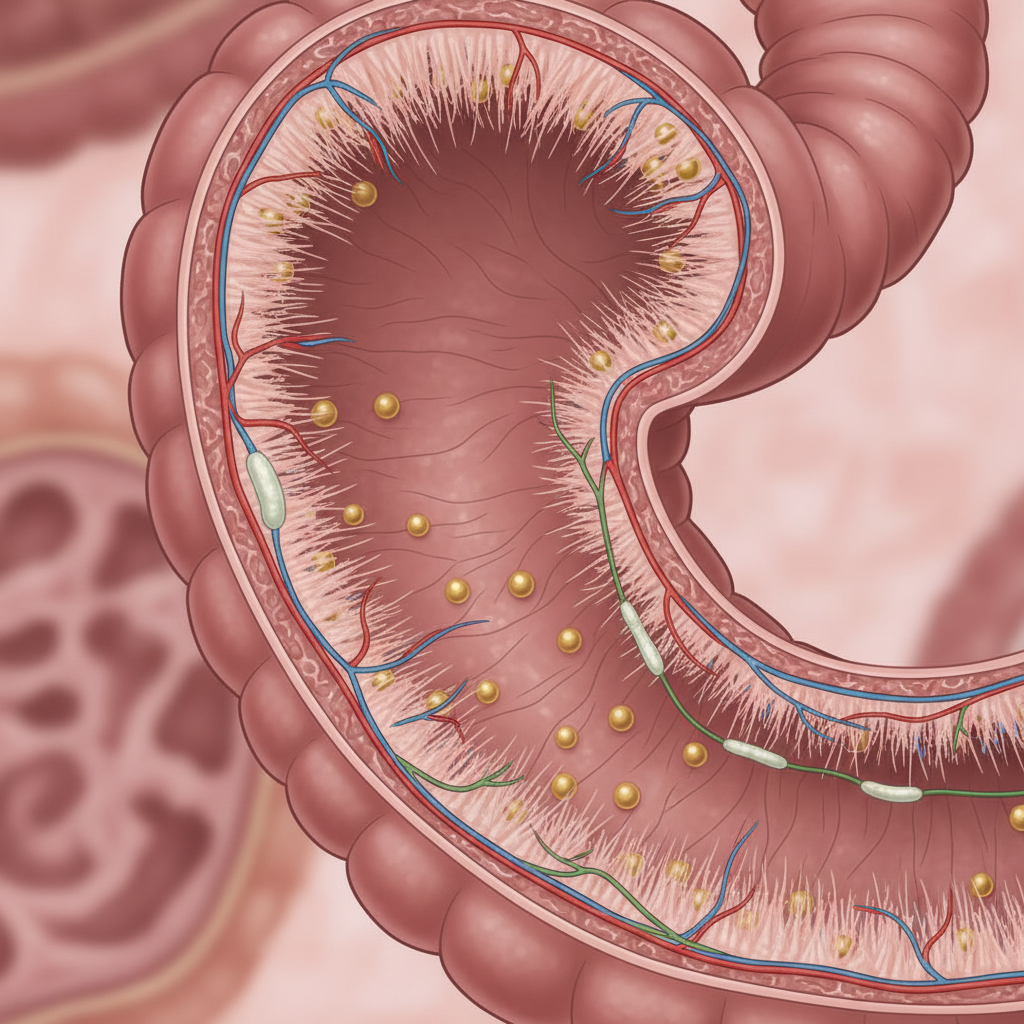 ⚠️ This picture may have spelling mistakes. Trust the words in the lesson.
5. The Large Intestine: The Water Recycler!
After the small intestine has absorbed almost all the good nutrients, the leftover stuff (mostly water and things your body can't use) moves into the large intestine. This part is shorter but wider than the small intestine.
- Analogy: The large intestine is like a water filter or a drying tunnel.
Its main job is to soak up any extra water from the leftover food material. This helps your body stay hydrated and turns the watery waste into more solid waste (poop).
6. The Anus: The Exit Door!
Finally, the solid waste that your body doesn't need leaves your body through the anus. This is the very end of the food's journey!
- Analogy: The anus is simply the exit door for all the leftovers your body can't use.
Helper Organs: The Super Assistants!
You also have some super helpful organs that aren't part of the main food tube but add special liquids to help with digestion. These include the liver, pancreas, and gallbladder. They are like busy assistants behind the scenes, making sure the food factory runs smoothly!
Why is the Digestive System So Important?
Your digestive system is one of the most important systems in your body because it's how you get all the energy and building blocks you need to:
- Run, jump, and play!
- Learn new things at school!
- Grow tall and strong!
- Heal when you get a cut or bruise!
Without it, your body wouldn't get the fuel it needs to do anything!
How to Keep Your Digestive System Happy and Healthy:
- Eat healthy foods: Lots of fruits, vegetables, and whole grains.
- Chew your food well: Give your stomach a head start!
- Drink plenty of water: It helps move things along.
- Exercise: Being active helps all your body systems work better.
So next time you eat, remember the amazing journey your food is taking inside your very own Food Factory! It's working hard for you every single day!
Keep learning, free
Create a free Syllabax account to unlock practice questions and games for this topic.
Visual Learning Enhanced! 🚀
To help you master this topic, we use Advanced Syllabax AI to generate detailed diagrams and visual models.
Note on Visuals: The AI sometimes makes spelling errors in image labels. Please refer to the lesson text for the correct terminology.