Conductors and insulators (basic) (Electricity )
Watch this topic in 60 seconds
Free preview · Lesson 1
Understanding Conductors and insulators (basic) (Electricity )
Understanding Conductors and Insulators: Electricity's Helpers and Protectors!
Hello, young explorers! Today, we're going on an exciting adventure to learn about electricity. Have you ever wondered how your favorite toy lights up, or how your tablet charges? It all has to do with something called **electricity**! Think of electricity as tiny, super-fast energy racers zooming around to power all the cool things in our world.
Just like cars need roads to travel, electricity needs special paths to move from one place to another. Some materials are like super-smooth, wide highways for these energy racers, letting them zoom freely. Other materials are like big, muddy roadblocks, stopping the racers in their tracks! These two types of materials are called **conductors** and **insulators**, and they are both super important!
Conductors: The Superhighways for Electricity!
Imagine you have a long, clear hose, and you want water to flow from one end to the other. If the hose is clear and open, the water rushes through easily, right? That's exactly how a **conductor** works for electricity!
A conductor is a material that allows electricity to flow through it very easily. It's like a special pathway that doesn't get in the way of our tiny energy racers. Instead, it helps them move quickly and efficiently.
Think of these analogies for conductors:
- A Super-Fast Race Track: Electricity can zoom around this track without any bumps or slowdowns.
- A Clear River: Water (electricity) flows smoothly and quickly down a clear river (conductor).
- A Busy Highway: Cars (electricity) can travel fast and easily to get where they need to go.
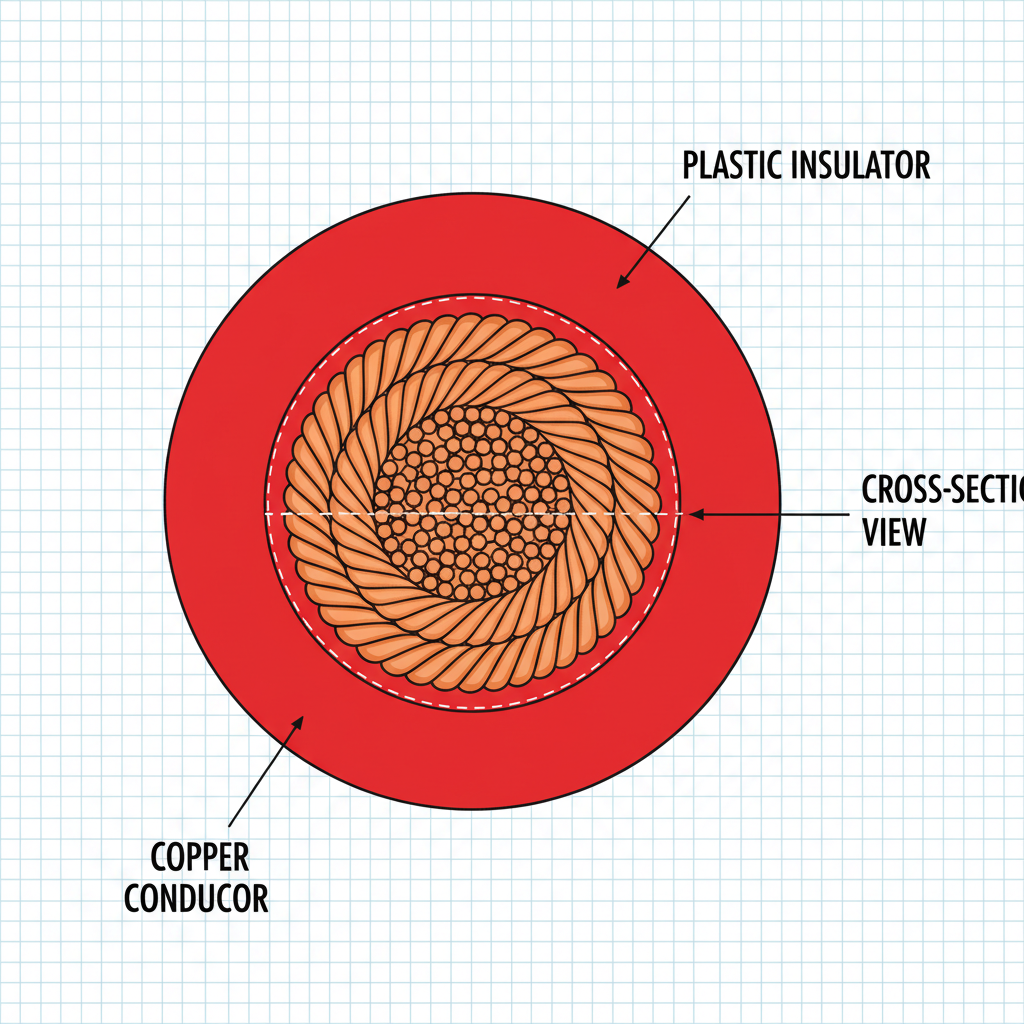
What are conductors made of? Mostly **metals**! Metals like copper, aluminum, silver, and gold are fantastic conductors. That's why if you look closely at electrical wires (with an adult's help, of course!), you'll often see shiny **copper** inside. Copper is used because it's great at letting electricity pass through, and it's not too expensive.
When you plug in a lamp, the electricity travels from the wall outlet, through the copper wires inside the cord, and into the lamp to turn on the light. The copper is doing its job as a superhighway for the electricity!
 ⚠️ This picture may have spelling mistakes. Trust the words in the lesson.
Insulators: The Roadblocks (and Safety Guards!) for Electricity!
Now, let's think about the opposite. What if you put a big rock or a dam in that clear hose? The water would stop or slow down a lot, wouldn't it? That's how an **insulator** works!
An insulator is a material that does NOT allow electricity to flow through it easily. It's like a big wall or a very muddy path that stops our tiny energy racers from moving. Instead, insulators keep electricity stuck or block it completely.
Think of these analogies for insulators:
- A Bumpy, Muddy Road: Electricity tries to move but gets stuck or slows down to a crawl.
- A Big Dam: The dam stops the water (electricity) from flowing further.
- A Thick Blanket: It keeps heat (electricity) from escaping.
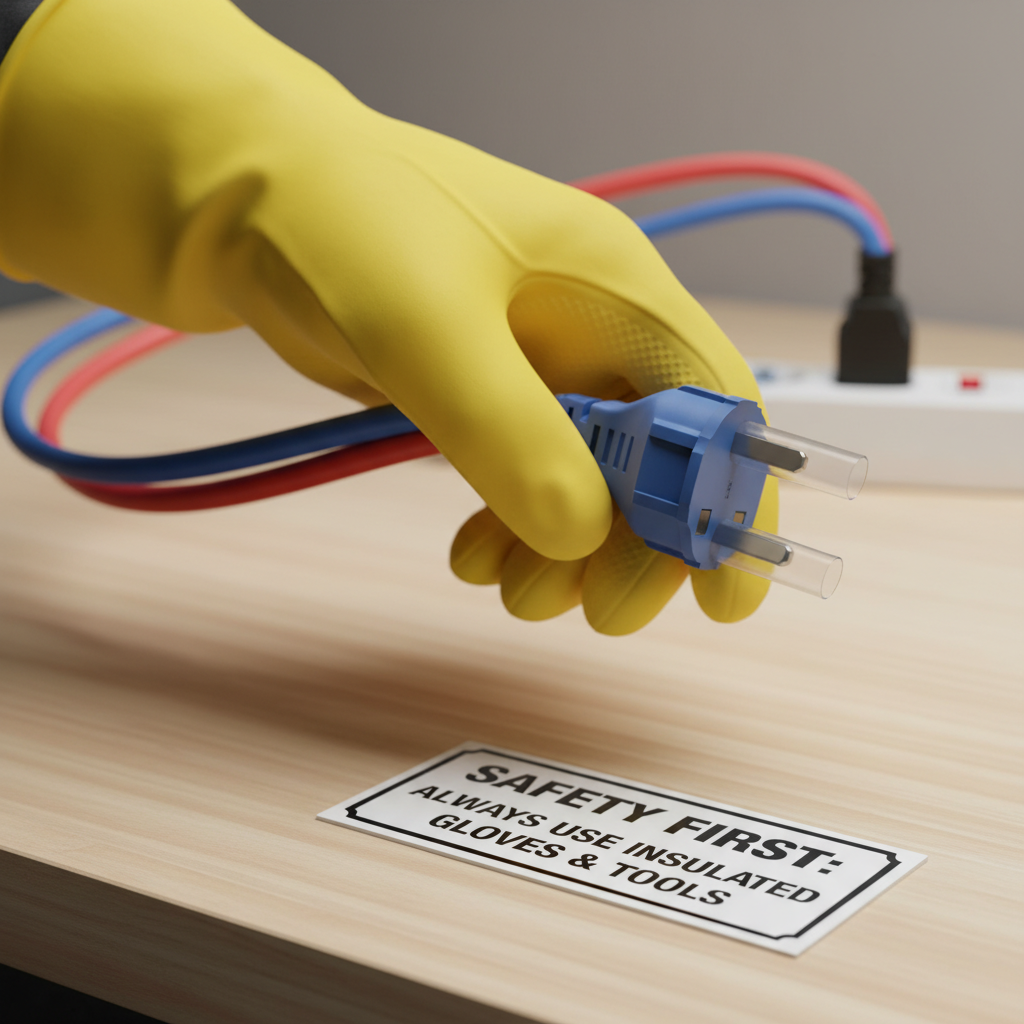
Why are insulators so important? They keep us SAFE! Imagine if every part of an electrical wire was bare copper. If you accidentally touched it, the electricity could flow right through you, which is very dangerous! Insulators act like protective shields.
This is why the copper wires in your lamp cord are covered in **plastic** or **rubber**! These materials are excellent insulators. They keep the electricity safely inside the wire, preventing it from escaping and hurting anyone. When you flip a light switch, the plastic around the switch knob keeps you safe from the electricity flowing inside.
Other common insulators include **wood**, **glass**, **ceramic**, and even **air**! Did you know air is an insulator? That's why birds can sit on power lines without getting hurt – the air around them acts as an insulator, keeping the electricity on the wire and not flowing through the bird.
Think about tools like screwdrivers. The metal part that touches the screw is a conductor, but the handle is usually made of plastic or rubber, which is an insulator. This protects the person holding the screwdriver from any electricity.
 ⚠️ This picture may have spelling mistakes. Trust the words in the lesson.
Working Together: Conductors and Insulators as a Team!
So, you see, conductors and insulators are like a super team! Conductors are like the paths that electricity *should* follow, getting it where it needs to go to power our devices. Insulators are like the fences and guards that make sure electricity *stays* on its path and doesn't wander off to accidentally hurt anyone.
Without conductors, our lights wouldn't turn on, and our devices wouldn't work. Without insulators, using electricity would be much too dangerous! They both play a crucial role in making electricity useful and safe for everyone.
Let's recap what we've learned:
- Electricity needs a path to travel.
- Conductors are materials that let electricity flow through them easily (like metals: copper, aluminum).
- Insulators are materials that stop or slow down electricity, keeping it from flowing easily (like plastic, rubber, wood, glass).
- Both conductors and insulators are important: conductors to move electricity, and insulators to keep us safe!
Great job learning about these important parts of our electrical world! Remember to always be safe around electricity and never touch bare wires or put things into electrical outlets.
Keep learning, free
Create a free Syllabax account to unlock practice questions and games for this topic.
Visual Learning Enhanced! 🚀
To help you master this topic, we use Advanced Syllabax AI to generate detailed diagrams and visual models.
Note on Visuals: The AI sometimes makes spelling errors in image labels. Please refer to the lesson text for the correct terminology.