Air pollution (intro) (Air)
Watch this topic in 60 seconds
Free preview · Lesson 1
Understanding Air pollution (intro) (Air)
Understanding Air Pollution: What is it and Why Does it Matter?
Hello, young scientists! Have you ever taken a deep breath of fresh air on a sunny day? It feels so good, right? Air is all around us, even though we can't see it. It's like an invisible blanket that covers our whole planet, and it's super important for everything that lives on Earth, including you, me, trees, and animals!
What is Air?
Imagine your classroom is filled with something you can't see, but you know it's there because you can breathe it. That's air! Air is made up of many tiny, tiny gases, like oxygen (which we breathe to live!), nitrogen, and a few others. It's usually clean and clear, helping us live, play, and grow.
What is Pollution?
Now, think about what happens when you accidentally spill juice on your clean shirt. Your shirt becomes dirty, or 'polluted,' right? Pollution means making something dirty or unhealthy. It's when unwanted or harmful things get mixed into something clean, making it not as good or even dangerous.
Putting It Together: What is Air Pollution?
So, if air is our invisible blanket, and pollution is making something dirty, then air pollution is when our invisible air blanket gets dirty! It means there are harmful or unhealthy things mixed into the air we breathe. These harmful things are called pollutants. Think of them as tiny, invisible bits of dirt, dust, and yucky gases floating around in the air. When you breathe them in, they can make you cough, feel sick, or even make it hard to breathe.
It’s like trying to drink a glass of water that has dirt mixed in – you wouldn't want to drink that, would you? Our lungs, which are like two soft balloons inside your chest that fill up with air, don't want to breathe in dirty air either!
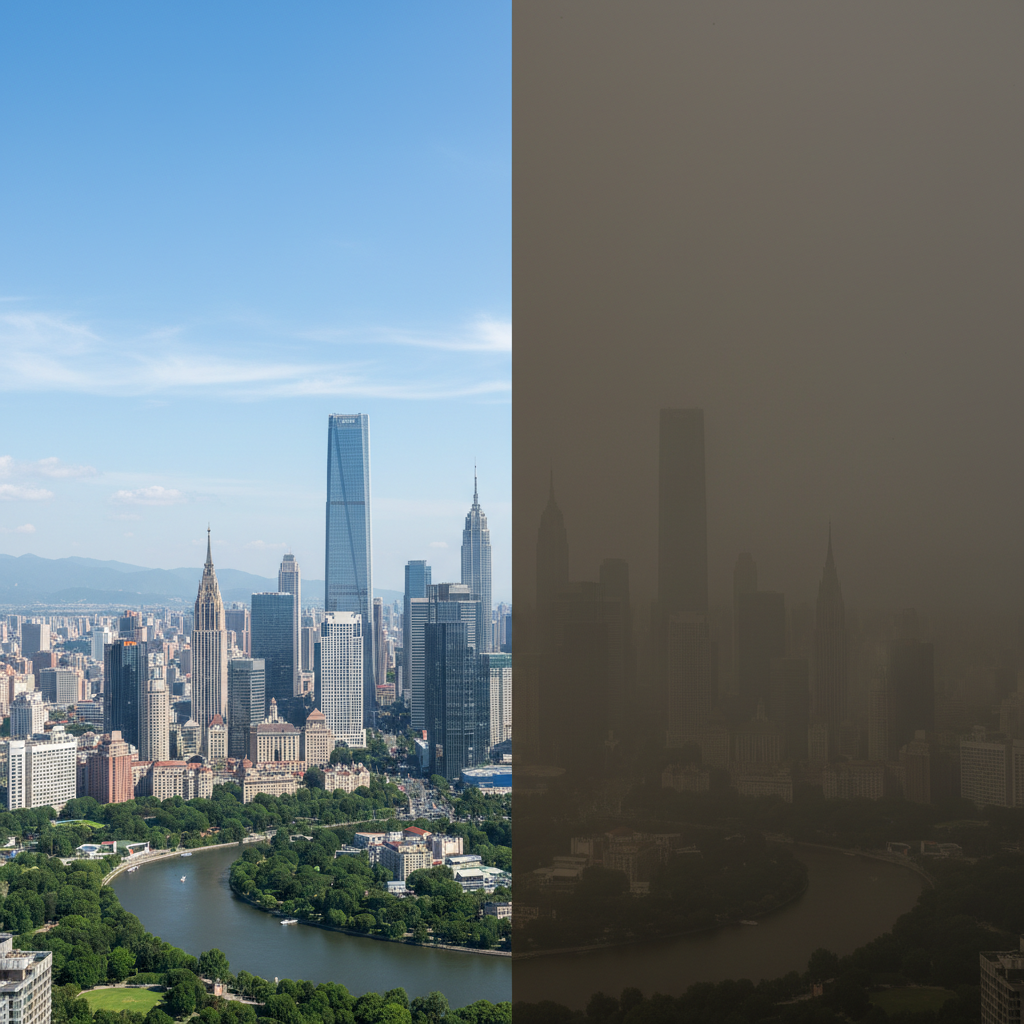 ⚠️ This picture may have spelling mistakes. Trust the words in the lesson.
Where Do These Air Pollutants Come From?
Air pollutants don't just appear out of nowhere. They come from different places, often from things we do every day:
-
Cars, Buses, and Trucks: Our Traveling Friends
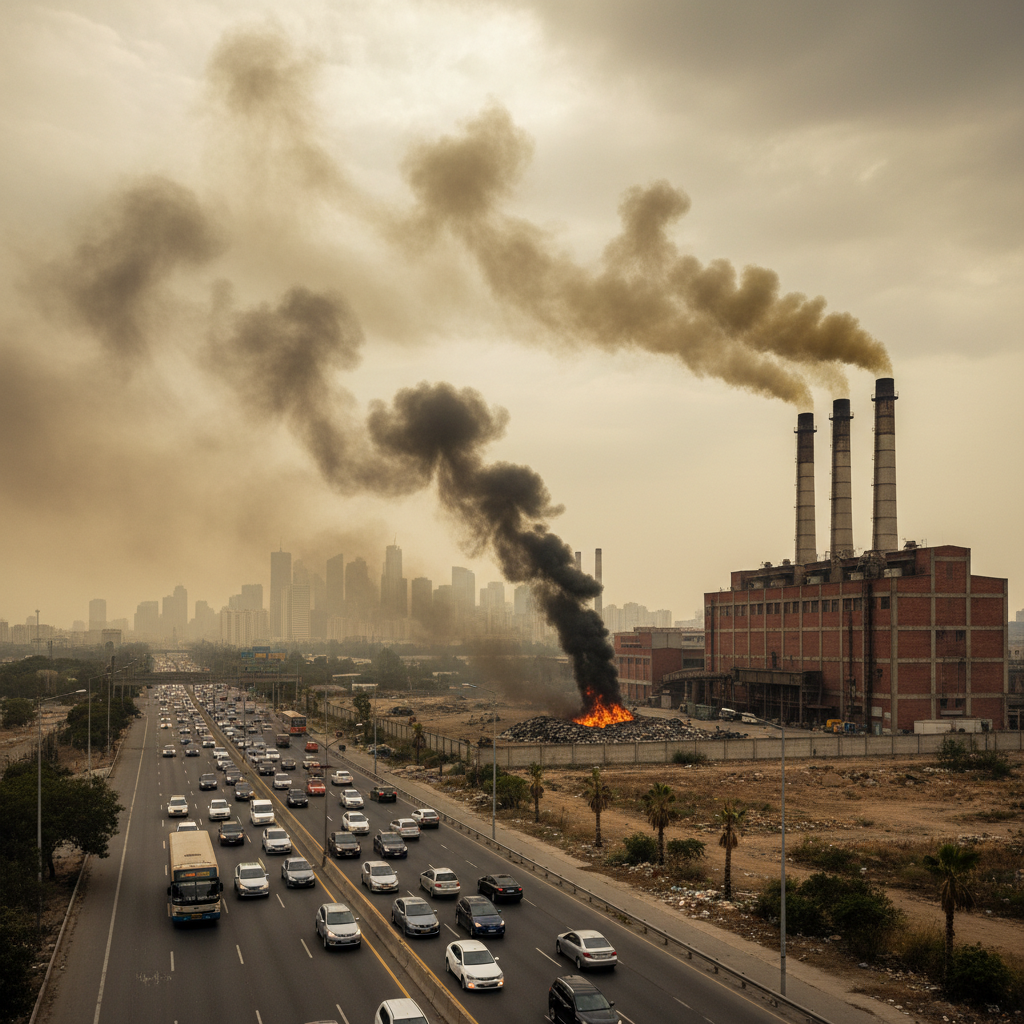
When cars, buses, and trucks drive around, they burn fuel (like gasoline). This burning process lets out smoke and tiny particles from their exhaust pipes, which is like the car taking a 'dirty breath' and blowing it into the air. Imagine someone blowing smoky bubbles into your face – not very nice!
-
Factories and Power Plants: Big Smokestacks
Many factories make things we use every day, and power plants make the electricity for our homes. But sometimes, when they work, they release a lot of smoke and gases from tall chimneys called smokestacks. These can look like big 'smoke monsters' puffing out dark clouds that go up into the sky and mix with our clean air.
-
Burning Things: Fires Big and Small
Whether it's a small campfire, burning leaves, or even big forest fires, burning wood and other materials creates smoke and ash. This smoke is full of tiny particles and gases that become air pollution.
-
Dust and Dirt: The Wind's Helpers
Sometimes, even natural things can cause air pollution! When the wind blows strongly over dry, dusty fields or construction sites, it can pick up lots of tiny dirt particles and carry them through the air, making it dusty and hard to see or breathe clearly.
How Does Air Pollution Affect Us and Our World?
When our air gets dirty, it's not just a little inconvenience; it can cause real problems:
-
For People: Making Us Sick
Breathing dirty air can make it harder for us to breathe, especially for kids and people with asthma. It can make us cough, give us sore throats, and even make us sick with colds or other breathing problems. Imagine trying to run a race while someone holds a pillow over your nose – that's a bit like how it feels when you breathe very polluted air.
-
For Animals: A Problem for All Creatures
Just like us, animals need clean air too! Air pollution can make them sick, damage their lungs, and even make it harder for them to find food or survive in their homes.
-
For Plants and Trees: Making Nature Unhealthy
Trees and plants breathe air, just like us, though they take in carbon dioxide and give out oxygen. When the air is polluted, it can damage their leaves, make them grow slowly, and even kill them. Imagine trying to grow a beautiful flower in soil that's full of junk – it wouldn't grow very well, would it?
-
For Our Planet: Harming the Environment
Some air pollution can even make our whole planet warmer, which affects weather patterns and animals' homes all over the world. It can also cause 'acid rain,' which hurts trees, lakes, and even buildings.
What Can We Do to Help Keep Our Air Clean?
The good news is that we can all do things to help keep our invisible blanket of air clean!
- Walk or Ride Your Bike: Instead of asking for a car ride for short distances, try walking or riding your bike. Less cars mean less 'dirty breaths' going into the air!
- Use Less Electricity: Turning off lights and electronics when you're not using them helps, because power plants create pollution when they make electricity.
- Plant Trees: Trees are like nature's air cleaners! They help to take bad stuff out of the air and put good, clean oxygen back in.
- Tell Others: Share what you've learned about air pollution with your family and friends. The more people who know, the more people can help!
Remember, clean air is a treasure, and by working together, we can all make a difference in keeping our planet's air healthy for everyone!
Keep learning, free
Create a free Syllabax account to unlock practice questions and games for this topic.
Visual Learning Enhanced! 🚀
To help you master this topic, we use Advanced Syllabax AI to generate detailed diagrams and visual models.
Note on Visuals: The AI sometimes makes spelling errors in image labels. Please refer to the lesson text for the correct terminology.