Learning Journey
Watch this topic in 60 seconds
Free preview · Lesson 1
Tenses (Foundational)
Tenses: Understanding Time in Sentences
Hi there, young linguists! Today, we're going to explore something called 'Tenses.' Don't worry, it's not as scary as it sounds! Tenses simply tell us when something happened. Think of them as time machines for your sentences!
What are Tenses?
A tense is a form of a verb that shows us when an action took place. Was it in the past? Is it happening now? Or will it happen in the future? Tenses help us understand the timing.
The Three Main Tenses:
- Past Tense: This tells us about things that already happened. Think of it as a story from yesterday.
- Present Tense: This tells us about things that are happening now, or things that are generally true. Think of it as what's happening today!
- Future Tense: This tells us about things that will happen later. Think of it as planning for tomorrow.
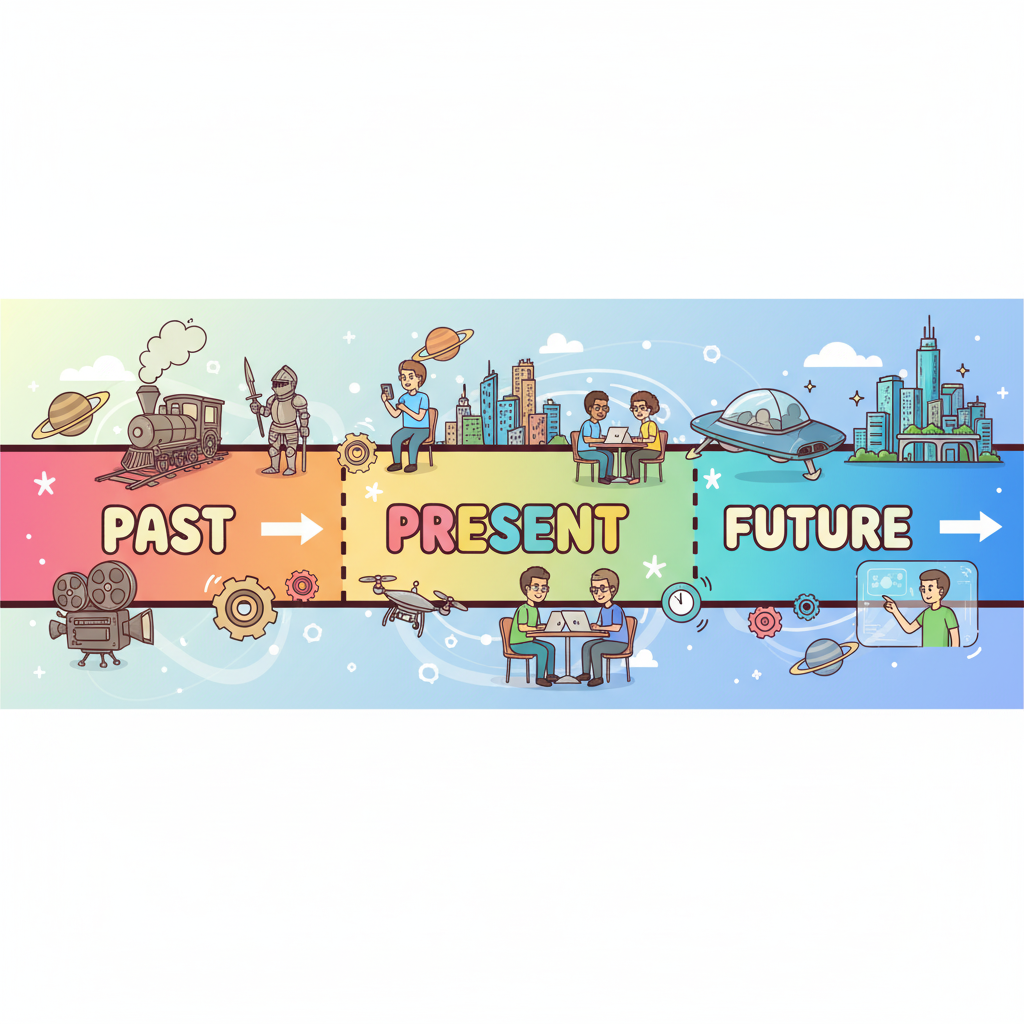 Examples:
- Past Tense: I walked to school yesterday. (It already happened.)
- Present Tense: I walk to school every day. (It's happening now, or generally true.)
- Future Tense: I will walk to school tomorrow. (It will happen later.)
Let's Break It Down:
- Past Tense: Usually ends in '-ed' or has a different form (like 'went' instead of 'go').
- Present Tense: Usually the base form of the verb (like 'walk', 'eat', 'sleep').
- Future Tense: Usually includes the word 'will' before the verb.
Why are Tenses Important?
Tenses are super important because they help us understand the order of events! Without them, it would be hard to tell when things happened.
Keep learning, free
Create a free Syllabax account to unlock practice questions and games for this topic.
Visual Learning Enhanced! 🚀
To help you master this topic, we use Advanced Syllabax AI to generate detailed diagrams and visual models.
Note on Visuals: The AI sometimes makes spelling errors in image labels. Please refer to the lesson text for the correct terminology.