Subtraction using objects (Subtraction )
Watch this topic in 60 seconds
Free preview · Lesson 1
Understanding Subtraction using objects (Subtraction )
Understanding Subtraction with Objects: Taking Away is Fun!
Hello super learners! Today, we're going on an exciting adventure to learn about something called subtraction. Imagine you have a basket full of yummy cookies, and you decide to share some with your friends. When you give away some cookies, you have fewer cookies left, right? That's exactly what subtraction is all about! It's like taking things away.
What is Subtraction?
Subtraction is a way to find out how many are left after we take some away from a group. Think of it like magic! You start with a certain number of things, and then poof! Some disappear, and you need to count how many are still there.
Let's Use Our Fingers!
Your fingers are amazing tools for learning subtraction! Let's try it. Hold up 5 fingers on one hand. Now, pretend you have 5 colorful balloons. Yay! You have 5 balloons!
Suddenly, one balloon floats away! Oh no! So, you need to take away 1 finger. How many fingers are you holding up now? Let's count: 1, 2, 3, 4. You have 4 fingers up. That means you have 4 balloons left!
We write this down like this: 5 - 1 = 4. The little 'minus' sign (-) tells us we are taking away.
Objects to the Rescue!
We can use all sorts of objects to help us understand subtraction. Think about toys, fruits, or even your favorite snacks!
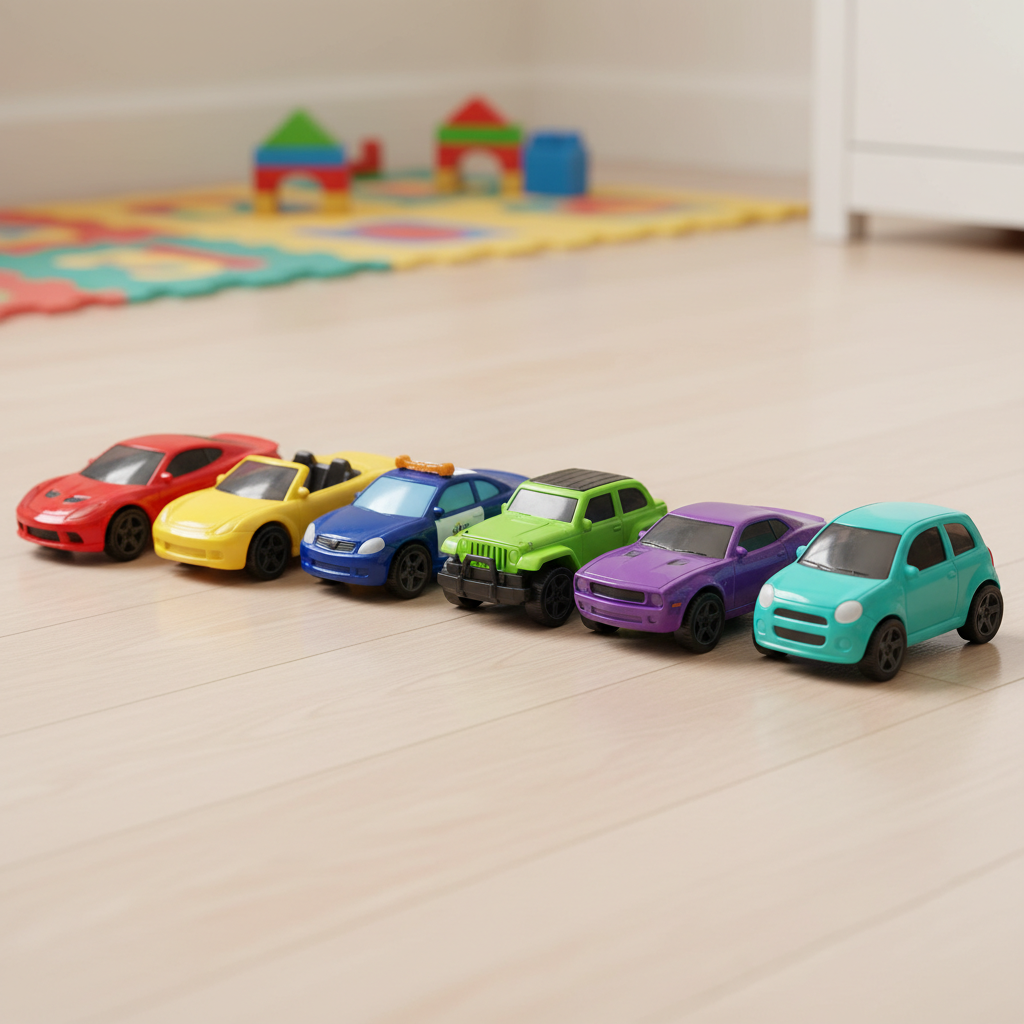
Let's imagine you have 6 toy cars. They are all lined up and ready to race!
 ⚠️ This picture may have spelling mistakes. Trust the words in the lesson.
Now, imagine 2 of your toy cars get a flat tire and can't race anymore. So, we need to take away 2 cars from our group.
If we take away 2 cars, how many cars are still ready to race? Let's count the ones that are left:
One, two, three, four. We have 4 cars left!
We can write this as: 6 - 2 = 4.
More Fun with Objects!
Let's try another one. Imagine you have 7 delicious apples in a bowl. Yum!
Your mom takes 3 apples to bake a pie. How many apples are left in the bowl for you to eat?
Start with your 7 apples. Now, imagine we take away 3 of them. We can cross them out or cover them up!
Original apples: 🍎🍎🍎🍎🍎🍎🍎
Mom takes 3: 🍎🍎🍎🍎🍎🍎🍎
How many are left? Let's count the ones that are not crossed out: 1, 2, 3, 4. There are 4 apples left!
So, 7 - 3 = 4.
The Minus Sign (-)
Remember that little line, the minus sign (-)? It's a special symbol that means 'take away' or 'subtract'. When you see it, you know you need to find out how many are left.
The Equals Sign (=)
And what about that symbol that looks like two short lines stacked on top of each other? That's the equals sign (=). It tells us what the answer is. So, when we write 7 - 3 = 4, it means '7 take away 3 equals 4'.
Let's Practice with Pictures!
Look at this picture:
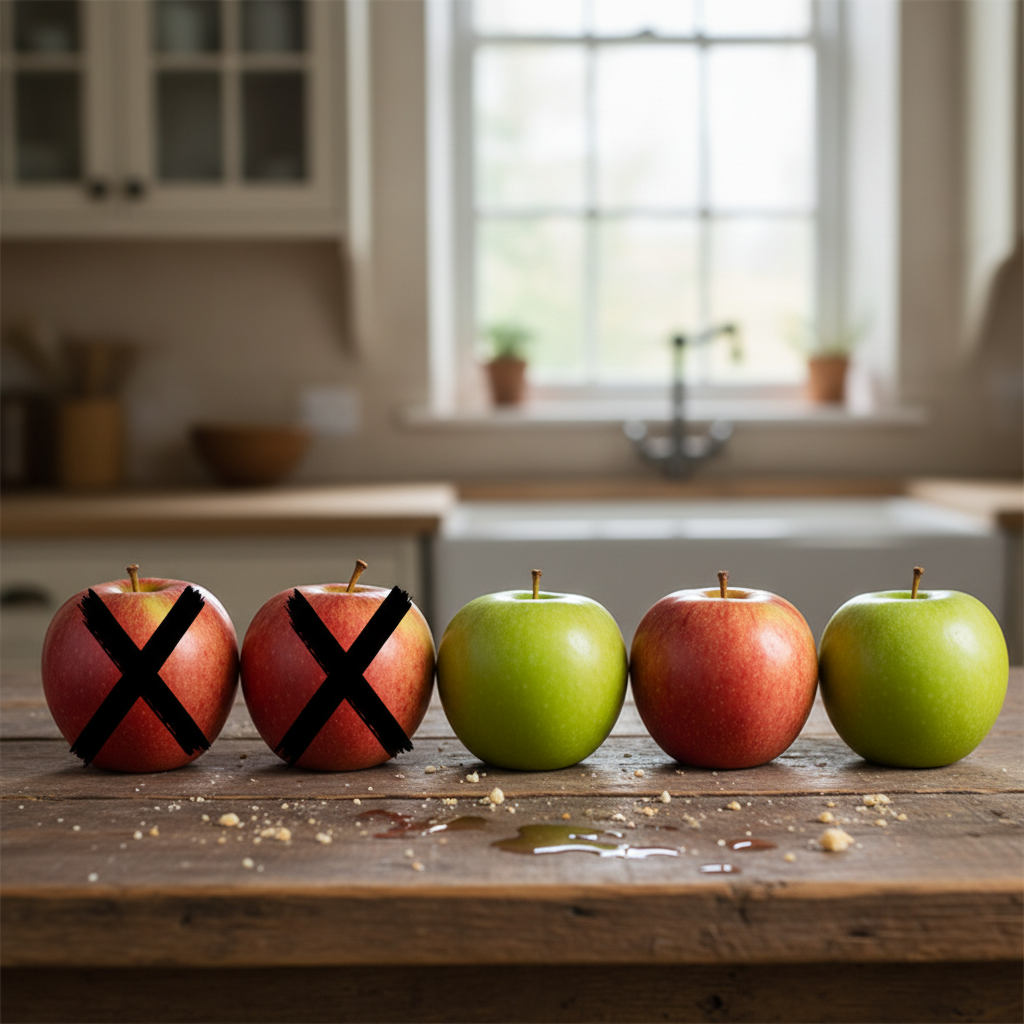
We start with 5 apples. We can see that 2 apples have been crossed out. That means we have taken away 2 apples. How many apples are left? Let's count them: 1, 2, 3. There are 3 apples left!
So, 5 - 2 = 3.
Why is Subtraction Important?
Subtraction is super useful! It helps us know how many candies we have left after sharing, how many toys are in the box after playing, or how many crayons we still have if we give some to a friend. It helps us count what remains.
Key Ideas to Remember:
- Subtraction means taking away.
- We use objects or our fingers to help us subtract.
- The minus sign (-) means 'take away'.
- The equals sign (=) tells us the answer.
- Subtraction helps us find out how many are left.
Keep practicing, and you'll become a subtraction star in no time!
Keep learning, free
Create a free Syllabax account to unlock practice questions and games for this topic.
Visual Learning Enhanced! 🚀
To help you master this topic, we use Advanced Syllabax AI to generate detailed diagrams and visual models.
Note on Visuals: The AI sometimes makes spelling errors in image labels. Please refer to the lesson text for the correct terminology.