Shape patterns (Patterns in Geometry)
Watch this topic in 60 seconds
Free preview · Lesson 1
Understanding Shape patterns (Patterns in Geometry)
Discovering Shape Patterns: A Geometry Adventure!
Welcome, young mathematicians, to an exciting journey into the world of geometry! Today, we're going to become pattern detectives and uncover the secrets hidden within shapes. Patterns are everywhere around us – in the stripes on a shirt, the arrangement of tiles on a floor, and even the way a spider spins its web. In geometry, patterns are special arrangements of shapes that repeat in a predictable way. Think of it like a secret code made of shapes!
What is a Pattern?
A pattern is something that repeats over and over again. Imagine clapping your hands twice, then stomping your feet once. If you keep doing this: clap, clap, stomp, clap, clap, stomp... you've created a pattern! In math, especially with shapes, patterns help us understand and predict what comes next. They are like a sequence or a series that follows a rule.
Shapes, Shapes Everywhere!
Before we dive into patterns, let's remember some basic shapes. We have:
- Circle: A round shape with no corners. Think of a pizza or a wheel!
- Square: A shape with four equal sides and four sharp corners (called right angles). Imagine a cracker or a window pane.
- Triangle: A shape with three sides and three corners. Think of a slice of pizza or a traffic sign for 'yield'.
- Rectangle: A shape with four sides and four corners, like a square, but two sides are longer than the other two. A door or a book is a rectangle.
These shapes can be combined and arranged to make amazing patterns!
Simple Shape Patterns: The Building Blocks
The simplest shape patterns use just two different shapes. Let's look at some examples:
Alternating Shapes
This is like a see-saw, going back and forth between two things. In this pattern, we switch between two shapes. For instance:
Circle, Square, Circle, Square, Circle, Square...
What shape do you think comes next? If you guessed Circle, you're right! The rule is simply: alternate between a circle and a square.
Another example:
Triangle, Rectangle, Triangle, Rectangle, Triangle, Rectangle...
What's the next shape? Yes, it's a Triangle!
Repeating Groups of Shapes
Sometimes, a pattern doesn't just switch between two things. It might repeat a small group of shapes. Think of a song that has a chorus that repeats after each verse. The pattern repeats a 'block' of shapes.
Let's try this one:
Square, Square, Circle, Square, Square, Circle, Square, Square, Circle...
What is the repeating group here? It's 'Square, Square, Circle'. This group of three shapes is repeated to make the pattern. So, if we had 'Square, Square, Circle, Square, Square, Circle, Square, Square, Circle', what comes next? It would be a Square, starting the group again!
Here's another example with a different group:
Triangle, Circle, Square, Triangle, Circle, Square, Triangle, Circle, Square...
The repeating group is 'Triangle, Circle, Square'.
More Complex Patterns: Adding More Shapes or Steps
As we get better at spotting patterns, we can look at more complicated ones. These might have more shapes in the repeating group, or the shapes might change in size or color (though we'll focus on the shape itself today!).
Patterns with Three or More Shapes in a Group
Imagine you are lining up your toys in a special order: a teddy bear, then a car, then a doll. If you keep repeating that order: teddy bear, car, doll, teddy bear, car, doll... you have a pattern! With shapes, it works the same way.
Example:
Circle, Triangle, Square, Rectangle, Circle, Triangle, Square, Rectangle...
What is the repeating group? It's 'Circle, Triangle, Square, Rectangle'. This pattern uses four different shapes in its repeating block.
Patterns with Changes in Size
Sometimes, a shape pattern might involve shapes getting bigger or smaller. Think of Russian nesting dolls, where each doll is smaller than the one before it.
Example:
Small Square, Big Square, Small Square, Big Square...
This pattern alternates between a small square and a big square. The next shape would be a Small Square.
Another example:
Small Triangle, Medium Triangle, Big Triangle, Small Triangle, Medium Triangle, Big Triangle...
The repeating group here is 'Small Triangle, Medium Triangle, Big Triangle'.
Why are Shape Patterns Important?
Spotting patterns is a super important skill! It helps us:
- Predict the Future: Like knowing that after the third clap and stomp, the fourth clap will be the start of a new sequence.
- Solve Problems: Many math problems, especially in algebra, involve finding patterns.
- Understand the World: Patterns are all around us in nature, art, and music. Recognizing them helps us make sense of things.
- Build and Create: Artists and builders use patterns to create beautiful designs and strong structures.
Let's Visualize!
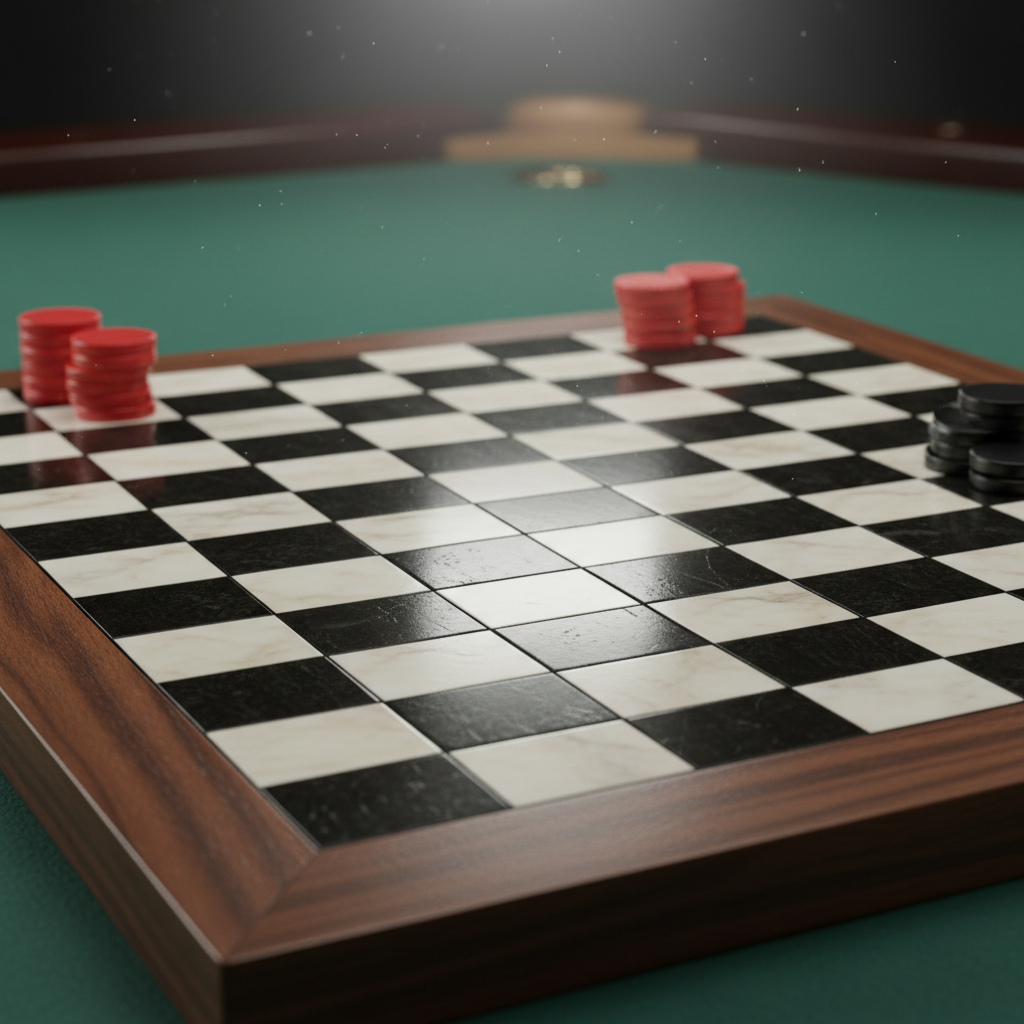
Imagine a checkerboard. It has a pattern of alternating black and white squares. This is a simple, yet beautiful, geometric pattern that makes the board easy to recognize.
 ⚠️ This picture may have spelling mistakes. Trust the words in the lesson.
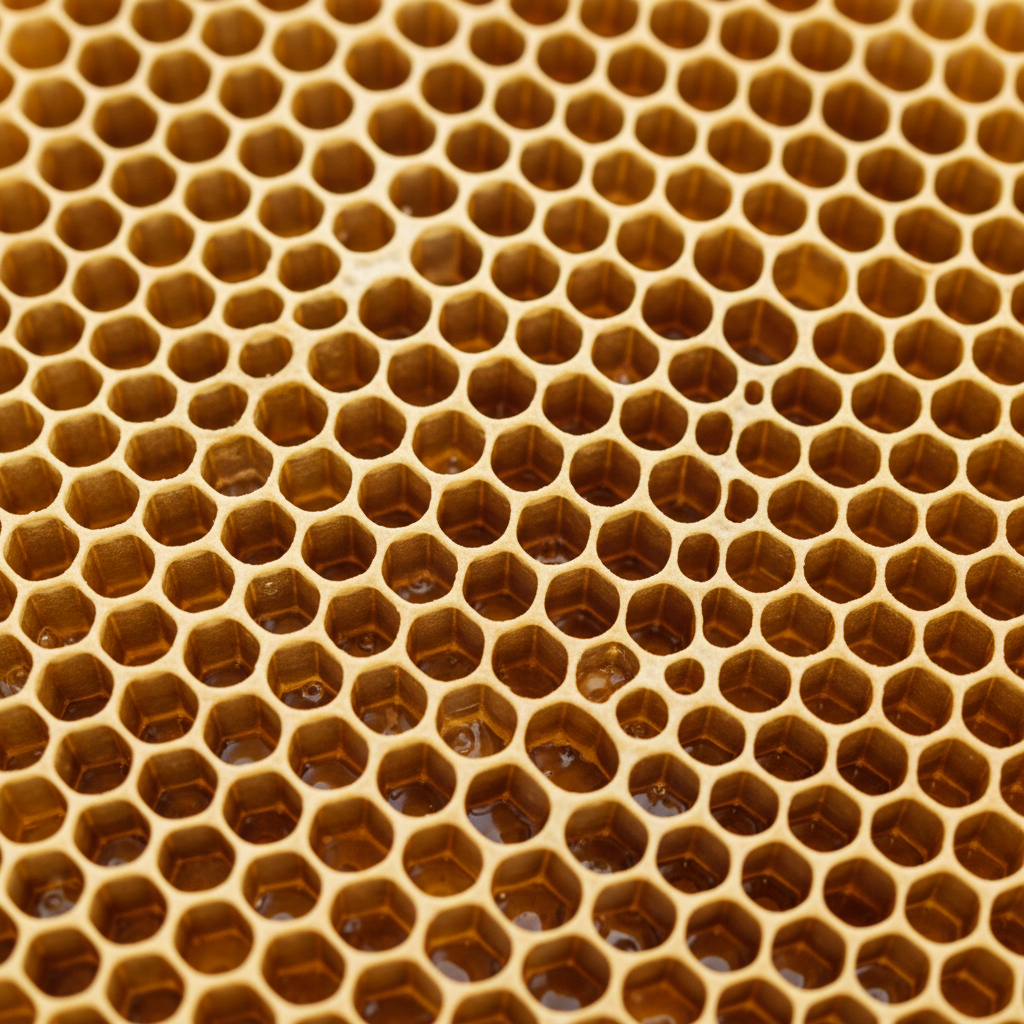
Now, think about a honeycomb. Bees build hexagonal (six-sided) cells that fit together perfectly. This is a very efficient pattern that uses space well!
 ⚠️ This picture may have spelling mistakes. Trust the words in the lesson.
Your Turn to Be a Pattern Detective!
Now that you know the basics, get ready to use your detective skills to find patterns in shapes. Look closely, think about what repeats, and you'll become a shape pattern master in no time!
Keep learning, free
Create a free Syllabax account to unlock practice questions and games for this topic.
Visual Learning Enhanced! 🚀
To help you master this topic, we use Advanced Syllabax AI to generate detailed diagrams and visual models.
Note on Visuals: The AI sometimes makes spelling errors in image labels. Please refer to the lesson text for the correct terminology.