Natural Resources & Global Distribution -World Geography
Watch this topic in 60 seconds
Free preview · Lesson 1
Natural Resources & Global Distribution -World Geography (Foundational)
Natural Resources & Global Distribution: Foundational Concepts
Welcome to the world of natural resources! In this lesson, we'll learn about what they are, where they come from, and why their distribution matters.
What are Natural Resources?
Natural resources are materials or substances that occur in nature and can be used for economic gain. They are essential for human survival and development. Think of them as gifts from the Earth!
- Examples: Water, air, sunlight, minerals, forests, oil, and natural gas.
- Uses: Food, energy, building materials, manufacturing, and transportation.
Types of Natural Resources
Natural resources can be categorized in several ways. A simple way is to classify them as renewable or non-renewable.
Renewable Resources
These resources can be replenished naturally over time. This means they won't run out if managed properly.
- Examples: Solar energy, wind energy, water (although clean water can be limited), forests (with replanting).
- Key characteristic: Can be replaced or regenerated within a human lifespan.
Non-Renewable Resources
These resources exist in a finite amount and cannot be easily replaced once used. They take millions of years to form.
- Examples: Fossil fuels (coal, oil, natural gas), minerals (iron, copper, gold).
- Key characteristic: Once depleted, they are gone forever (or at least for a very, very long time).
Global Distribution of Natural Resources
Natural resources are not evenly spread across the globe. Some regions have abundant supplies of certain resources, while others have very little. This uneven distribution has significant consequences.
Factors Affecting Distribution
- Geology: The type of rock and soil influences the presence of minerals and fossil fuels.
- Climate: Rainfall patterns affect water availability and forest growth.
- Geography: Mountain ranges, rivers, and coastlines influence the distribution of resources.
Examples:
- The Middle East has large reserves of oil.
- Brazil has vast rainforests.
- Canada has significant mineral deposits.
Why Does Distribution Matter?
The uneven distribution of natural resources leads to:
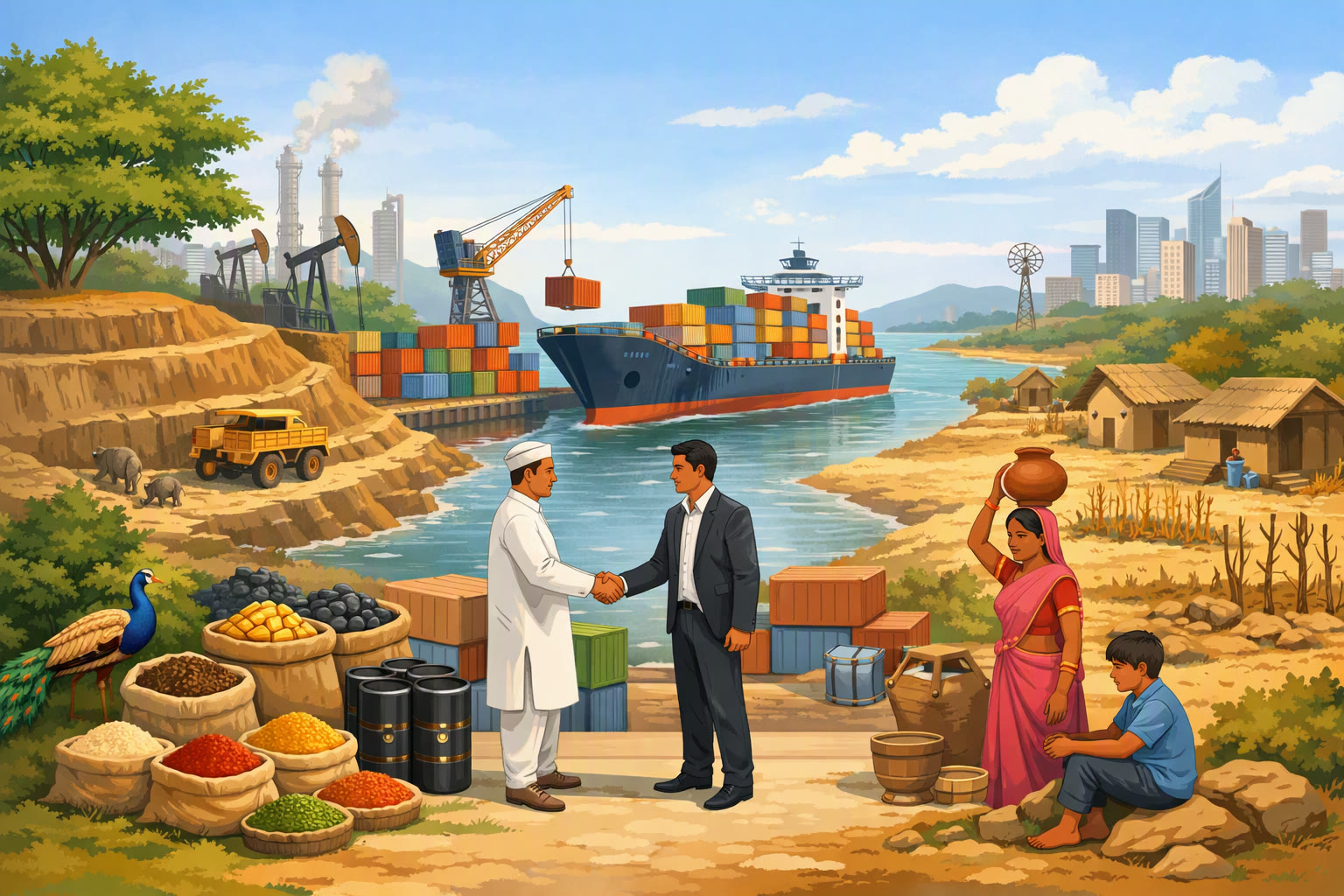
- Trade: Countries with abundant resources trade with countries that need them.
- Economic Disparities: Regions with valuable resources may become wealthy.
- Geopolitical Issues: Competition for resources can lead to conflicts.
Keep learning, free
Create a free Syllabax account to unlock the other 1 lesson, practice questions and games.
Visual Learning Enhanced! 🚀
To help you master this topic, we use Advanced Syllabax AI to generate detailed diagrams and visual models.
Note on Visuals: The AI sometimes makes spelling errors in image labels. Please refer to the lesson text for the correct terminology.