Domestic vs wild animals(Animals)
Watch this topic in 60 seconds
Free preview · Lesson 1
Understanding Domestic vs wild animals(Animals)
Welcome to the Amazing World of Animals!
Hello, young explorers! Today, we're going on an exciting adventure to learn about two big groups of animals: domestic animals and wild animals. It's like sorting your toys into two different boxes – one box for toys you play with at home, and another box for toys you see only at the park or in pictures of faraway places!
What are Domestic Animals?
Imagine you have a best friend who lives with you, eats food you give them, and loves to play with you. That's a bit like a domestic animal! Domestic animals are animals that humans have tamed and raised for a very, very long time. They live with people or close to people, and people help take care of them.
Think about your pet dog or cat. They live in your house, you give them food and water, and you take them to the vet if they're sick. They rely on you, right? These are perfect examples of domestic animals. It's like they're part of our big human family!
Domestic animals are often friendly with people because they've grown up around us. They can even help us! Dogs can guard our homes or help people who can't see very well. Cows give us milk, chickens give us eggs, and sheep give us wool for warm clothes. These animals are like helpers and friends that live with us on farms or in our homes.
They usually don't have to hunt for their own food or find shelter from bad weather because we provide those things for them. Their homes are often barns, coops, or even our very own houses! They've learned to live with humans and usually feel safe around us.
Some common domestic animals you might know are:
- Dogs: Man's best friend!
- Cats: Our furry housemates.
- Cows: Give us milk.
- Horses: Can help us ride or work.
- Chickens: Give us eggs.
- Pigs: Live on farms.
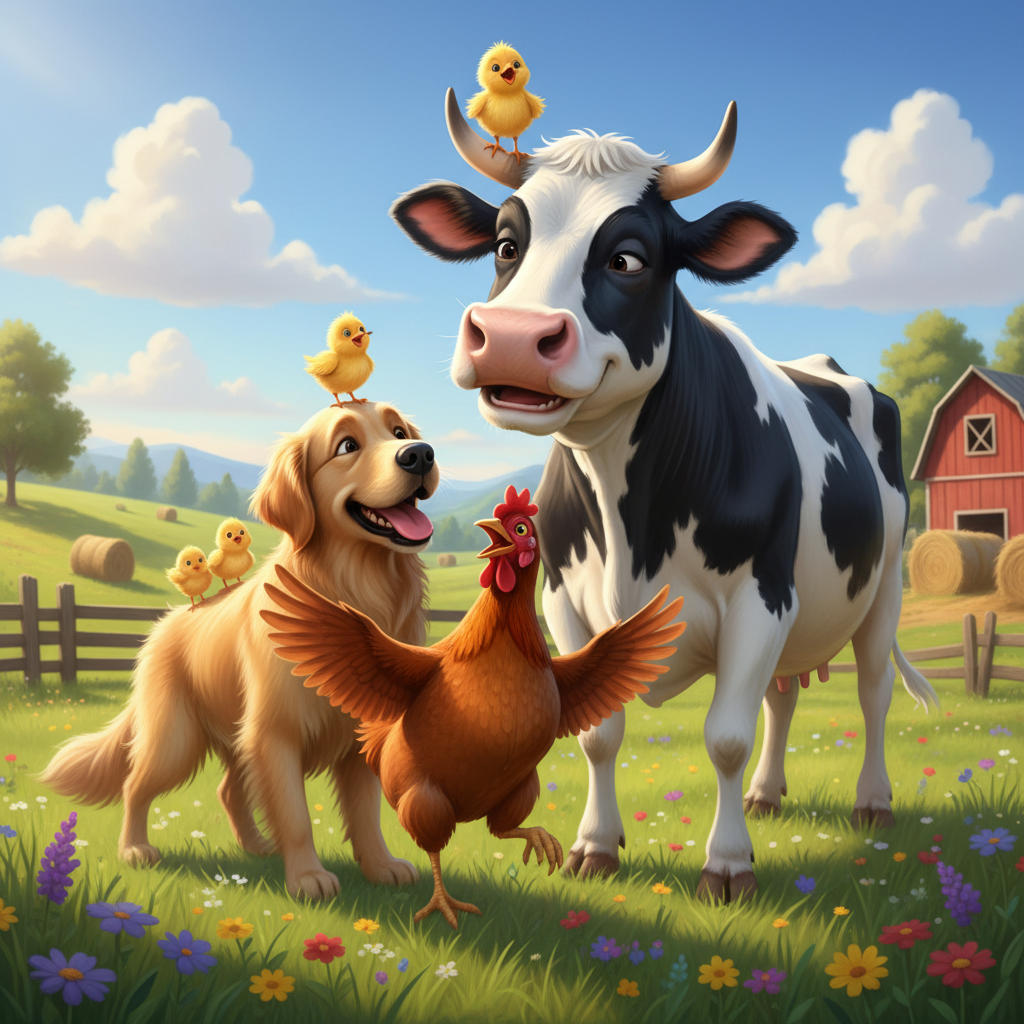 ⚠️ This picture may have spelling mistakes. Trust the words in the lesson.
What are Wild Animals?
Now, let's think about animals that live far away from people, in places like big forests, vast deserts, or deep oceans. These are wild animals! Wild animals live on their own in nature. They find their own food, build their own homes (like a bird building a nest or a bear finding a cave), and protect themselves from danger.
Wild animals are like super independent adventurers! They don't need humans to feed them or give them a place to sleep. They use their natural instincts and amazing skills to survive in the wilderness. If you tried to give food to a wild bear, it might be scared or even dangerous, because it's not used to being around people like a pet dog is.
Their homes are wherever they can find shelter in nature – maybe a tree for a monkey, a river for a fish, or a burrow in the ground for a rabbit. They eat what they find in their natural habitat, like leaves, fruits, other small animals, or insects. They are very good at taking care of themselves!
It's important to remember that wild animals usually don't want to be near humans. They might feel scared if we come too close, and sometimes they can be dangerous if they feel threatened. That's why we observe wild animals from a distance, like when you watch a squirrel scamper up a tree in the park, or when you see pictures of lions in a jungle book.
Some common wild animals you might know are:
- Lions: Live in the savannas.
- Elephants: Big animals from Africa or Asia.
- Monkeys: Live in trees.
- Deer: Found in forests.
- Sharks: Live in the ocean.
- Owls: Hunt at night.
The Big Differences: Domestic vs. Wild
Let's put on our detective hats and compare them!
- Who Takes Care of Them?
Domestic animals: Humans take care of them. Like your parents taking care of you!
Wild animals: They take care of themselves. Like a superhero finding their own way! - Where Do They Live?
Domestic animals: With humans, on farms, or in our homes. Their home is often built by people.
Wild animals: In nature – forests, oceans, deserts, mountains. Their home is naturally made. - How Do They Get Food?
Domestic animals: Humans feed them. We give them pet food or farm feed.
Wild animals: They find their own food by hunting, foraging, or grazing. - Are They Friendly with Humans?
Domestic animals: Usually friendly and used to being around people.
Wild animals: Usually scared of humans and prefer to stay away, or might be dangerous if approached. - What About Their Safety?
Domestic animals: Humans protect them from danger and provide shelter.
Wild animals: They must protect themselves from predators and find their own safe places.
Why Is This Important?
Knowing the difference helps us understand how to treat animals. We care for domestic animals because they rely on us. We respect wild animals by giving them space and protecting their natural homes, so they can continue to be amazing adventurers in the wild!
So, next time you see an animal, think: Is it a domestic friend who lives with people, or a wild explorer living free in nature? Great job learning today, animal explorers!
Keep learning, free
Create a free Syllabax account to unlock practice questions and games for this topic.
Visual Learning Enhanced! 🚀
To help you master this topic, we use Advanced Syllabax AI to generate detailed diagrams and visual models.
Note on Visuals: The AI sometimes makes spelling errors in image labels. Please refer to the lesson text for the correct terminology.