Ascending & descending order (Number Sense )
Watch this topic in 60 seconds
Free preview · Lesson 1
Understanding Ascending & descending order (Number Sense )
Learning Resource: Ascending and Descending Order
Welcome, Young Learners!
Hello, super mathematicians! Today, we're going on an exciting adventure to learn about putting numbers in order. Think of it like lining up your favorite toys or arranging your colorful building blocks. We're going to learn about two important ways to arrange numbers: ascending order and descending order. Don't worry, it's going to be fun!
What is Number Sense?
Before we dive into ordering, let's quickly talk about number sense. Number sense is like having a 'feeling' for numbers. It means understanding what numbers mean, how they relate to each other, and being able to work with them easily. When we learn about ascending and descending order, we are building a super strong number sense!
Ascending Order: Going Up!
Let's imagine you are climbing a ladder. You start at the bottom rung and move up, rung by rung. That's exactly what ascending order is like for numbers! It means arranging numbers from the smallest to the biggest. Think of the word 'ascend' – it sounds like 'a scent' going up, or like a rocket 'ascending' into space!
Here’s a simple way to remember:
- Smallest to Biggest
- Like climbing stairs UP
- The numbers get LARGER
Let's look at an example. Imagine these numbers:
3, 1, 5, 2, 4
To put them in ascending order, we need to find the smallest number first. Which one is the smallest? It's 1!
Then, we look for the next smallest number. That's 2.
Next comes 3.
Then 4.
And finally, the biggest number, which is 5.
So, in ascending order, the numbers look like this:
1, 2, 3, 4, 5
See? We started with the smallest and went all the way up to the biggest. It's like a happy little number parade, marching from small to large!
Descending Order: Coming Down!
Now, imagine you've climbed to the top of the ladder. What do you do next? You come down, rung by rung! That's descending order for numbers. It means arranging numbers from the biggest to the smallest. Think of the word 'descend' – it sounds like 'descending' from a plane or a slide going DOWN!
Here’s a simple way to remember:
- Biggest to Smallest
- Like sliding DOWN a slide
- The numbers get SMALLER
Let's use the same numbers we had before, but this time we'll put them in descending order:
3, 1, 5, 2, 4
To put them in descending order, we need to find the biggest number first. Which one is the biggest? It's 5!
Then, we look for the next biggest number. That's 4.
Next comes 3.
Then 2.
And finally, the smallest number, which is 1.
So, in descending order, the numbers look like this:
5, 4, 3, 2, 1
See? We started with the biggest number and came all the way down to the smallest. It's like a number rollercoaster, going from high to low!
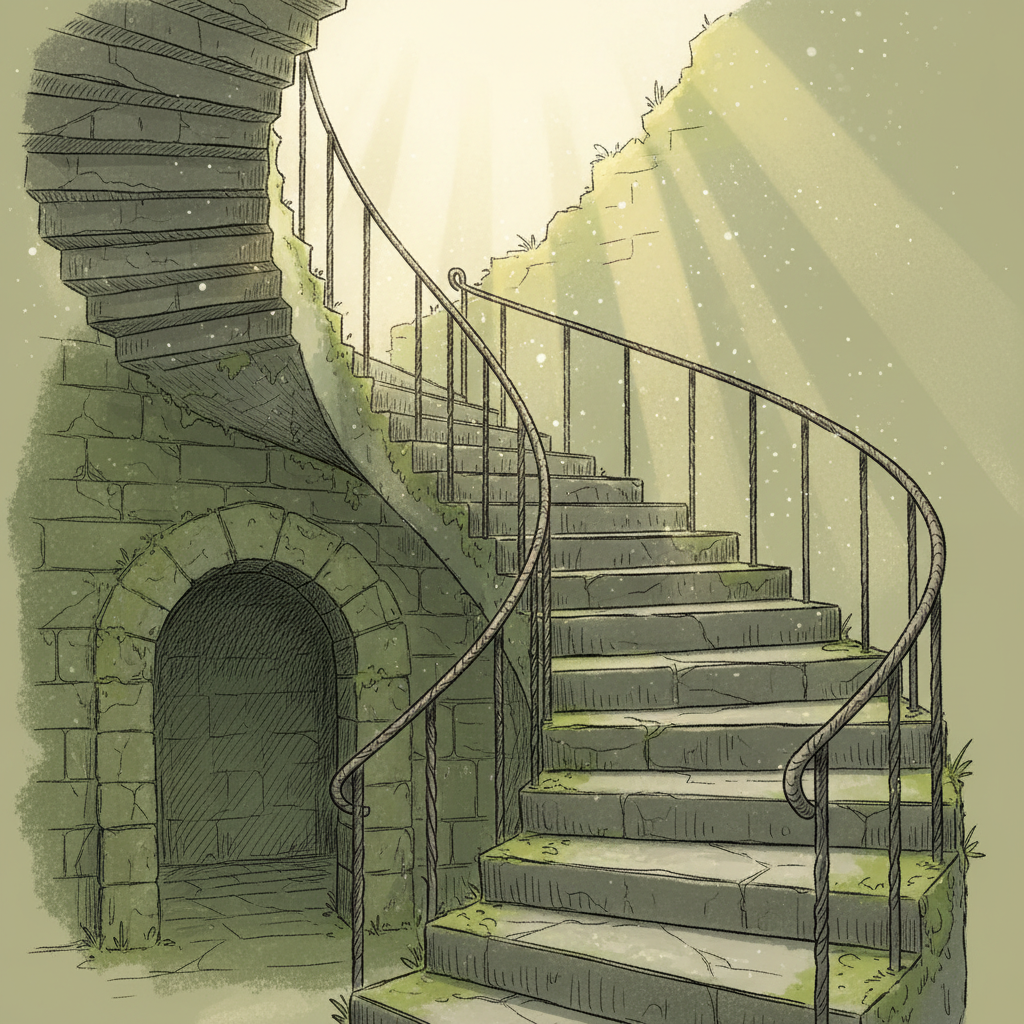
Putting it all together!
Let's try another set of numbers: 7, 10, 6, 8, 9
Ascending Order (Smallest to Biggest):
We look for the smallest number. Which is smaller, 7 or 10? 7 is smaller. Let's keep going. Is 6 smaller than 7? Yes! So, 6 is the smallest.
Next smallest after 6? It's 7.
Then comes 8.
Then 9.
And the biggest is 10.
So, in ascending order: 6, 7, 8, 9, 10
Descending Order (Biggest to Smallest):
Now let's start with the biggest. Which is the biggest? 10!
Next biggest is 9.
Then 8.
Then 7.
And the smallest is 6.
So, in descending order: 10, 9, 8, 7, 6
More Analogies to Help You Remember!
Ascending Order:
- A baby growing into a tall adult.
- A seed growing into a big plant.
- Collecting more and more stickers.
- Building a tower block by block, from the bottom up.
Descending Order:
- A grown-up shrinking back into a baby (like in a cartoon!).
- A big tree losing its leaves and becoming smaller.
- Eating all your yummy cookies until there are none left.
- Taking blocks away from a tower, from the top down.
 ⚠️ This picture may have spelling mistakes. Trust the words in the lesson.
Why is this important?
Learning to put numbers in order helps our brains organize information. It’s like tidying up your toys so you can find what you need. It helps us understand how numbers compare to each other (which is bigger, which is smaller). This skill is super helpful in lots of things, like counting money, measuring things, or even playing games!
Let's Practice!
Now it's your turn to be number wizards! Try putting these numbers in order.
Keep learning, free
Create a free Syllabax account to unlock practice questions and games for this topic.
Visual Learning Enhanced! 🚀
To help you master this topic, we use Advanced Syllabax AI to generate detailed diagrams and visual models.
Note on Visuals: The AI sometimes makes spelling errors in image labels. Please refer to the lesson text for the correct terminology.