Medieval India: Kingdoms, Culture & Society – Indian History (Foundation + Higher Classes Prep)
Watch this topic in 60 seconds
Free preview · Lesson 1
Medieval India: Kingdoms, Culture & Society – Indian History (Foundation + Higher Classes Prep) (Foundational)
Medieval India: Kingdoms, Culture & Society
Welcome to the study of Medieval India! This period, roughly from the 8th to the 18th centuries, is a crucial part of Indian history. It witnessed the rise and fall of many kingdoms, the development of unique cultures, and significant changes in society.
What is Medieval India?
Medieval India refers to the period in Indian history between ancient and modern times. While there's no universally agreed-upon starting and ending date, it's generally considered to span from the decline of the Gupta Empire (around the 6th century) to the beginning of British rule in the 18th century. This lesson will focus on the core period, exploring major kingdoms, cultural advancements, and societal structures.
Major Kingdoms
Several powerful kingdoms dominated Medieval India. Understanding these kingdoms is key to understanding the period. Here are a few prominent examples:
- The Rajputs: A collection of warrior clans who controlled much of northern India. They were known for their bravery and chivalry.
- The Delhi Sultanate: Established in the 13th century, this was a Muslim empire that ruled over a large part of India. Key dynasties within the Delhi Sultanate included the Mamluk, Khilji, Tughlaq, Sayyid, and Lodi dynasties.
- The Mughal Empire: Founded in the 16th century by Babur, the Mughal Empire eventually controlled almost the entire Indian subcontinent. They were renowned for their art, architecture, and administration.
Culture and Society
Medieval India was a melting pot of different cultures. Interactions between Hindu, Muslim, and other communities led to the development of new art forms, architectural styles, and philosophical ideas. Here are some key aspects of the culture and society of Medieval India:
- Art and Architecture: The period saw the construction of magnificent temples, mosques, and forts. Examples include the Taj Mahal (Mughal), the Qutub Minar (Delhi Sultanate), and various Rajput forts.
- Religion and Philosophy: Hinduism and Islam were the major religions. The Bhakti and Sufi movements emerged, emphasizing devotion and love.
- Literature and Language: Persian and Sanskrit were important languages. Many literary works were produced in these languages, as well as in regional languages like Hindi and Tamil.
- Social Structure: Society was hierarchical, with a clear division between the ruling class, the priestly class, merchants, and peasants. The caste system was prevalent in Hindu society.
Key Rulers
Many rulers shaped Medieval India. Here are a few notable figures:
- Muhammad Ghori: A ruler from present-day Afghanistan who invaded India and laid the foundation for the Delhi Sultanate.
- Alauddin Khilji: A powerful ruler of the Delhi Sultanate known for his military campaigns and administrative reforms.
- Babur: The founder of the Mughal Empire.
- Akbar: Considered one of the greatest Mughal emperors, known for his religious tolerance and administrative skills.
The Decline
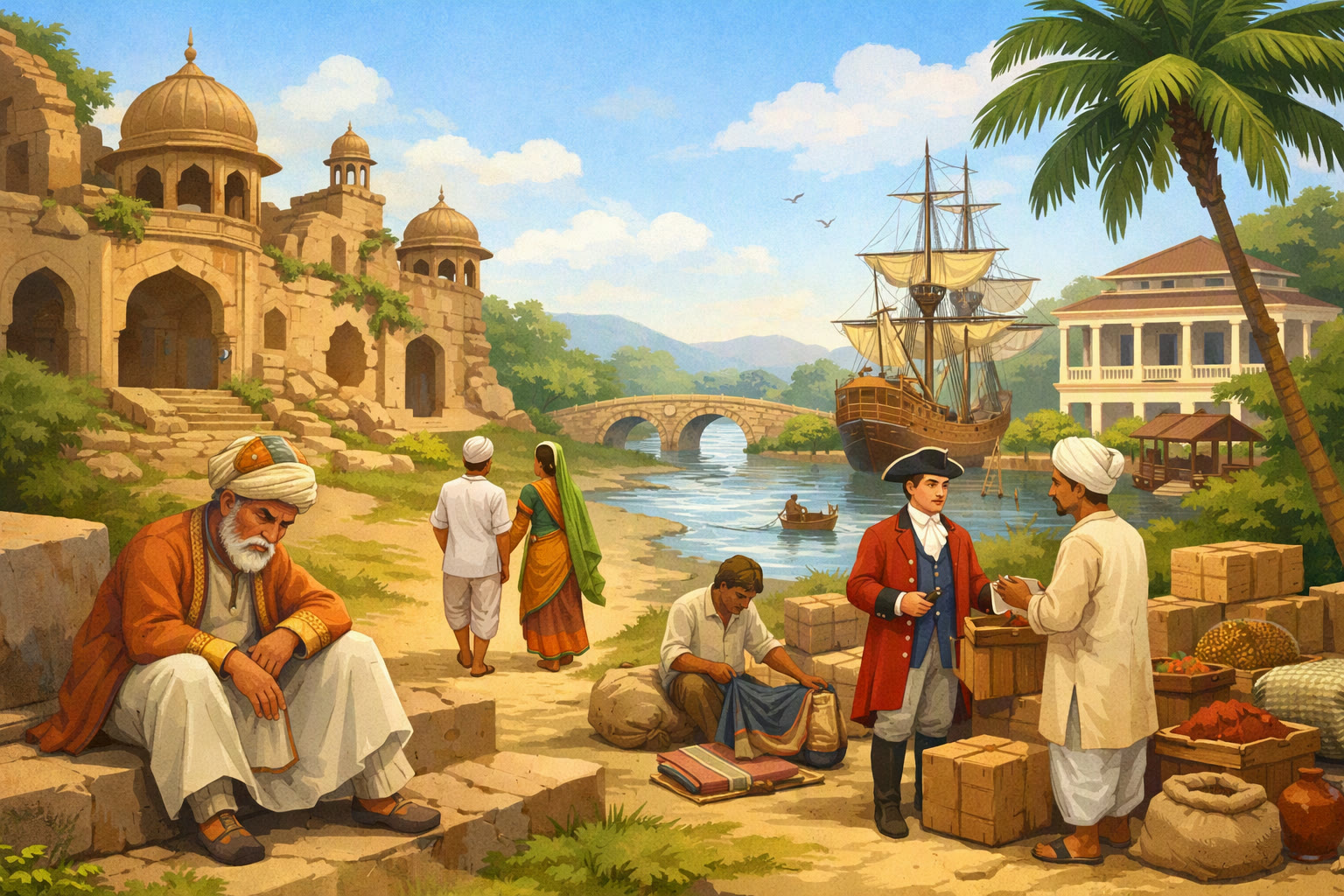
The Medieval period ended with the gradual decline of the Mughal Empire in the 18th century, paving the way for the rise of the British East India Company and the beginning of British colonial rule.
Keep learning, free
Create a free Syllabax account to unlock practice questions and games for this topic.
Visual Learning Enhanced! 🚀
To help you master this topic, we use Advanced Syllabax AI to generate detailed diagrams and visual models.
Note on Visuals: The AI sometimes makes spelling errors in image labels. Please refer to the lesson text for the correct terminology.