Constellations[PHYSICS]
Watch this topic in 60 seconds
Free preview · Lesson 1
Understanding Constellations[PHYSICS]
Journey Through the Stars: An Introduction to Constellations
Have you ever looked up at the night sky and seen patterns in the stars? That's not just your imagination! For thousands of years, humans have looked at the stars and connected them to form pictures. These star pictures are called constellations. Think of them like connect-the-dots, but on a cosmic scale!
What Exactly is a Constellation?
A constellation is a group of stars that appear to form a pattern or picture in the night sky. These patterns are often named after mythological figures, animals, or objects. For example, you might have heard of the Big Dipper. The Big Dipper is actually part of a larger constellation called Ursa Major, which means "Great Bear" in Latin. The stars that make up a constellation are usually very far apart from each other in reality, but they look close together from our perspective on Earth.
Imagine you're standing on a field and you see a few distant trees that line up perfectly. From your viewpoint, they look like a single line. However, if you could walk closer to one of the trees, you'd see that the other trees are actually much further away and not in a straight line at all. Stars in a constellation are similar. They just happen to align from our point of view on Earth.
Why Do We See Constellations?
Constellations are a result of how we perceive the stars. The stars themselves are giant, glowing balls of gas, like our Sun, but they are incredibly far away. Because they are so distant, they appear as tiny points of light in the sky. When we connect these points of light in our minds, we create patterns. These patterns have been used for centuries to tell stories, navigate, and keep track of time.
Famous Constellations to Look For
There are 88 officially recognized constellations by astronomers. Here are a few famous ones you might be able to spot:
1. Ursa Major (The Great Bear) and the Big Dipper
As mentioned, the Big Dipper is a very recognizable pattern of seven bright stars within the larger constellation of Ursa Major. It looks like a ladle or a large spoon. If you find the two stars at the end of the Big Dipper's bowl and draw a line through them upwards, you'll point towards Polaris, the North Star. Polaris is special because it stays in almost the same spot in the sky all night, making it a great guide for navigation.
2. Orion (The Hunter)
Orion is one of the most prominent constellations, visible throughout the world. It's known for Orion's Belt, a line of three bright stars in a row. Orion also has four bright stars that form a rectangle, representing the hunter's body. You can often see the reddish star Betelgeuse (shoulder) and the bluish-white star Rigel (foot).
3. Cassiopeia (The Queen)
Cassiopeia looks like a "W" or an "M" in the sky, depending on its position. It's part of a larger constellation named after a queen in Greek mythology. It's a great constellation to spot because its distinctive shape makes it easy to find.
4. Leo (The Lion)
Leo is another well-known constellation. It often looks like a backward question mark, which is supposed to be the lion's mane and head. The brightest star in Leo is Regulus, which is part of the "question mark" shape.
How Constellations Help Us
Constellations have played a vital role in human history. Here are a few ways:
- Navigation: Before GPS, sailors and travelers used constellations to find their way. For example, finding the North Star (Polaris) using Ursa Major helped people determine which direction was north.
- Storytelling and Mythology: Ancient cultures created myths and stories around the constellations. These stories were passed down through generations, explaining the stars and their meanings.
- Calendars and Agriculture: The changing positions of constellations throughout the year helped ancient people track the seasons. This was crucial for knowing when to plant crops and when to harvest.
Are Stars Really Moving Together?
This is a common question! The stars that make up a constellation are not actually moving together. They are individual stars, each with its own path and speed through space. The patterns we see are just a snapshot in time. Over thousands of years, as stars move, the constellations will slowly change their appearance. What looks like Orion today will look slightly different to people living thousands of years in the future.
Think of it like a group of people standing in a field. From a distance, they might appear to form a specific shape. But each person is walking around, and if you look again later, the shape they form will be different. Stars are doing the same thing, but on a much, much grander scale over vast amounts of time.
Constellations and the Zodiac
You might have heard of zodiac constellations. These are a specific group of constellations that lie along the ecliptic. The ecliptic is the path the Sun appears to take across the sky over the course of a year. As the Earth orbits the Sun, our perspective on the stars behind the Sun changes. The zodiac constellations are the ones that the Sun, Moon, and planets appear to pass through. Your astrological "sign" is based on which zodiac constellation the Sun was in when you were born.
The Physics Behind the Stars
While constellations are about patterns we see, the stars themselves are fascinating physics objects. Stars are born in massive clouds of gas and dust called nebulae. Gravity pulls this material together, causing it to heat up and eventually ignite nuclear fusion in its core. This fusion process releases enormous amounts of energy, which is why stars shine. Our Sun is a star, and it's powered by this same process!
The different colors of stars tell us about their temperatures. Hotter stars are usually blue or white, while cooler stars are red or orange. The brightness of a star depends on both its size and how far away it is from us.
Conclusion
Constellations are more than just pretty patterns in the sky. They are a testament to human curiosity, our need to find order, and our desire to tell stories. They have guided travelers, marked the passage of time, and filled our imaginations for millennia. So, the next time you look up at the night sky, try to find some of these star pictures and imagine the stories they tell!
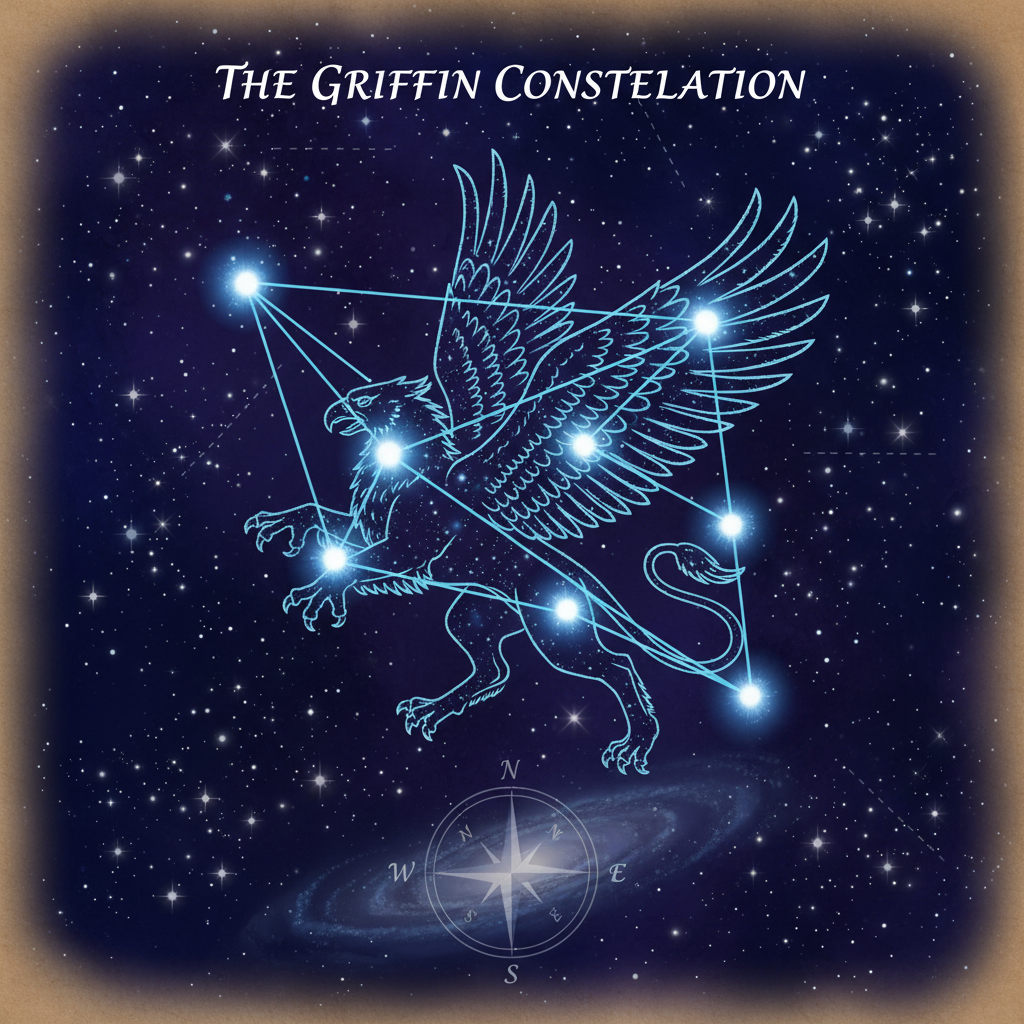
Let's visualize what a constellation looks like from Earth:
Keep learning, free
Create a free Syllabax account to unlock practice questions and games for this topic.
Visual Learning Enhanced! 🚀
To help you master this topic, we use Advanced Syllabax AI to generate detailed diagrams and visual models.
Note on Visuals: The AI sometimes makes spelling errors in image labels. Please refer to the lesson text for the correct terminology.