Symmetry (basic idea) (Patterns)
Watch this topic in 60 seconds
Free preview · Lesson 1
Understanding Symmetry (basic idea) (Patterns)
Exploring Symmetry: A Fun Look at Balance!
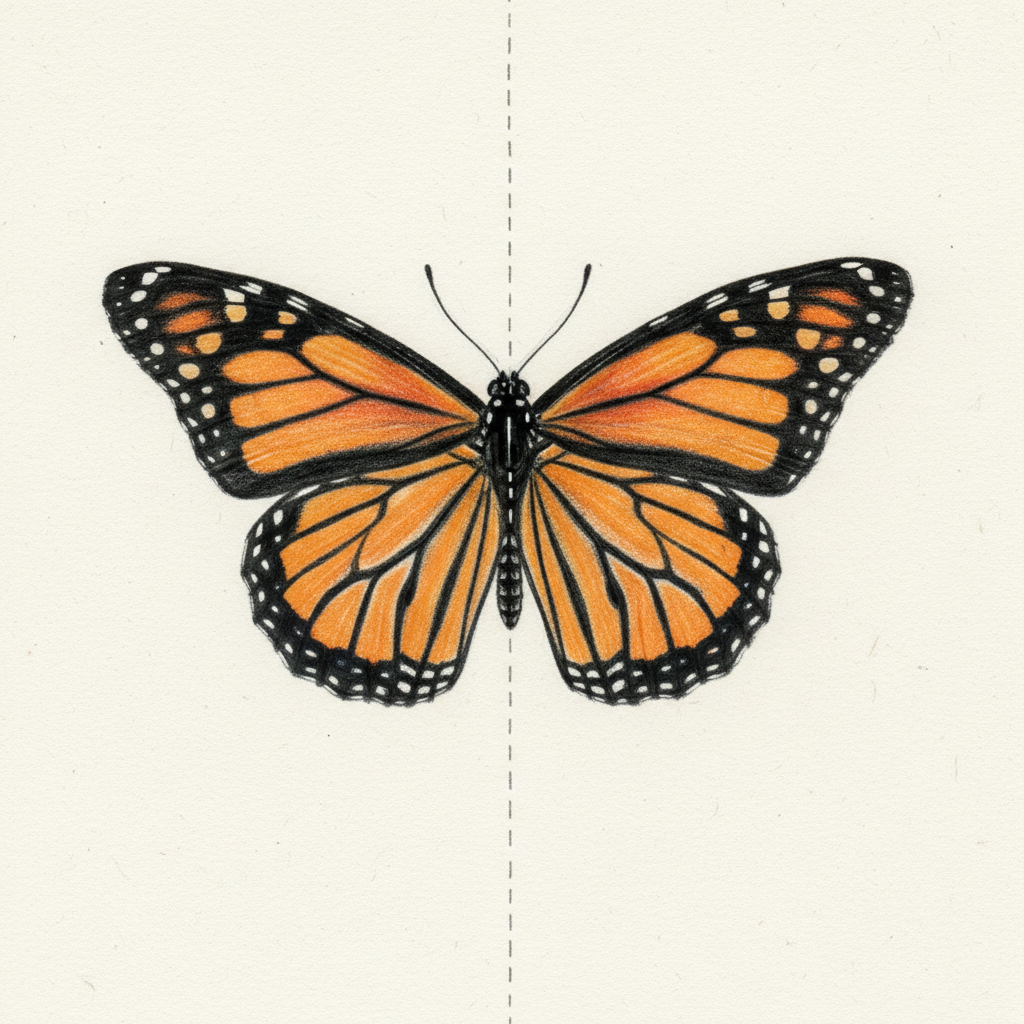
Hello young explorers! Today, we're going to embark on an exciting journey to discover something super cool called symmetry. Think of it as a special kind of balance. Have you ever noticed how some things look exactly the same on both sides, like a perfectly cut sandwich or a butterfly's wings? That's symmetry!
What is Symmetry?
Symmetry is like having a mirror image. Imagine you have a special invisible line, called a line of symmetry, running right through the middle of an object. If you could fold the object along this line, the two halves would match up perfectly, like two puzzle pieces fitting together.
Finding the Line of Symmetry
This invisible line can be straight up and down, or it can go side to side, or even diagonally! Let's look at some examples:
Objects with Vertical Symmetry
Think about a beautiful butterfly. If you draw a line right down the middle of its body, its left wing looks exactly like its right wing. This line is called a vertical line of symmetry because it goes up and down.
Other things with vertical symmetry include:
- A perfectly shaped heart
- A tall, slender tree trunk
- A person's face (if it's perfectly balanced!)
- The letter 'A'
Imagine folding a piece of paper with the letter 'A' written on it down the middle. Both sides would perfectly cover each other. It's like magic!
Objects with Horizontal Symmetry
Now, imagine a cloud floating in the sky. If you draw a line right through the middle, from left to right, the top half might look like the bottom half. This line is called a horizontal line of symmetry because it goes across.
Other things with horizontal symmetry include:
- A calm lake reflecting the sky
- A happy-looking smiley face 🙂 (if the mouth is straight across)
- The letter 'B'
- A shelf on a bookcase
If you could fold a piece of paper with the letter 'B' on it across its middle, the top part would land perfectly on the bottom part.
Objects with Diagonal Symmetry
Some objects have lines of symmetry that go from a corner to another corner. These are called diagonal lines of symmetry. Think about a star with five points. You can draw lines from the center to each point, and the two halves on either side of that line will match.
An example is a square. A square has a vertical line of symmetry, a horizontal line of symmetry, and even two diagonal lines of symmetry!
Symmetry in Nature
Nature is full of amazing symmetry! Look around you:
- Leaves: Many leaves have a line of symmetry going down their center vein.
- Flowers: Some flowers, like daisies or tulips, have petals that are arranged symmetrically.
- Animals: Many animals, from fish to tigers, have bodies that are symmetrical.
- Snowflakes: Each snowflake is a unique masterpiece of symmetry!
It's like nature loves to create beautiful, balanced patterns.
Symmetry in Everyday Objects
We see symmetry all around us in things people have made too:
- Buildings: Many houses and buildings are designed with symmetrical features.
- Furniture: A chair often has symmetrical legs and a back.
- Toys: Many toy cars and dolls are designed symmetrically.
- Food: A perfectly round pizza cut in half is symmetrical!
Think about your favorite teddy bear. Does it look the same on the left and right sides? Most likely, it does!
Why is Symmetry Important?
Symmetry makes things look pleasing and orderly. Our brains tend to like things that are balanced and symmetrical. It helps us understand patterns and predict what might come next. It's like a secret code that makes the world look beautiful!
Symmetry and Patterns
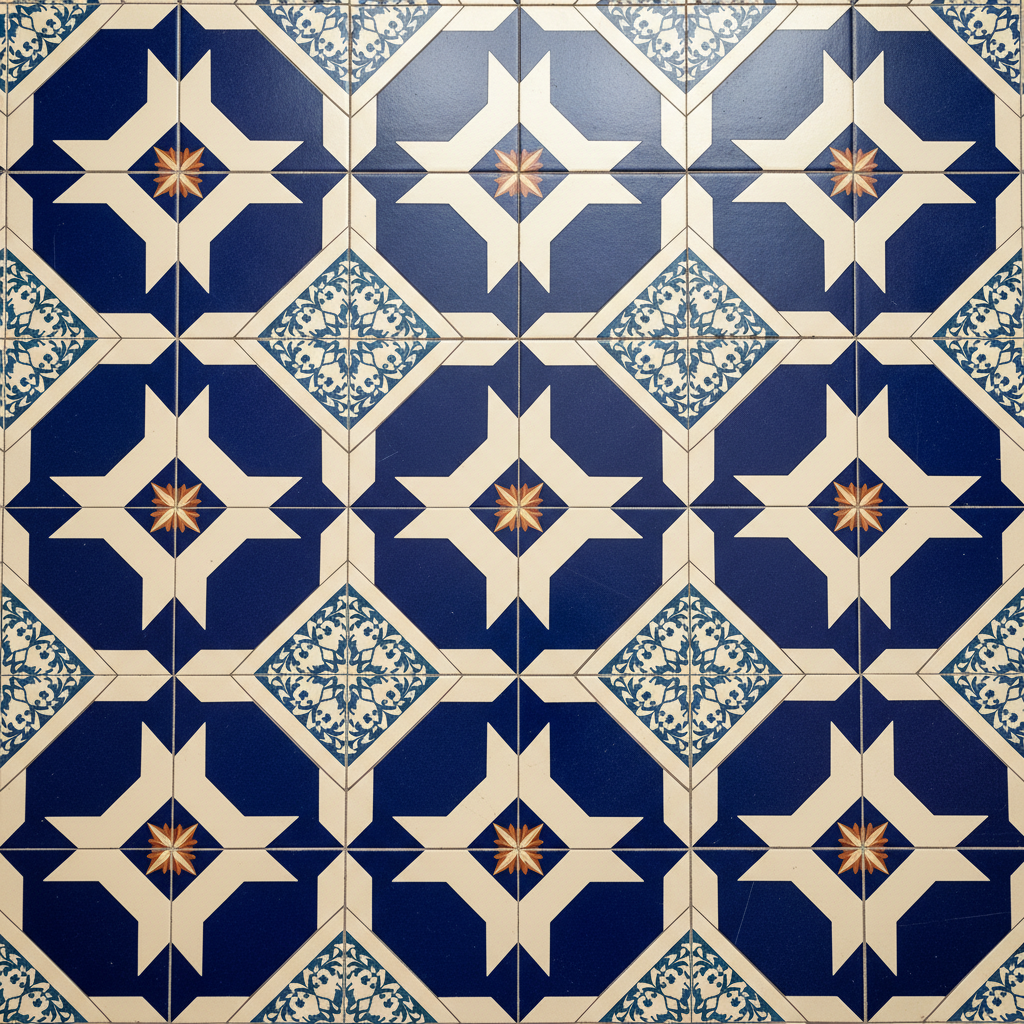
Symmetry is a type of pattern! When we see symmetry, we are seeing a repeating or balanced arrangement. These balanced patterns are everywhere, from the tiles on a bathroom floor to the design on a piece of clothing.
Imagine a wallpaper with repeating flowers. If you can fold it so that the flowers on one side match the flowers on the other, you've found symmetry in a pattern.
Let's Summarize!
Symmetry is all about balance. It's when an object can be divided into two matching halves by a line of symmetry. This line can be vertical, horizontal, or diagonal. We see symmetry in nature, in everyday objects, and it helps us understand patterns!
Keep learning, free
Create a free Syllabax account to unlock practice questions and games for this topic.
Visual Learning Enhanced! 🚀
To help you master this topic, we use Advanced Syllabax AI to generate detailed diagrams and visual models.
Note on Visuals: The AI sometimes makes spelling errors in image labels. Please refer to the lesson text for the correct terminology.