Dialogue Completion
Watch this topic in 60 seconds
Free preview · Lesson 1
Dialogue Completion (Foundational)
Dialogue Completion: Talking It Out!
Hey there, future storytellers! Today, we're going to learn about how people talk to each other in stories and how to make sure their conversations make sense. It's called Dialogue Completion!
What is Dialogue?
Dialogue is just a fancy word for a conversation between two or more people. Think of it like when you're chatting with your friends, your family, or even your pets (if they could talk back!). Good dialogue helps us understand what people are thinking and feeling.
What is Dialogue Completion?
Dialogue Completion means figuring out what a person would say next in a conversation, based on what they or other characters have already said. It's like filling in the blanks in a conversation!
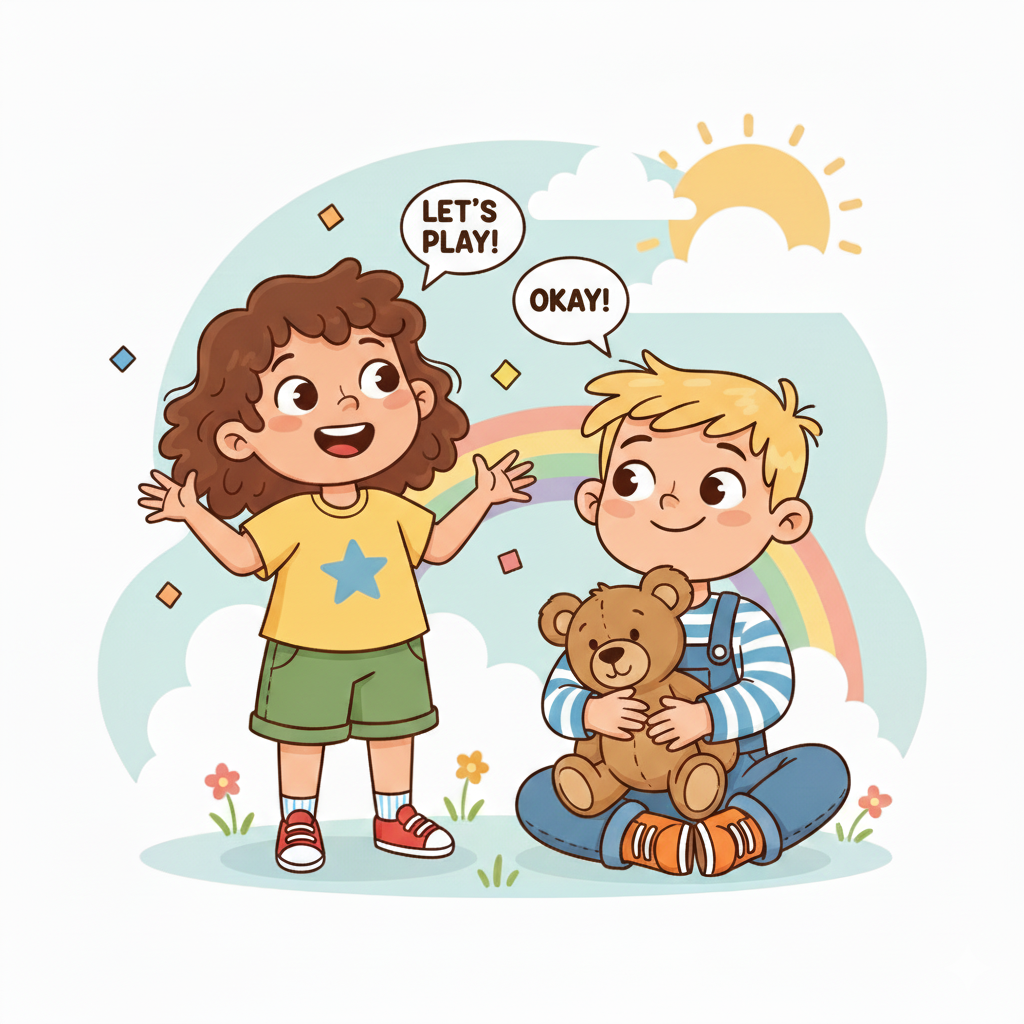 How to Complete Dialogue:
- Read Carefully: Pay close attention to what everyone has said so far.
- Think About the Topic: What are they talking about?
- Consider Feelings: How are the characters feeling? Are they happy, sad, angry, or excited?
- Use Clues: Look for clues in the sentences to help you predict what they might say next.
Example:
Mia: "I'm so excited for the school trip tomorrow!"
Leo: "Me too! I heard we're going to see lots of animals."
Mia: "____________________________________"
What do you think Mia might say next? She might say something like: "I hope we get to see a lion!" or "I packed my favorite snack!"
Tips for Good Dialogue:
- Keep it Natural: Make it sound like real people talking.
- Show, Don't Tell: Use dialogue to show how characters feel instead of just saying it. For example, instead of saying "She was angry," you could write, "Why would you do that?!" she shouted.
- Stay on Topic: The conversation should make sense and stay related to the main topic.
Keep learning, free
Create a free Syllabax account to unlock practice questions and games for this topic.
Visual Learning Enhanced! 🚀
To help you master this topic, we use Advanced Syllabax AI to generate detailed diagrams and visual models.
Note on Visuals: The AI sometimes makes spelling errors in image labels. Please refer to the lesson text for the correct terminology.