Parts of a plant: root, stem, leaf, flower (BIOLOGY)
Watch this topic in 60 seconds
Free preview · Lesson 1
Understanding Parts of a plant: root, stem, leaf, flower (BIOLOGY)
The Amazing Parts of a Plant!
Welcome, young scientists! Today, we're going on an exciting journey into the world of plants. Plants are all around us, from the tiniest blades of grass to the tallest trees. They are living things, just like us, and they have different parts that help them live and grow. Think of a plant like a tiny factory, with each part having a special job to do!
The Plant's Superpower: Photosynthesis
Before we explore the parts, let's talk about what plants do. Most plants can make their own food using sunlight, water, and air. This amazing process is called photosynthesis. It's like they have their own little kitchen inside them!
Part 1: The Root - The Anchor and The Straw
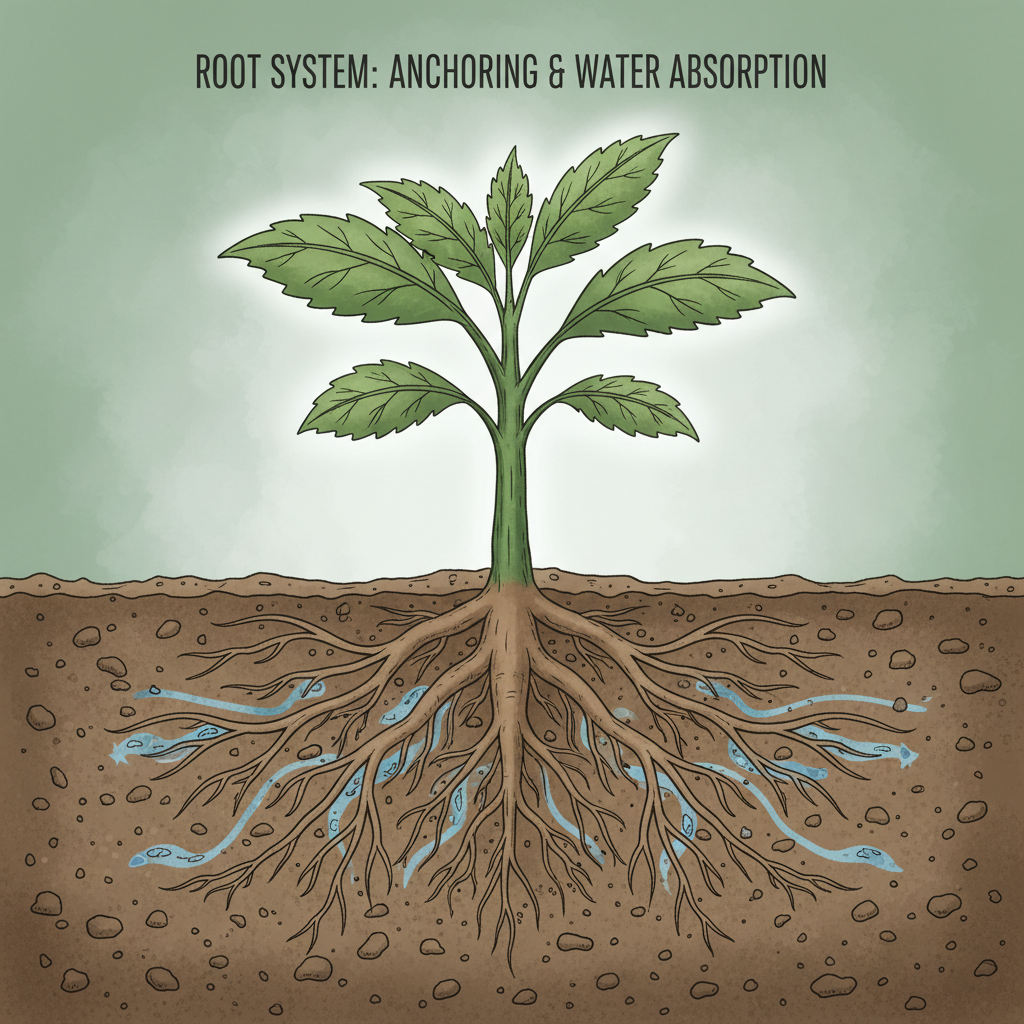
Let's start from the bottom! The root is usually found underground. It has two main jobs:
- Anchoring the plant: The roots hold the plant firmly in the ground. Imagine the roots are like the anchors on a ship, keeping it from drifting away. This is super important so the plant doesn't fall over, especially when it's windy!
- Absorbing water and nutrients: Roots act like tiny straws, sucking up water and important minerals from the soil. These are like the plant's food and drink. The water travels up the plant to keep it alive and help it grow.
Think of the roots as the plant's drinking straws and its anchor all in one!
Part 2: The Stem - The Elevator and The Highway
Next up is the stem. The stem is usually above ground and connects the roots to the leaves and flowers. The stem has a few very important jobs:
- Supporting the plant: The stem helps the plant stand tall and strong. It's like the skeleton of the plant, holding everything up.
- Transporting water and nutrients: The stem has tiny tubes inside, like little pipes. Water and nutrients absorbed by the roots travel up through these tubes to the leaves and flowers. This is like an elevator or a highway system for the plant's "food" and "drink"!
- Sometimes storing food: Some plants, like carrots and potatoes (which are actually modified stems or roots!), store extra food in their stems or roots.
The stem is like the plant's sturdy elevator shaft, carrying water and nutrients to where they need to go, while also holding the whole structure upright.
Part 3: The Leaf - The Food Factory
Ah, the leaves! These are usually the green, flat parts of the plant. Leaves are incredibly important because they are the main place where plants make their food through photosynthesis. They are like the plant's personal chefs!
- Capturing sunlight: Leaves are often wide and flat to catch as much sunlight as possible. Sunlight is the energy source for making food.
- Taking in air: Leaves have tiny holes, like little mouths, that let in a gas from the air called carbon dioxide. This is one of the ingredients for making food.
- Releasing oxygen: As a byproduct of making food, plants release oxygen into the air. This is the air we breathe! So, plants are not only feeding themselves but also helping us breathe.
Leaves are like the plant's solar-powered kitchens, using sunlight, air, and water to cook up delicious food (sugars) for the plant and releasing fresh oxygen for us!
 ⚠️ This picture may have spelling mistakes. Trust the words in the lesson.
Part 4: The Flower - The Plant's "Baby Maker"
Many plants have beautiful flowers. Flowers might look pretty, but they have a very important job: helping the plant reproduce, meaning making new baby plants! They are like the reproductive center of the plant.
- Attracting pollinators: Flowers often have bright colors, sweet smells, and nectar (a sugary liquid) to attract insects like bees and butterflies, or birds. These visitors are called pollinators.
- Producing seeds: When pollinators visit flowers, they help move pollen from one part of the flower to another, or to another flower. This process leads to the creation of seeds.
- Protecting the seeds: After pollination, the flower can develop into a fruit, which protects the seeds inside until they are ready to grow into new plants.
Flowers are like the plant's way of sending out invitations (colors, smells) to get help (pollinators) to create the next generation (seeds).
Putting It All Together!
So, we've learned about the four main parts of a plant:
- Roots: Anchor the plant and drink water and nutrients from the soil.
- Stem: Supports the plant and transports water and nutrients.
- Leaf: Makes food for the plant using sunlight, air, and water.
- Flower: Helps the plant make seeds to create new plants.
Each part works together like a team to help the plant survive and thrive. Isn't nature amazing?
Keep learning, free
Create a free Syllabax account to unlock practice questions and games for this topic.
Visual Learning Enhanced! 🚀
To help you master this topic, we use Advanced Syllabax AI to generate detailed diagrams and visual models.
Note on Visuals: The AI sometimes makes spelling errors in image labels. Please refer to the lesson text for the correct terminology.