Climate of India – Monsoon Mechanism -Indian Geography
Watch this topic in 60 seconds
Free preview · Lesson 1
Climate of India – Monsoon Mechanism -Indian Geography (Foundational)
Climate of India – Monsoon Mechanism - Indian Geography (Foundational)
Welcome to this lesson on the Climate of India! We'll explore the monsoon, a vital weather phenomenon that significantly impacts life in India.
What is Climate?
Climate is the average weather pattern in a place over a long period, usually 30 years or more. It includes temperature, rainfall, humidity, and wind patterns.
India's Climate
India has a monsoon climate, which means its weather is strongly influenced by seasonal wind changes. These winds bring rain during certain parts of the year.
The Monsoon: A Seasonal Wind
The word 'monsoon' comes from the Arabic word 'mausim,' meaning season. Monsoons are seasonal winds that reverse direction completely between summer and winter.
How the Monsoon Works: The Basics
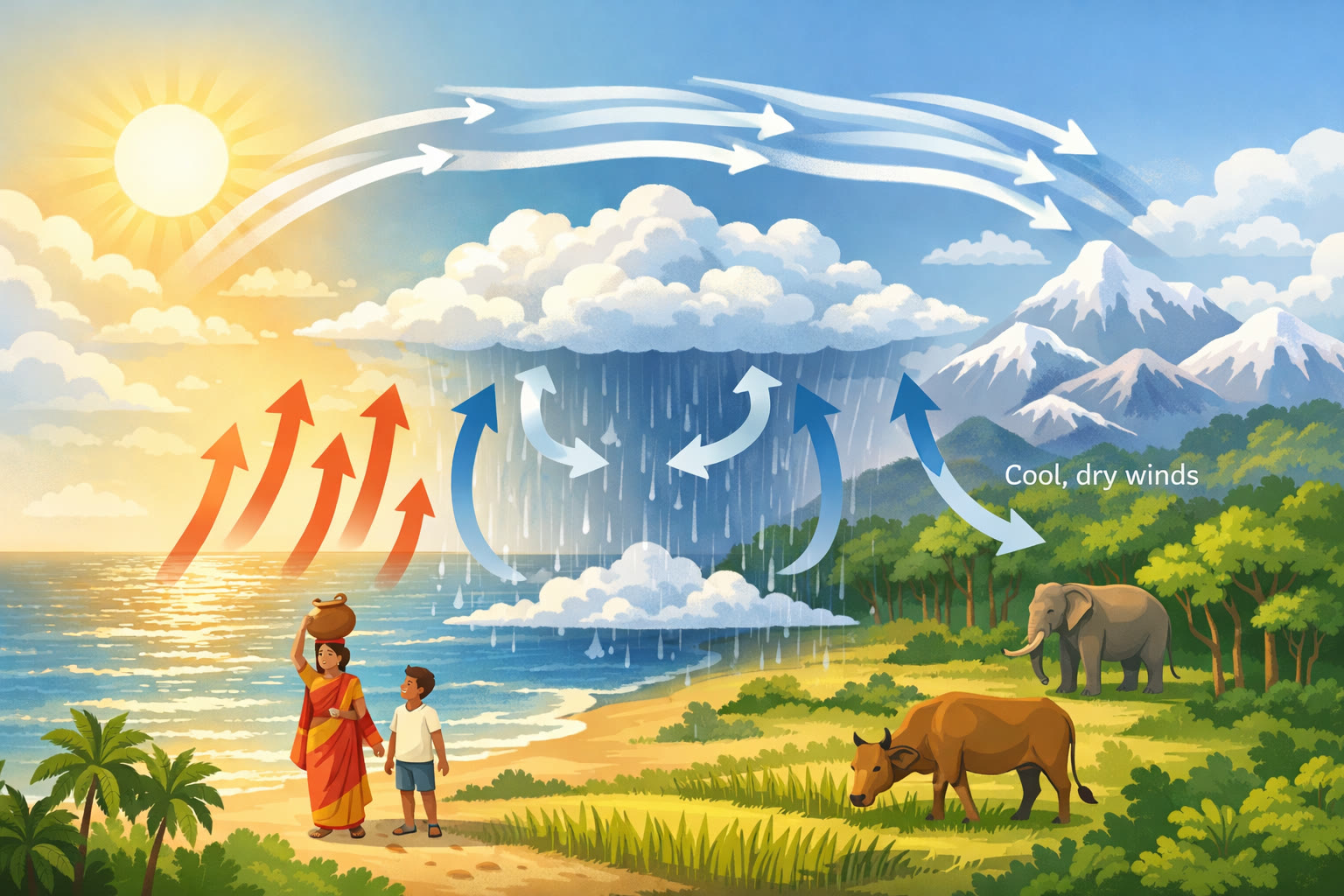
The monsoon is driven by differences in temperature over land and sea. Here's a simplified explanation:
- Summer Heating: During the summer months (April-June), the land in northern India heats up intensely. This creates a low-pressure area.
- Air Rises: Hot air rises because it is less dense. This rising air creates a vacuum.
- Sea Breeze: The ocean, being cooler than the land, has a relatively higher pressure. Air from the ocean (the Arabian Sea and the Bay of Bengal) is drawn towards the low-pressure area over the land. This is the southwest monsoon.
- Moisture Laden Winds: These winds pick up moisture as they travel over the ocean.
- Rainfall: When these moisture-laden winds reach the Indian subcontinent, they are forced to rise by the mountains (like the Western Ghats and the Himalayas). As the air rises, it cools, and the moisture condenses, forming clouds and causing rainfall.
- Winter Reversal: In winter (October-February), the process reverses. The land cools down faster than the sea, creating a high-pressure area over northern India. The winds then blow from the land towards the sea. This is the northeast monsoon, which is generally drier but brings some rainfall to the southeast coast of India.
Branches of the Monsoon
The southwest monsoon splits into two main branches:
- Arabian Sea Branch: This branch hits the Western Ghats, causing heavy rainfall.
- Bay of Bengal Branch: This branch flows towards the northeast and brings rainfall to that region.
Why is the Monsoon Important?
The monsoon is crucial for India because:
- It provides water for agriculture, which is the backbone of the Indian economy.
- It replenishes rivers and groundwater.
- It affects the overall climate and ecosystems of the region.
Factors Affecting the Monsoon
Several factors influence the monsoon, including:
- The temperature of the Indian Ocean
- The position of the Intertropical Convergence Zone (ITCZ), a low-pressure zone near the equator.
- Jet streams, high-altitude winds that can steer monsoon winds.
Keep learning, free
Create a free Syllabax account to unlock practice questions and games for this topic.
Visual Learning Enhanced! 🚀
To help you master this topic, we use Advanced Syllabax AI to generate detailed diagrams and visual models.
Note on Visuals: The AI sometimes makes spelling errors in image labels. Please refer to the lesson text for the correct terminology.