Days, weeks, months, seasons (Time)
Watch this topic in 60 seconds
Free preview · Lesson 1
Understanding Days, weeks, months, seasons (Time)
Understanding Time: Days, Weeks, Months, and Seasons
Hello amazing learners! Today, we're going on a fun adventure to explore something super important: time! We use time every single day, even when we're sleeping. Time helps us know when it's time to play, time to learn, and time to rest. Let's break down the different ways we measure time, starting with the smallest pieces and building up!
Days: A Circle of Light and Dark
Think about your day. You wake up when the sun is shining, right? That's daytime! Then, the sun goes down, and the moon and stars come out. That's nighttime. One complete cycle of daytime and nighttime is called a day. A day is like a short, round trip that the Earth takes. It spins around and around, and as it spins, different parts of the Earth get sunlight (day) and then go into the dark (night). It's like a giant spinning top that never stops!
Each day is special. We do different things each day. Monday is different from Tuesday, and Tuesday is different from Wednesday. Days help us plan our week.
Weeks: A Bunch of Days Together
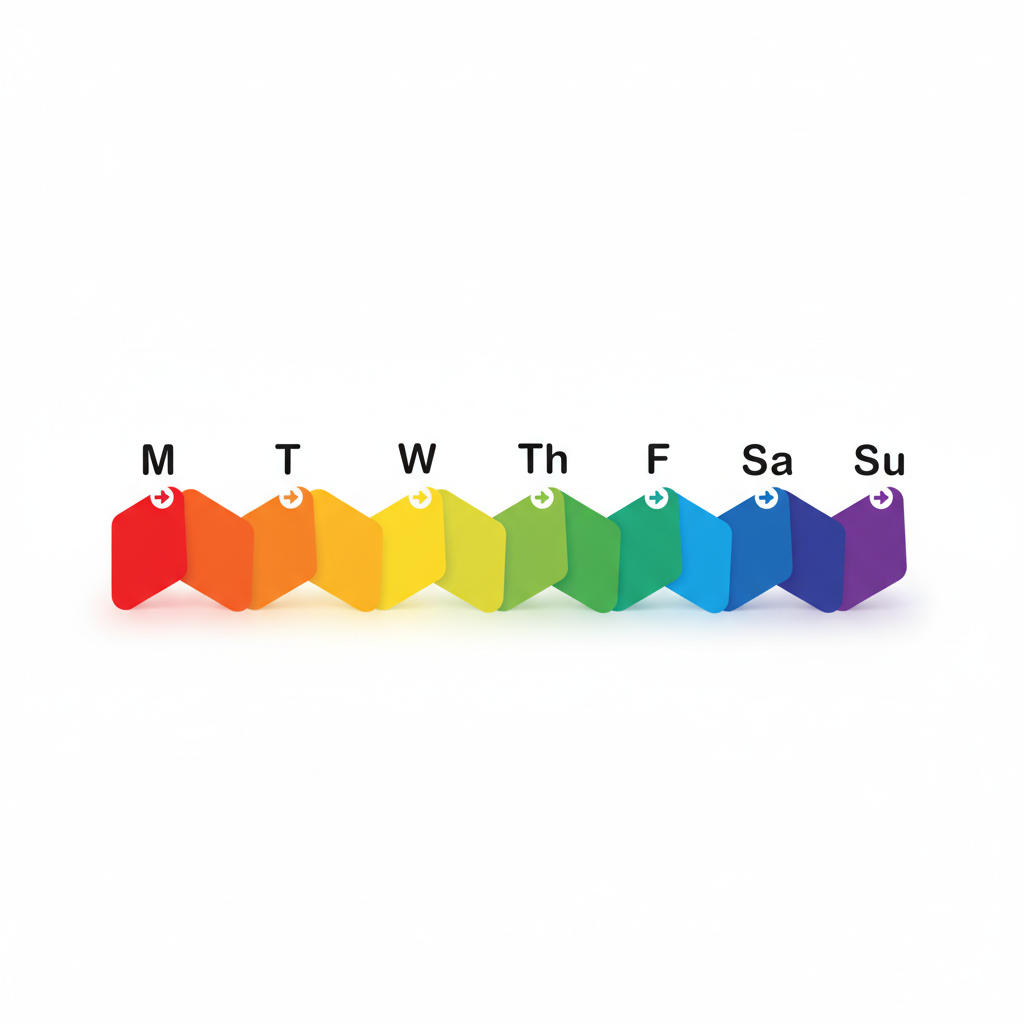
Now, imagine you have a bunch of LEGO bricks. A week is like a bunch of seven days all connected together. We have seven days in a week, and they have special names:
- Sunday
- Monday
- Tuesday
- Wednesday
- Thursday
- Friday
- Saturday
A week is like a small team of seven friends, each with their own name and personality, working together to make things happen. We go to school on some days of the week, and maybe we rest or play with friends on other days. Your birthday might happen on a Tuesday one year and a Wednesday the next – that's because the days keep going in their circle!
Analogy: A week is like a train with seven cars. Each car is a different day, and they all follow each other in a specific order. Once the last car (Saturday) passes, the train starts again with the first car (Sunday).
Months: A Bigger Collection of Weeks
If a week is a small team, then a month is like a bigger group, or a whole class of students! A month is made up of about four weeks, plus a few extra days. There are twelve months in a whole year, and each month has its own name and a different number of days. Some months are shorter, like a quick skip, and some are longer, like a long jump!
Here are the names of the twelve months:
- January
- February
- March
- April
- May
- June
- July
- August
- September
- October
- November
- December
Analogy: Think of a month as a chapter in a book. Each chapter tells a different part of the story. When you finish one chapter (month), you start a new one, and eventually, you finish the whole book (the year)! Some chapters are shorter and some are longer.
February is a special month because it's usually the shortest. It's like the little brother of the months! Sometimes it has 28 days, and once every four years, it gets an extra day and has 29 days – that special year is called a leap year. It’s like February gets a surprise birthday treat!
Seasons: The Big Changes in the Year
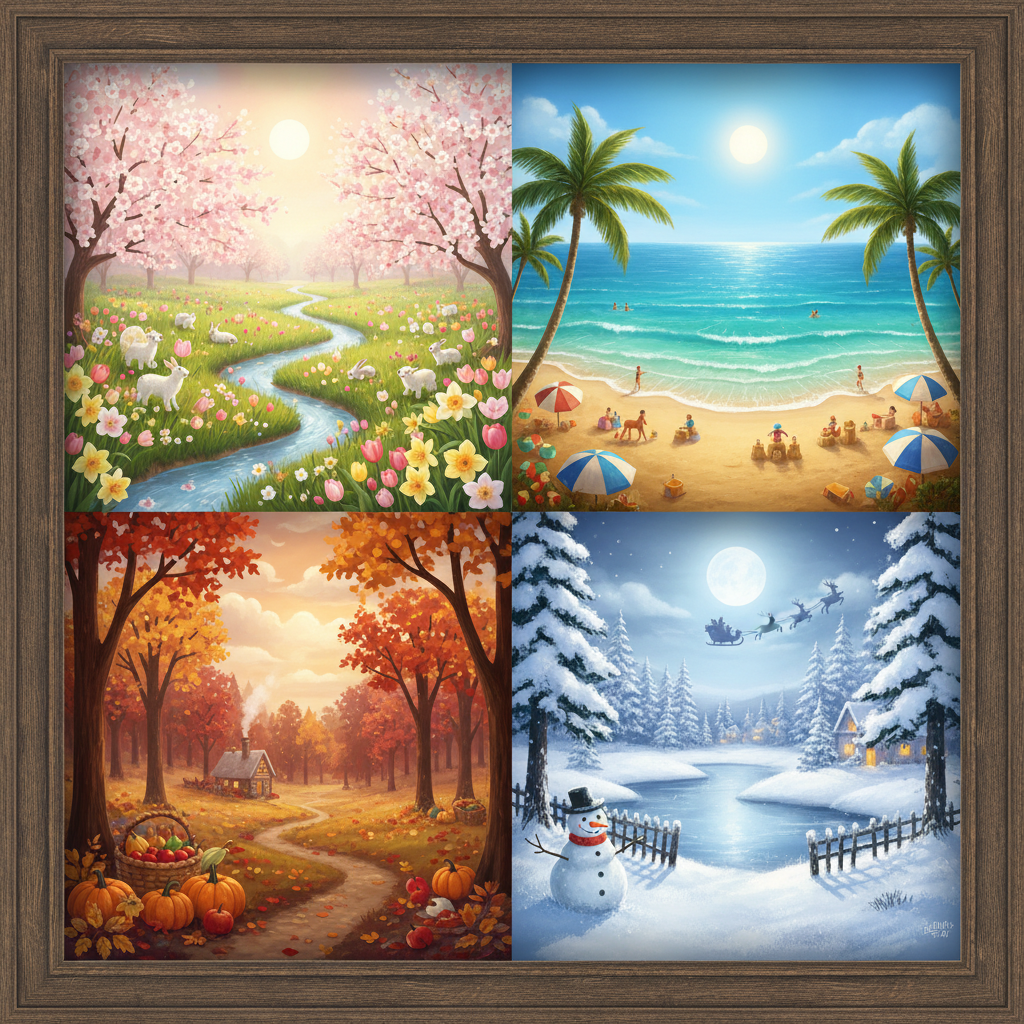
Now, let's talk about something even bigger: seasons! Seasons are like the big moods of the year. They happen because the Earth is tilted as it goes around the sun. When one part of the Earth is tilted towards the sun, it gets more sunshine and is warmer – that's summer! When it's tilted away, it gets less sunshine and is colder – that's winter. Spring and autumn (or fall) are the times in between, when the weather is changing.
There are four main seasons:
- Spring: This is when flowers start to bloom, baby animals are born, and the weather gets warmer after winter. It's like the world is waking up after a long nap.
- Summer: This is usually the warmest time of the year, with long days and short nights. It's perfect for swimming, playing outside, and going on vacation! Think of it as the year's big, sunny party.
- Autumn (or Fall): The leaves on the trees change color and fall off, and the weather starts to get cooler. It's like the year is getting ready for a rest, and the leaves are dressing up in beautiful colors before they go to sleep.
- Winter: This is usually the coldest time of the year, with shorter days and longer nights. Sometimes it snows! It's a time for cozy blankets, hot cocoa, and staying warm inside. The world is taking a big, cold nap.
Each season lasts for about three months. So, spring is roughly March, April, and May. Summer is June, July, and August. Autumn is September, October, and November. And winter is December, January, and February. The seasons help us understand the patterns of weather and nature throughout the year.
Putting It All Together: The Calendar
All of these pieces – days, weeks, months, and seasons – fit together to make up a whole year. A year is like the longest journey the Earth takes around the sun. It's made of 12 months, which are made of weeks, which are made of days! We use a calendar to see all of these things at once. A calendar shows us all the days, weeks, and months, and helps us know when holidays and birthdays are coming up!
Remember:
- Day: One cycle of light and dark.
- Week: Seven days in a row.
- Month: About four weeks, with different lengths.
- Year: Twelve months, with changing seasons.
Understanding time helps us organize our lives and appreciate the wonderful cycles of nature!
Keep learning, free
Create a free Syllabax account to unlock practice questions and games for this topic.
Visual Learning Enhanced! 🚀
To help you master this topic, we use Advanced Syllabax AI to generate detailed diagrams and visual models.
Note on Visuals: The AI sometimes makes spelling errors in image labels. Please refer to the lesson text for the correct terminology.