Learning Journey
Watch this topic in 60 seconds
Free preview · Lesson 1
Understanding Features of living things (Living &Non Living Things)
Exploring Our World: Living and Non-Living Things!
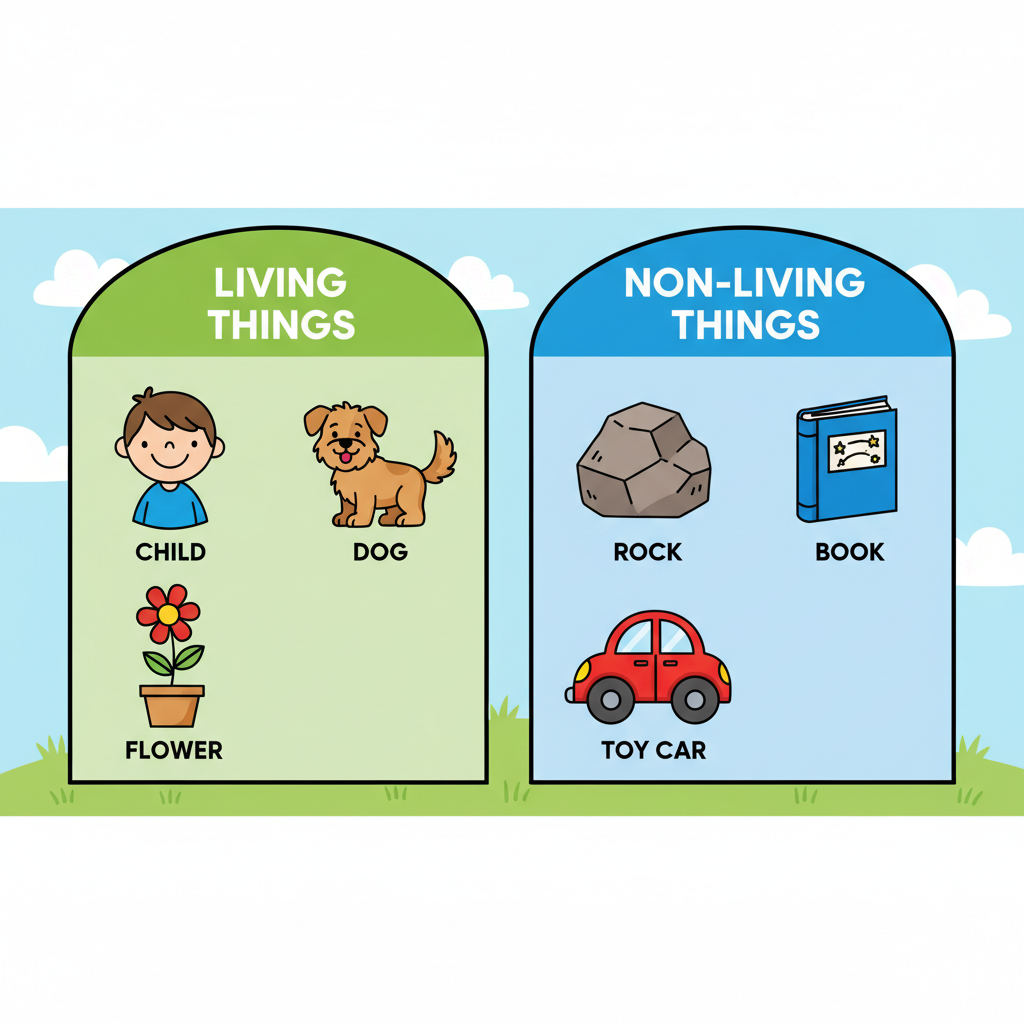
Hello, young explorers! Look around you right now. What do you see? Maybe a chair, a book, a pencil, or even a pet like a dog or a cat. Perhaps you see a beautiful plant by the window! Our world is full of so many different things, and we can sort almost everything into two big groups: Living Things and Non-Living Things. It’s like sorting your toys into 'soft toys' and 'hard toys'!
What are Living Things?
Imagine your favorite pet dog or a tiny little sprout growing in a pot. What do they have in common? They are both living things! Living things are amazing because they can do many special things all by themselves. Think of it like a superpower that only living things have!
What are Non-Living Things?
Now, look at your toy car or a big, smooth rock in your garden. Can your toy car drive itself without you pushing it? Can the rock suddenly stand up and walk away? No! These are non-living things. Non-living things don't have those special 'superpowers' that living things have.
Let's discover these 'superpowers' or features that make something a living thing. If something has ALL these features, it's alive!
The Seven Superpowers of Living Things!
1. Living Things Can MOVE!
Think about a bird flying high in the sky, a fish swimming in the pond, or you running and playing! Animals move from one place to another. Plants also move, but they do it much slower. A sunflower will slowly turn its head to follow the sun across the sky. That's movement! A car can move, but only if a person drives it or if it's pushed. It can't move by itself. A rock just sits there!
2. Living Things Can GROW!
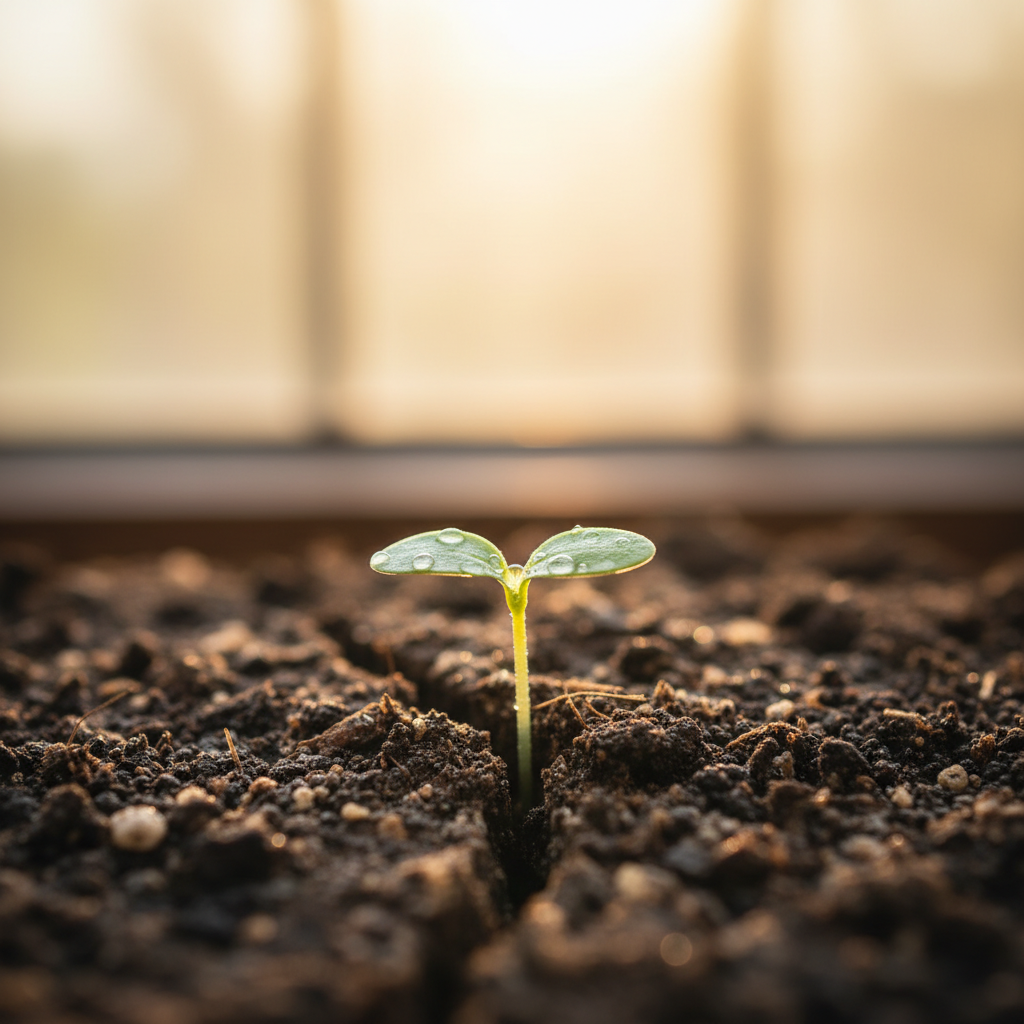
Remember when you were a tiny baby? You've grown so much since then! That's because you are a living thing. A tiny seed can grow into a huge tree. A little puppy grows into a big dog. This is growth! Can your favorite teddy bear grow bigger by itself? No, it stays the same size forever (unless you buy a bigger one!).
 ⚠️ This picture may have spelling mistakes. Trust the words in the lesson.
3. Living Things Need FOOD and WATER!
Why do you eat breakfast, lunch, and dinner? To get energy! Living things need food to grow, move, and stay healthy. Animals eat other plants or animals. Plants are amazing because they can make their OWN food using sunlight, water, and air – it's like magic! Non-living things like your bicycle don't need to eat or drink. They just need you to ride them!
4. Living Things Can BREATHE!
Take a deep breath in... and out! You are breathing air right now. All living things need to breathe to live. Humans and many animals breathe air using their lungs. Fish breathe underwater using special parts called gills. Plants also breathe through tiny holes in their leaves. A toy or a table doesn't need to breathe; they don't have lungs or gills!
5. Living Things Can REPRODUCE (Make Babies)!
Living things can make more living things just like themselves. A mommy cat and a daddy cat can have cute little kittens. A hen lays eggs, and baby chicks hatch from them. A tiny seed from a plant can grow into a whole new plant! This is how living things make sure there are always more of them in the world. Can your favorite building blocks make more blocks by themselves? No way!
6. Living Things Can RESPOND to Their Environment!
Imagine you accidentally touch something hot. What do you do? You quickly pull your hand away! That's responding. If a loud noise happens, you might jump. If a plant gets too much sun, its leaves might wilt to protect itself. Living things react to what's happening around them. A rock doesn't care if it's sunny or rainy; it just stays a rock.
7. Living Things Get Rid of WASTE!
Just like you eat food and then your body gets rid of the parts it doesn't need (when you go to the bathroom), living things produce waste. This means they get rid of things their bodies don't need anymore. Plants can even release gases or shed old leaves as waste. Non-living things don't eat, so they don't produce waste!
Living or Non-Living? Let's Practice!
Now you know the seven superpowers! If something has ALL of these features, it's a living thing. If it only has some, or none at all, it's a non-living thing.
- Is a cloud living or non-living? A cloud moves and seems to grow, but it doesn't eat, breathe, or make baby clouds. So, it's non-living!
- Is a fire living or non-living? A fire moves, grows, and uses 'food' (like wood) and 'breathes' (uses oxygen), but it doesn't reproduce in the same way, or respond to its environment like a living thing. It's non-living!
It's important to remember that non-living things can be natural (like rocks, water, air) or man-made (like toys, cars, books). Both are non-living because they don't have all seven superpowers!
The Big Idea!
Understanding the difference between living and non-living things helps us appreciate the amazing world around us. From the smallest bug to the tallest tree, every living thing is a wonder, thanks to its special abilities!
Keep learning, free
Create a free Syllabax account to unlock practice questions and games for this topic.
Visual Learning Enhanced! 🚀
To help you master this topic, we use Advanced Syllabax AI to generate detailed diagrams and visual models.
Note on Visuals: The AI sometimes makes spelling errors in image labels. Please refer to the lesson text for the correct terminology.