Depreciation (intro) (Commercial Math)
Watch this topic in 60 seconds
Free preview · Lesson 1
Understanding Depreciation (intro) (Commercial Math)
Understanding Depreciation: What Happens When Things Get Older?
Hey there, Grade 10 learners! Ever noticed how a brand new smartphone, car, or even a pair of shoes seems to lose some of its 'newness' and value the moment you start using it? That feeling, that decrease in value over time, is exactly what we're going to explore in the world of business and commercial math. It's called Depreciation, and it's a super important concept for businesses to understand.
What is Depreciation? (The Big Idea)
Imagine you buy a shiny new bicycle. It's perfect! But after a year of riding it to school, over bumpy paths, and maybe even a few rain showers, it's not quite as perfect. There might be some scratches, the tires are a bit worn, and a newer model with fancier gears just came out. If you tried to sell your year-old bike, you probably wouldn't get the same price you paid for it, right?
Depreciation is simply the accounting way of recognizing that assets (things a business owns) lose value over time due to wear and tear, obsolescence, or just getting older. Businesses own all sorts of 'stuff' – from delivery vans and factory machines to computers and office furniture. Just like your bike, these items don't stay new forever, and their value goes down.
Why Do Things Depreciate? (The Reasons Behind the Value Drop)
Let's dive into why assets lose value:
- Wear and Tear: This is the most obvious reason. Just like your shoes get scuffed or your car accumulates miles, machinery breaks down a little with each use. A delivery truck driving thousands of miles each year will naturally wear out its engine, tires, and body over time. Think of it like a favorite sweater that gets thinner with every wash – it's still useful, but not as 'good as new'.
- Obsolescence: This is when something becomes outdated or less useful because new, better technology comes along. Remember flip phones? They worked perfectly, but then smartphones with touchscreens and apps came out, making flip phones seem ancient. A computer system bought five years ago might still work, but it's much slower and less efficient than today's models. It hasn't worn out, but it's been 'left behind' by progress.
- Passage of Time: Sometimes, things just lose value simply because time passes, even if they're not used much. A fashion item from last season might be perfectly fine, but its 'value' in the eyes of consumers might have dropped because it's no longer the latest trend. A building, over many decades, might still stand strong, but its structural components, wiring, and plumbing will eventually need upgrading, reducing its current market appeal.
Key Terms You Need to Know
To really understand depreciation, let's break down some essential vocabulary:
- Asset: This is anything of value that a business owns and uses to operate and generate income. Think of them as the 'tools' a business uses. Examples include: a factory building, a delivery van, computers, machines that make products, office desks, and even patents or trademarks. If a business buys it and expects to use it for more than one year, it's likely an asset.
-
Original Cost (or Cost): This is simply the total amount a business pays to acquire an asset and get it ready for use. If a company buys a machine for
- Useful Life: This is the estimated period during which an asset is expected to be useful to the business. It's not necessarily how long the asset could physically last, but how long the business expects to get economic benefit from it. For example, a laptop might physically last 7 years, but a business might consider its useful life to be 3 years before it's too slow for modern software. Think of a rechargeable battery – it has a certain number of charges before it effectively 'dies'. That's its useful life.
- Salvage Value (or Residual Value): This is the estimated value of an asset at the end of its useful life. It's what the business expects to sell the asset for, or what its scrap value would be, once it's no longer useful to them. Imagine selling your old car for parts or to a junkyard – that's its salvage value. It might be zero, or it might be a significant amount depending on the asset.
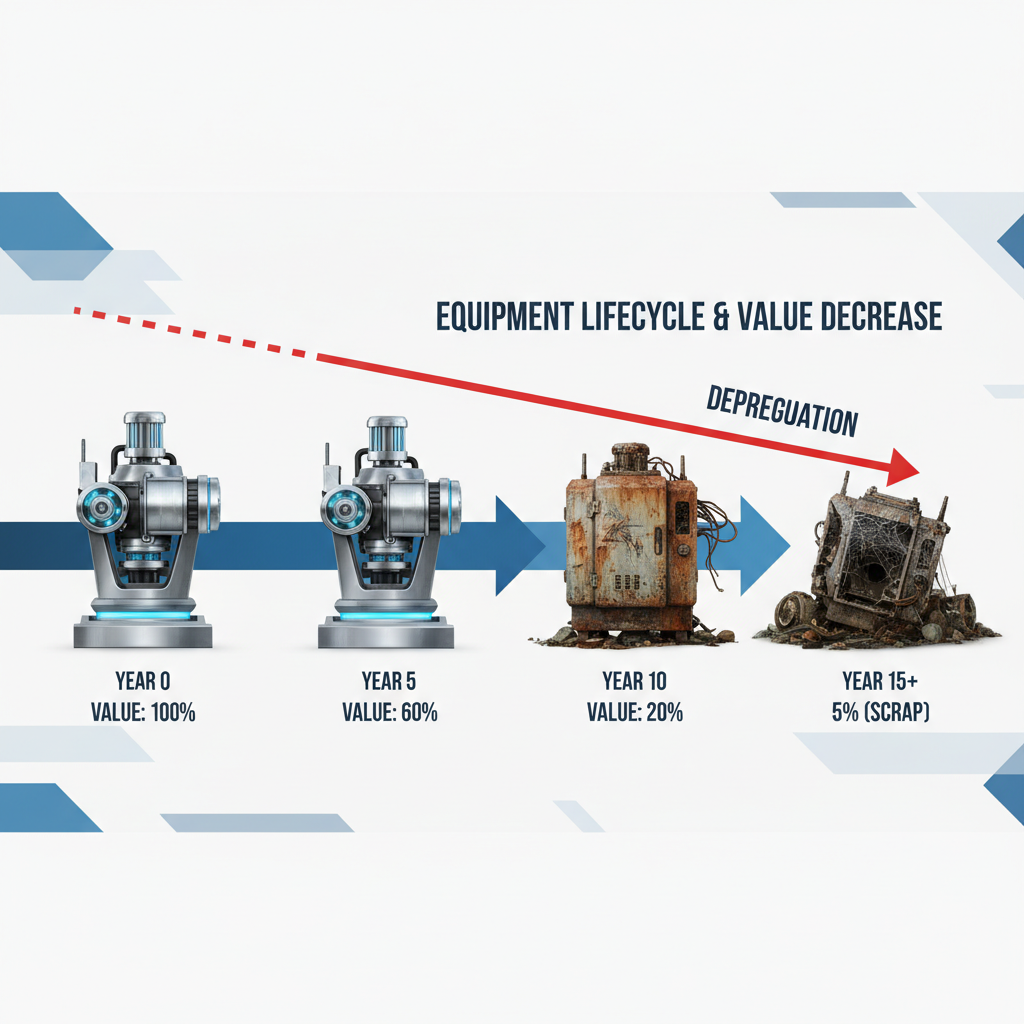 ⚠️ This picture may have spelling mistakes. Trust the words in the lesson.
Why is Depreciation Important for Businesses?
You might be thinking, "Okay, things lose value, so what?" Well, for businesses, understanding and calculating depreciation is absolutely crucial for several reasons:
-
Accurate Financial Reporting: If a business bought a delivery truck for
- Tax Benefits: This is a big one! In many countries, businesses can deduct depreciation expenses from their taxable income. This means they pay less in taxes, which frees up money for other investments or operations. It's a way the government encourages businesses to invest in assets.
- Planning for Replacement: By tracking how much an asset is depreciating, businesses can better plan for its eventual replacement. If they know a machine will be worthless in 10 years, they can start setting aside money or saving up to buy a new one when the old one is no longer efficient. It helps avoid sudden, unexpected large expenses.
- Pricing Decisions: Knowing the true cost of using an asset (including its depreciation) can help businesses set appropriate prices for their products or services. If a machine is slowly losing value, that cost needs to be factored into what they charge customers.
A Simple Analogy to Wrap Up
Think about a delicious cake you just baked. When it comes out of the oven, it's at its peak – warm, fresh, and most valuable! But as time passes, it starts to get stale. After a day or two, it's still edible, but not as good as new. After a week, it might be quite dry and not worth much at all. The cake's 'value' depreciated over time. Businesses apply this same logic to their assets, recognizing that their 'freshness' and economic value diminish over their useful life.
So, the next time you see an old car, a worn-out building, or an outdated piece of technology, remember that depreciation is at play! It's not just about things getting old; it's a fundamental concept in how businesses manage their finances and plan for the future.
Keep learning, free
Create a free Syllabax account to unlock practice questions and games for this topic.
Visual Learning Enhanced! 🚀
To help you master this topic, we use Advanced Syllabax AI to generate detailed diagrams and visual models.
Note on Visuals: The AI sometimes makes spelling errors in image labels. Please refer to the lesson text for the correct terminology.