Impurities in water[CHEMISTRY]
Watch this topic in 60 seconds
Free preview · Lesson 1
Understanding Impurities in water[CHEMISTRY]
Understanding Impurities in Water (Chemistry - Grade 6)
Welcome, young scientists, to an exciting journey into the world of water! Water is essential for life. We drink it, plants need it to grow, and it's used in countless ways every day. But have you ever wondered if the water we get is always perfectly pure? Sometimes, water can have tiny things mixed in with it. These extra things are called impurities.
What is Pure Water?
Imagine a perfectly clean, empty glass. That's like pure water. In chemistry, pure water is just water molecules (H₂O) and nothing else. It's like a room with only chairs and no other furniture. Pure water is clear, colorless, and tasteless. It's the ideal form of water.
What are Impurities?
Now, imagine putting a few grains of sand or a tiny bit of salt into that clean glass of water. Even though the water still looks mostly like water, it's no longer pure. The sand and salt are the impurities. Impurities are any substances that are mixed with water but are not water itself.
Think of impurities like extra decorations on a plain cake. The cake is still cake, but the decorations (sprinkles, frosting) are the 'impurities' that change its appearance and taste.
Types of Impurities
Impurities in water can come from many places and can be different types. Let's explore some:
1. Dissolved Impurities
These impurities dissolve in water, meaning they break down into tiny pieces that spread out evenly throughout the water. You usually can't see them, but they change the water's properties, like its taste or how it behaves.
- Salts: When you put salt (like the salt you use in food) into water, it dissolves. This is why seawater tastes salty – lots of dissolved salts are in it! Even tap water has a tiny amount of dissolved minerals, which are like natural salts that give water a slight taste.
- Minerals: These are naturally occurring substances found in rocks and soil. When water flows over rocks, it can pick up small amounts of these minerals and dissolve them. Hard water, for example, has a lot of dissolved minerals like calcium and magnesium.
- Gases: Sometimes, gases can dissolve in water. For instance, fizzy drinks are made by dissolving carbon dioxide gas in water under pressure. Even natural water can have dissolved oxygen, which fish need to breathe!
Analogy: Think of dissolving sugar in your tea. The sugar disappears, but you know it's there because your tea is now sweet. The sugar is a dissolved impurity.
2. Suspended Impurities
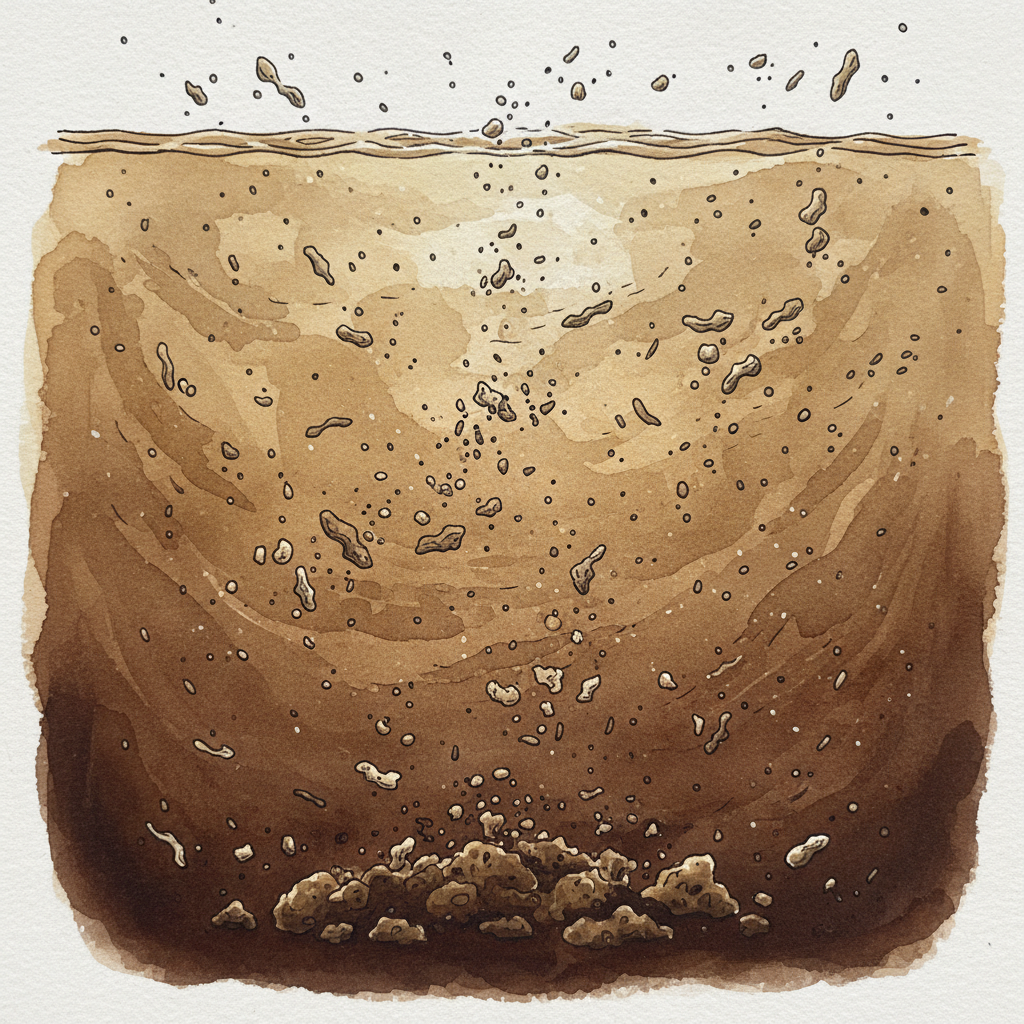
These impurities are tiny solid particles that float around in the water but don't dissolve. They are like little specks of dust floating in a sunbeam. If you let the water stand for a while, these particles might settle down to the bottom.
- Mud and Silt: When it rains heavily, soil and mud can get washed into rivers and lakes. These tiny soil particles make the water look cloudy or muddy.
- Sand: Small grains of sand can also be suspended in water, especially near riverbeds or beaches.
- Organic Matter: Bits of leaves, tiny plant parts, or even dead microorganisms can float in water, making it look murky.
Analogy: Imagine a bowl of clear soup. If you add some tiny pieces of chopped herbs, they will float around in the soup but won't disappear. These herb pieces are like suspended impurities.
 ⚠️ This picture may have spelling mistakes. Trust the words in the lesson.
3. Microorganisms (Microbes)
These are living things so tiny that you can only see them with a microscope. Some are harmless, but others can cause diseases.
- Bacteria: Some bacteria can get into water from sewage or animal waste.
- Viruses: These are even smaller than bacteria and can also spread through contaminated water.
- Protozoa: These are single-celled organisms that can sometimes be found in water and might make you sick.
Analogy: Think of a school playground. Most of the kids are friendly and play nicely (harmless microbes). But sometimes, there might be a bully who causes trouble (harmful microbes). Harmful microbes in water are like the bullies – they can make people sick.
Why are Impurities Important to Understand?
Understanding impurities is crucial for our health and for many everyday uses of water:
- Drinking Water: We need clean water to drink. Impurities, especially harmful microorganisms and certain dissolved chemicals, can make us very sick. Water treatment plants work hard to remove these impurities before water reaches our taps.
- Hygiene: Water with impurities might not be good for washing or cleaning.
- Industrial Use: Many factories need very pure water for their processes. Dissolved minerals, for example, can interfere with how machines work.
- Environmental Health: Impurities like mud or pollution can harm aquatic life in rivers and lakes.
How are Impurities Removed?
We have developed clever ways to clean water:
- Sedimentation: Letting water stand so that heavier suspended impurities (like mud) sink to the bottom.
- Filtration: Passing water through materials like sand, gravel, or special filters that trap suspended impurities. Think of a coffee filter catching the coffee grounds!
- Boiling: Heating water to a high temperature kills most harmful microorganisms.
- Chemical Treatment: Adding specific chemicals to make impurities clump together so they can be easily removed, or to kill harmful microbes.
Water is a precious resource, and keeping it clean helps us stay healthy and keeps our planet healthy too! Keep exploring the amazing world of chemistry!
Keep learning, free
Create a free Syllabax account to unlock practice questions and games for this topic.
Visual Learning Enhanced! 🚀
To help you master this topic, we use Advanced Syllabax AI to generate detailed diagrams and visual models.
Note on Visuals: The AI sometimes makes spelling errors in image labels. Please refer to the lesson text for the correct terminology.