Shape Construction Puzzles – Non – Verbal Reasoning (Diagrammatic)
Watch this topic in 60 seconds
Free preview · Lesson 1
Shape Construction Puzzles – Non – Verbal Reasoning (Diagrammatic) (Foundational)
Shape Construction Puzzles – Non – Verbal Reasoning (Diagrammatic) (Foundational)
Hello budding scientists! Today, we're diving into the world of shape construction puzzles. These puzzles use diagrams instead of words (that's the 'non-verbal' part!), and they test your ability to visualize how different shapes can fit together.
What are Shape Construction Puzzles?
Shape construction puzzles are like putting together LEGOs, but with flat shapes! You are given a set of smaller shapes, and your goal is to figure out how to combine them to create a larger, target shape.
- Diagrammatic: This means the puzzles use pictures or diagrams. No words needed!
- Non-Verbal Reasoning: This means using your visual skills to solve problems instead of reading or writing.
How to Solve Shape Construction Puzzles:
- Look at the Target Shape: What does the final shape look like? Notice its overall form, any sharp angles, and any curves.
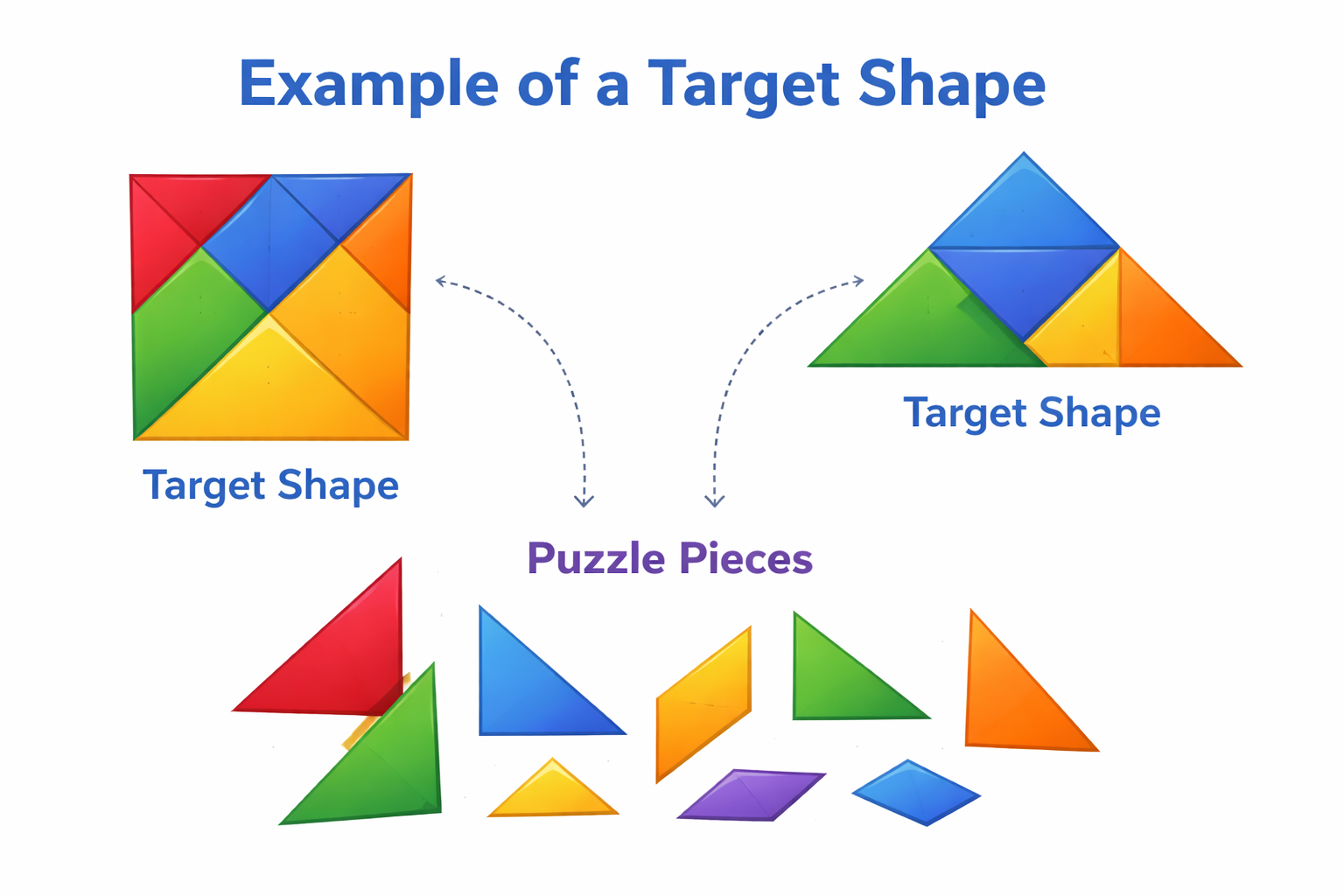
- Examine the Pieces: Look carefully at each of the smaller shapes you are given. Are they triangles, squares, rectangles, or something else? Note their sizes and angles.
- Mental Rotation and Flipping: Imagine turning or flipping the smaller shapes in your mind. Can you fit them together in different ways?
- Trial and Error: Start trying to fit the shapes together. Don't be afraid to make mistakes! If something doesn't work, try a different arrangement.
- Focus on the Edges: Pay close attention to the edges of the shapes. Do they match up with the edges of the target shape?
Key Shapes to Know:
- Square: A shape with four equal sides and four right angles.
- Triangle: A shape with three sides and three angles.
- Rectangle: A shape with four sides and four right angles, but not all sides are equal.
- Circle: A round shape with no corners or edges.
Tips and Tricks:
- Start with the Largest Pieces: Try to fit the biggest shapes into the target shape first.
- Look for Matching Angles: See if any of the smaller shapes have angles that match angles in the target shape.
- Don't Give Up! These puzzles can be tricky, but with practice, you'll become a shape-solving expert!
Keep learning, free
Create a free Syllabax account to unlock practice questions and games for this topic.
Visual Learning Enhanced! 🚀
To help you master this topic, we use Advanced Syllabax AI to generate detailed diagrams and visual models.
Note on Visuals: The AI sometimes makes spelling errors in image labels. Please refer to the lesson text for the correct terminology.