Waste Management: e-waste, biomedical waste – Environment & Ecology
Watch this topic in 60 seconds
Free preview · Lesson 1
Waste Management: e-waste, biomedical waste – Environment & Ecology (Foundational)
Waste Management: E-waste and Biomedical Waste
Waste management is how we handle the trash we create. It's important to keep our environment clean and healthy. This lesson focuses on two special types of waste: e-waste and biomedical waste.
What is Waste?
Waste is any unwanted or unusable material. It can be solid, liquid, or gas. We create waste in our homes, schools, hospitals, and factories.
E-waste: Electronic Waste
E-waste is waste from electronic devices. This includes things like:
- Old computers
- Mobile phones
- Televisions
- Printers
- Batteries
E-waste can be dangerous because it contains harmful substances like lead, mercury, and cadmium. If not handled properly, these substances can pollute the soil and water.
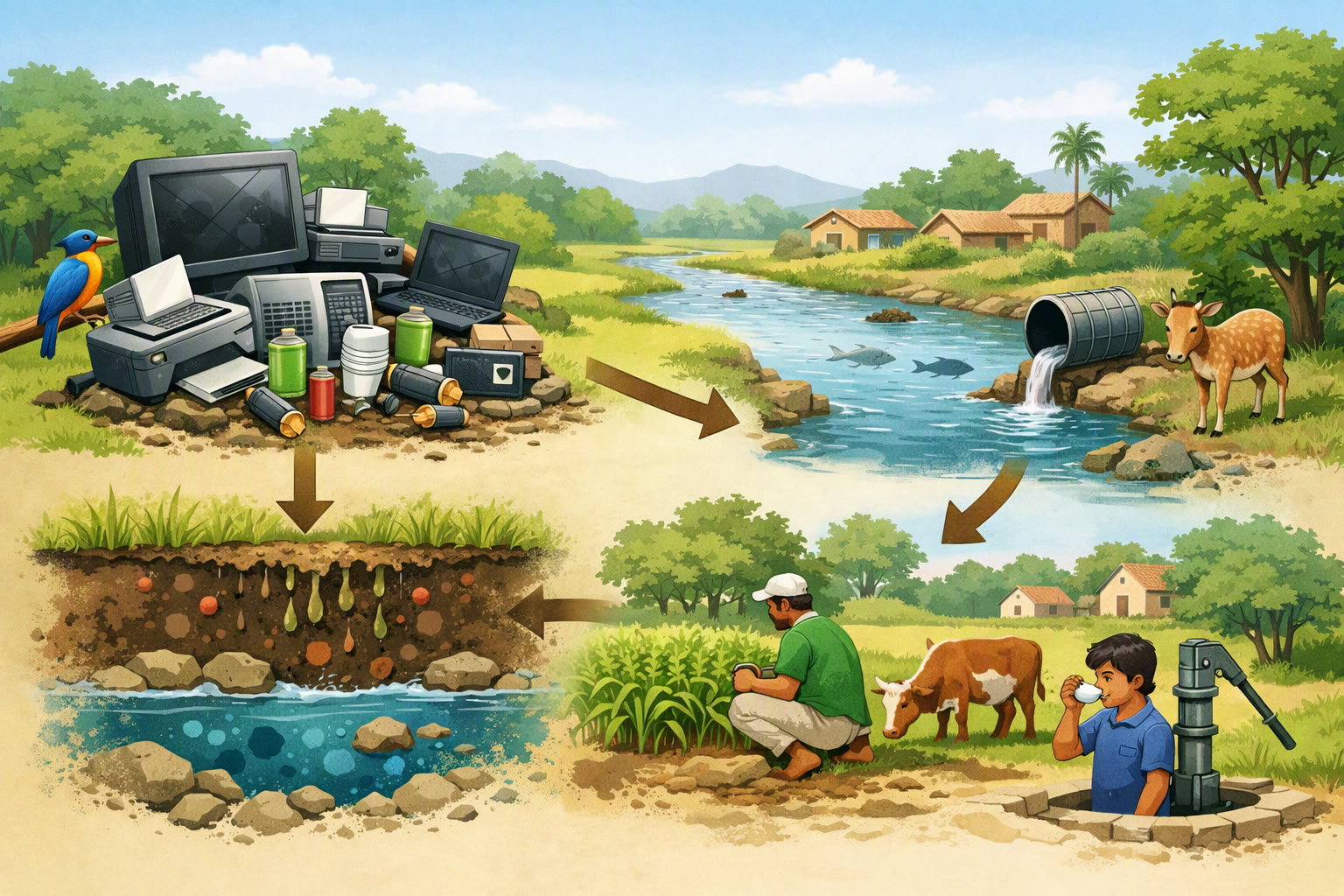
How to manage E-waste: The best way to manage e-waste is to:
- Recycle: Take your old electronics to a recycling center.
- Donate: If the device still works, donate it to someone who can use it.
- Proper Disposal: If recycling or donating isn't possible, dispose of it properly at a designated facility.
Biomedical Waste
Biomedical waste is waste from hospitals, clinics, and laboratories. It can include:
- Needles and syringes
- Bandages
- Body parts
- Infected materials
Biomedical waste can be very dangerous because it can spread diseases. It must be handled very carefully to protect people's health.
How to manage Biomedical Waste: Biomedical waste management involves several steps:
- Segregation: Separating different types of waste into different containers.
- Collection: Collecting the waste in special bags and containers.
- Treatment: Treating the waste to kill germs (e.g., using autoclaves).
- Disposal: Disposing of the treated waste safely (e.g., in landfills designed for biomedical waste).
Why is Waste Management Important?
Proper waste management is important because it:
- Protects the environment from pollution.
- Protects people's health from diseases.
- Conserves resources by recycling materials.
Keep learning, free
Create a free Syllabax account to unlock the other 1 lesson, practice questions and games.
Visual Learning Enhanced! 🚀
To help you master this topic, we use Advanced Syllabax AI to generate detailed diagrams and visual models.
Note on Visuals: The AI sometimes makes spelling errors in image labels. Please refer to the lesson text for the correct terminology.