Classification: domestic & wild (BIOLOGY)
Watch this topic in 60 seconds
Free preview · Lesson 1
Understanding Classification: domestic & wild (BIOLOGY)
Classification: Domestic vs. Wild Animals
Welcome, young scientists! Today, we're going on an exciting journey to explore the amazing world of animals and learn how we can sort them into two big groups: domestic animals and wild animals. Think of it like sorting your toys – you might have toys you play with at home, and toys you only see at the playground. Animals are a bit like that too!
What Does Classification Mean?
Classification is just a fancy word for sorting and organizing things based on what they have in common. In biology, scientists classify living things (like plants and animals) to help us understand them better. It's like making a big, organized library for all the living things on Earth!
Meet the Domestic Animals!
Domestic animals are animals that have been tamed and kept by humans for a long time. They often live with us, help us, or are raised for food or companionship. Think of them as animals that have become our friends and helpers!
Characteristics of Domestic Animals:
- Tamed by Humans: They are not afraid of people and have learned to live alongside us. Imagine a puppy that wags its tail when you pet it – that's a sign of domestication!
- Depend on Humans: Many domestic animals rely on humans for food, shelter, and care. A pet cat needs you to fill its food bowl and provide a warm place to sleep.
- Bred by Humans: Over many, many years, humans have chosen specific animals to breed. This means they selected animals with traits they liked (like being gentle or producing lots of milk) and helped them have babies. This is how we got so many different kinds of dogs and cows!
- Often Live in or Near Homes: You'll find these animals on farms, in our backyards, or even inside our houses as pets.
Examples of Domestic Animals:
Can you think of any animals that fit this description? Here are some common ones:
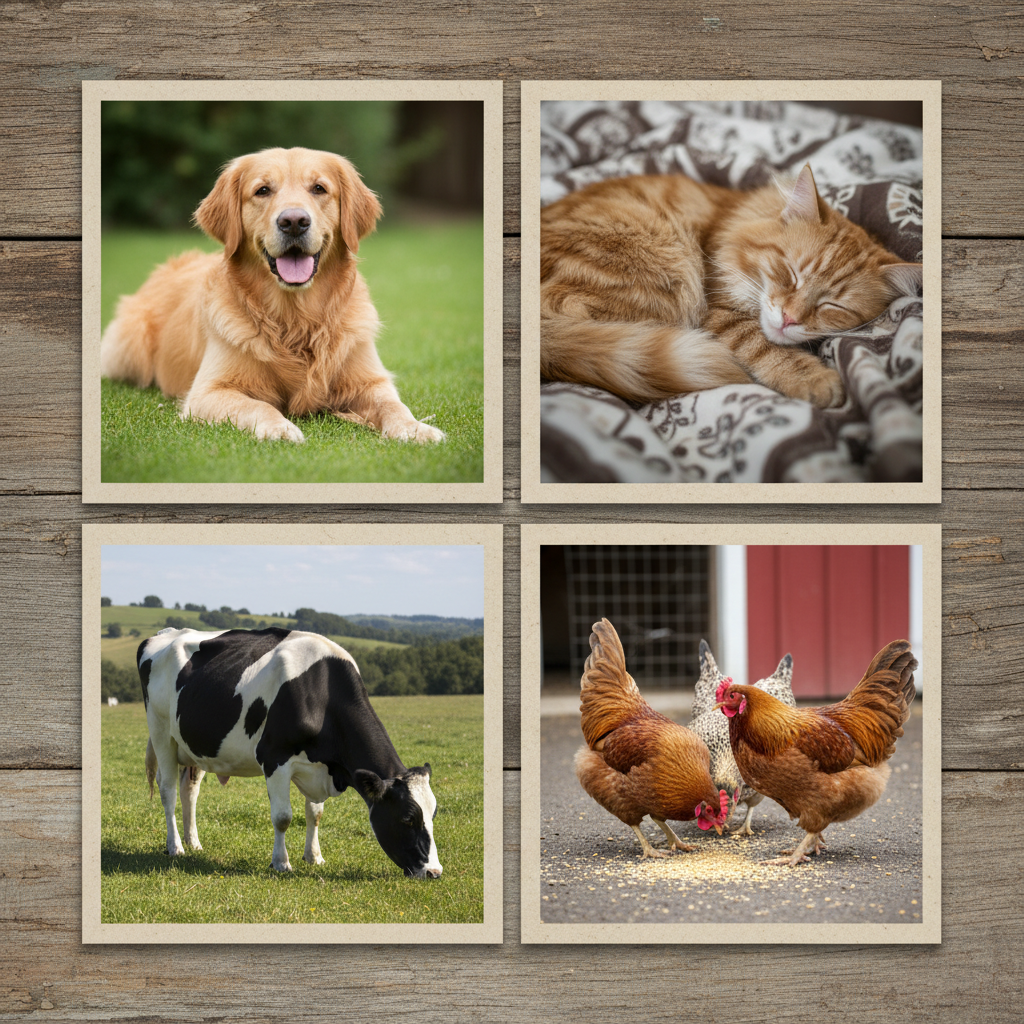
- Dogs: Our loyal companions! They were one of the first animals to be domesticated, probably helping humans hunt and guard their homes.
- Cats: Independent but often loving pets that help keep rodents away.
- Cows: Raised for milk and meat. They are gentle giants that live on farms.
- Chickens: Farm animals that give us eggs and meat.
- Horses: Used for riding, carrying things, and in sports.
- Sheep: Raised for their wool (to make sweaters!) and meat.
- Pigs: Farm animals raised for meat.
Analogy: Think of domestic animals like the helpers in a big family. The dog is the playful friend, the cat is the quiet roommate, and the cow is the generous provider of milk. They all live together and have special jobs or roles!
Exploring the Wild Animals!
Wild animals are animals that live freely in their natural habitats. They find their own food, build their own homes, and generally avoid humans. They are the adventurers of the animal kingdom!
Characteristics of Wild Animals:
- Live in Natural Habitats: They live in forests, jungles, oceans, deserts, mountains – wherever they can survive and find what they need.
- Find Their Own Food: They hunt, forage (look for plants and berries), or scavenge for their meals. A lion needs to hunt its prey, and a squirrel needs to find nuts.
- Self-Sufficient: They don't rely on humans for survival. They build their own nests, dens, or burrows.
- Avoid Humans: Most wild animals are shy and will run away or hide if they see a person. This is a survival instinct to stay safe.
- Not Tamed: They have not been bred or trained by humans to live with us.
Examples of Wild Animals:
Here are some examples of animals that live in the wild:
- Lions: Majestic predators that roam the African savanna.
- Elephants: Huge, intelligent mammals living in Africa and Asia.
- Tigers: Powerful big cats found in Asian forests.
- Bears: Found in forests and mountains, they forage for berries, fish, and other food.
- Dolphins: Intelligent marine mammals swimming in the oceans.
- Eagles: Birds of prey that soar high in the sky.
- Snakes: Reptiles found in various habitats around the world.
- Wolves: Social hunters living in packs in forests and wilderness areas.
Analogy: Think of wild animals like the explorers and adventurers of the world. They are independent, resourceful, and brave, navigating their own paths in vast, untamed landscapes.
Key Differences: Domestic vs. Wild
It's important to remember that even though some wild animals can be tamed (like a bear cub), they are still considered wild if they haven't been domesticated over many generations. The key is their long-term relationship with humans.
Here’s a simple way to think about it:
- Domestic animals: "Friends and helpers of humans, living with us."
- Wild animals: "Independent explorers of nature, living on their own."
Why Does Classification Matter?
Understanding the difference between domestic and wild animals helps us in many ways:
- Conservation: We know which animals need our protection in their natural homes (wild animals) and which ones we care for directly (domestic animals).
- Safety: It helps us know how to behave around different animals. We can pet a dog, but we should admire a lion from a safe distance!
- Understanding Animals: It helps us learn about their needs and behaviors.
So, the next time you see an animal, try to think: Is it a domestic animal, living with humans, or a wild animal, exploring its own world?
Keep learning, free
Create a free Syllabax account to unlock practice questions and games for this topic.
Visual Learning Enhanced! 🚀
To help you master this topic, we use Advanced Syllabax AI to generate detailed diagrams and visual models.
Note on Visuals: The AI sometimes makes spelling errors in image labels. Please refer to the lesson text for the correct terminology.