Ecosystems & Food Webs – Environment & Ecology
Watch this topic in 60 seconds
Free preview · Lesson 1
Ecosystems & Food Webs – Environment & Ecology (Foundational)
Ecosystems & Food Webs – Environment & Ecology (Foundational)
Hey there, future ecologists! Welcome to the amazing world of ecosystems and food webs. Let's dive in!
What is an Ecosystem?
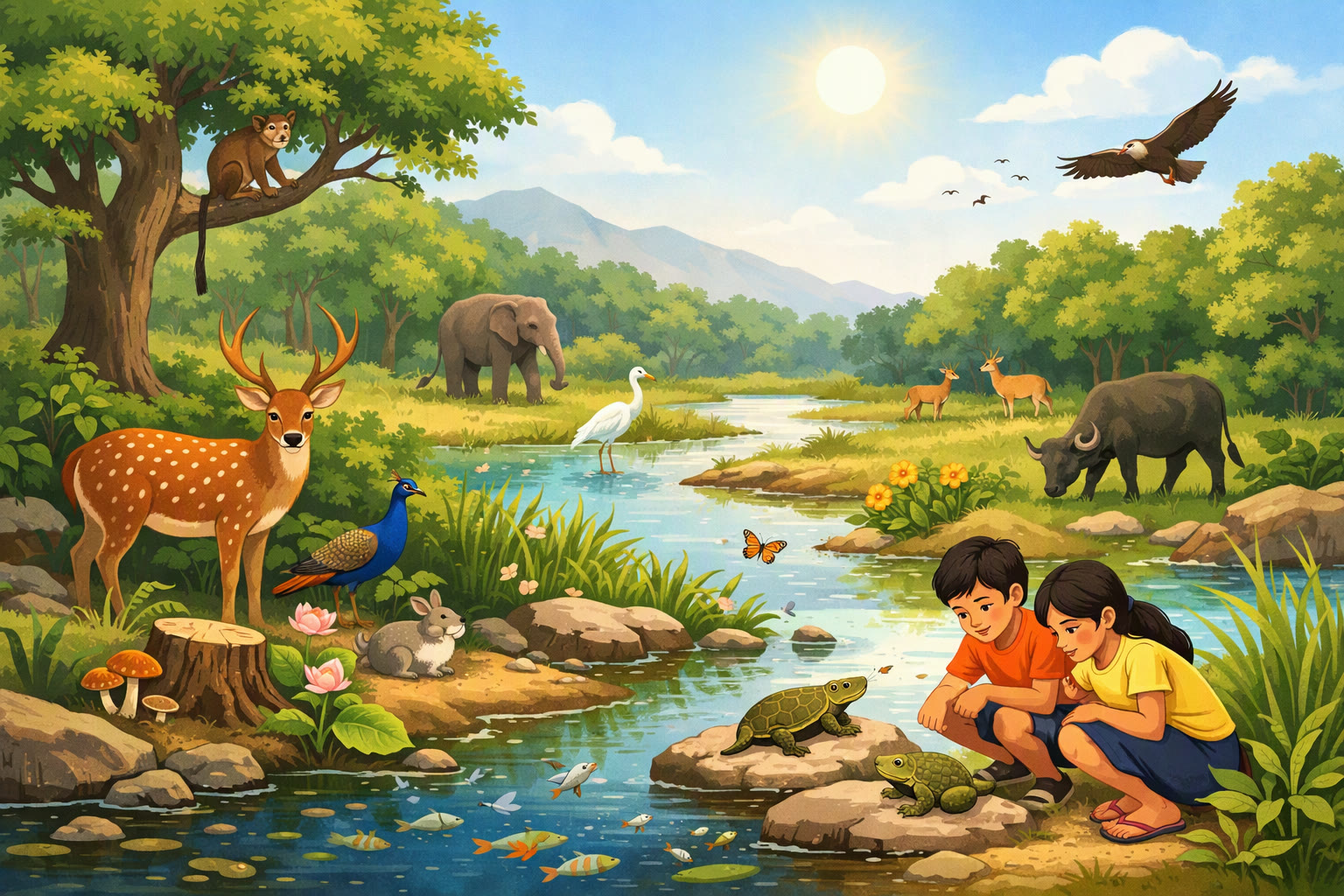
An ecosystem is like a big neighborhood where plants, animals, and tiny organisms (like bacteria) all live together and interact with their physical environment (like soil, water, and air). Think of a forest, a pond, or even your backyard!
- Living things: Plants, animals, and microorganisms.
- Non-living things: Sunlight, water, soil, air, and temperature.
What is a Food Web?
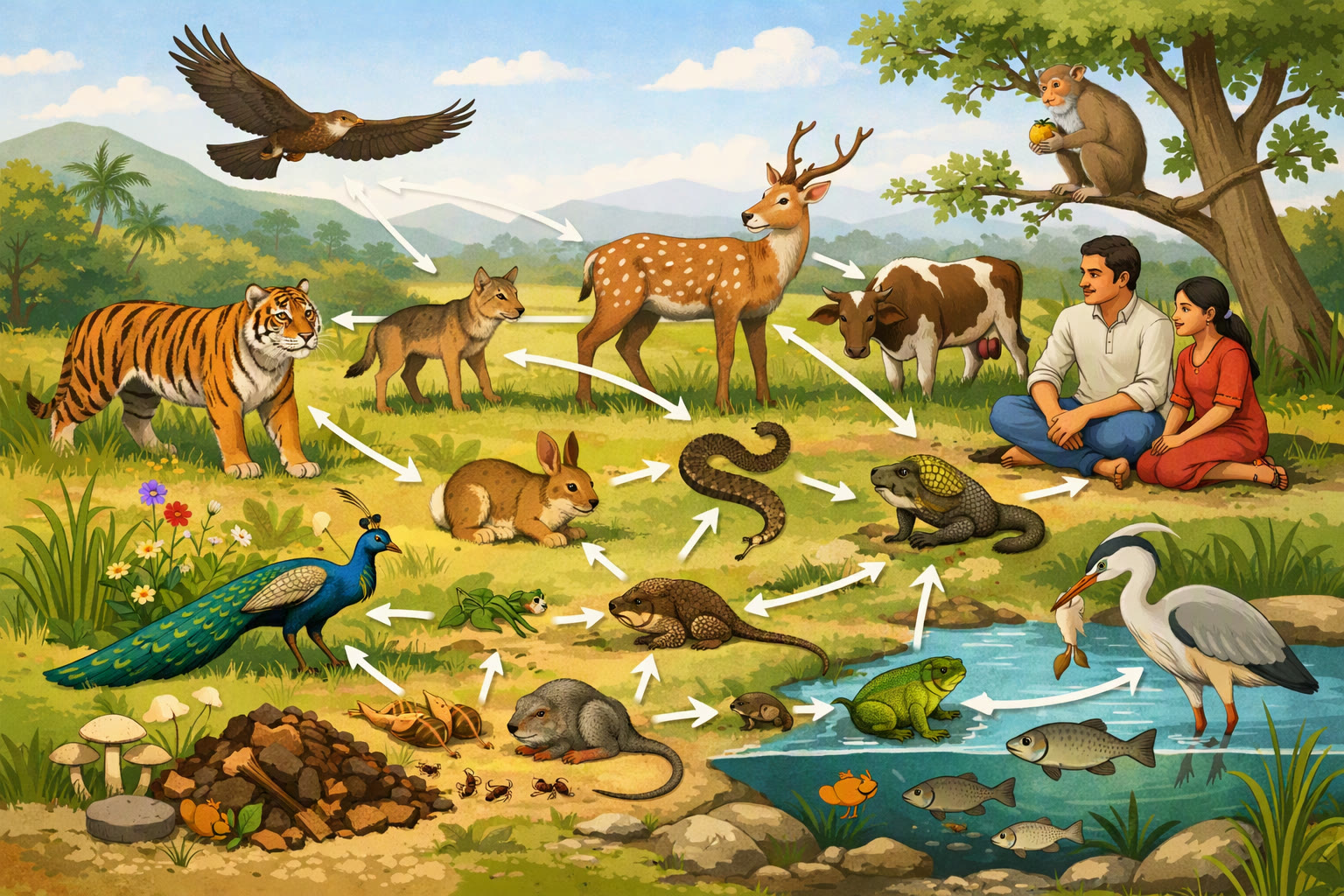
A food web shows how different organisms in an ecosystem eat each other to get energy. It's like a map of who eats whom!
- Producers: These are plants! They make their own food using sunlight (photosynthesis). They are at the bottom of the food web.
- Consumers: These are animals that eat other organisms. They can be herbivores (plant-eaters), carnivores (meat-eaters), or omnivores (eat both!).
- Decomposers: These are organisms like bacteria and fungi that break down dead plants and animals. They recycle nutrients back into the soil.
Types of Consumers
- Herbivores: Animals that eat only plants (e.g., rabbits, deer).
- Carnivores: Animals that eat only meat (e.g., lions, sharks).
- Omnivores: Animals that eat both plants and animals (e.g., bears, humans).
Food Chain vs. Food Web
A food chain is a simple, linear sequence showing who eats whom. A food web is more complex and shows many interconnected food chains in an ecosystem.
Why are Ecosystems and Food Webs Important?
- Balance: They help keep the environment in balance. If one part of the food web disappears, it can affect everything else.
- Energy: They show how energy flows through the environment.
- Survival: They are essential for the survival of all living things.
Keep exploring and learning about our amazing planet!
Keep learning, free
Create a free Syllabax account to unlock practice questions and games for this topic.
Visual Learning Enhanced! 🚀
To help you master this topic, we use Advanced Syllabax AI to generate detailed diagrams and visual models.
Note on Visuals: The AI sometimes makes spelling errors in image labels. Please refer to the lesson text for the correct terminology.