Calendar & Clocks -Verbal Reasoning
Watch this topic in 60 seconds
Free preview · Lesson 1
Calendar & Clocks -Verbal Reasoning (Foundational)
Welcome, Time Travelers! Understanding Calendars & Clocks
Hello, future super-solvers! Have you ever wondered how we keep track of all the amazing things happening around us? From planning your next birthday party to knowing when your favorite show starts, calendars and clocks are our trusty guides through the river of time!
In this lesson, we're going to become detectives of time, using our words to solve puzzles about dates and times. This is what we call Verbal Reasoning – thinking through problems described with words. Don't worry, we'll keep it super simple and fun!
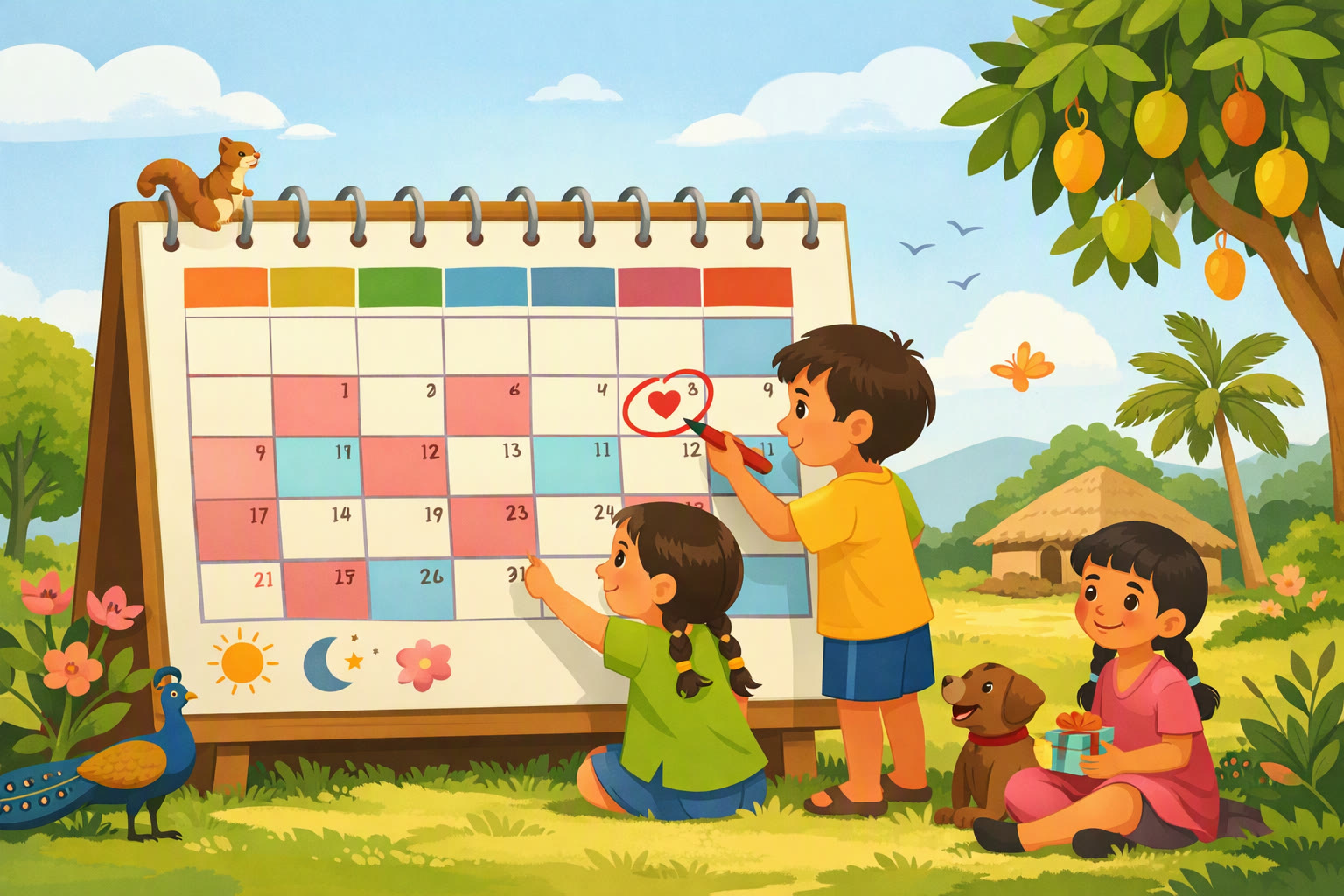
What is a Calendar? Your Yearly Storybook!
Think of a calendar as a giant storybook that tells us about the days, weeks, and months of a whole year. It helps us organize our lives!
- A day is how long it takes for the Earth to spin around once.
- A week is a group of 7 days (Monday, Tuesday, Wednesday, Thursday, Friday, Saturday, Sunday).
- A month is a longer period, usually about 30 or 31 days. There are 12 months in a year: January, February, March, April, May, June, July, August, September, October, November, December.
- A year is how long it takes for the Earth to travel all the way around the Sun once. Most years have 365 days.
Quick Calendar Facts:
- Some months have 30 days (like September, April, June, November).
- Some months have 31 days (like January, March, May, July, August, October, December).
- February usually has 28 days. But wait! Every four years, February gets an extra day, making it 29 days. This is called a Leap Year.
Knowing these facts helps us figure out dates. For example, if someone says "My birthday is two weeks after July 10th," you can count forward to find the date!
What is a Clock? Your Daily Time Tracker!
While a calendar shows us the big picture of a year, a clock helps us track time during a single day. It tells us the exact hour and minute!
- There are 24 hours in a full day.
- Each hour has 60 minutes.
- Each minute has 60 seconds.
We often split the day into two parts:
- AM (stands for "ante meridiem"): This is from midnight (12:00 AM) all the way up to just before noon (12:00 PM). Think of it as "morning" time.
- PM (stands for "post meridiem"): This is from noon (12:00 PM) all the way up to just before midnight (12:00 AM). Think of it as "afternoon and evening" time.
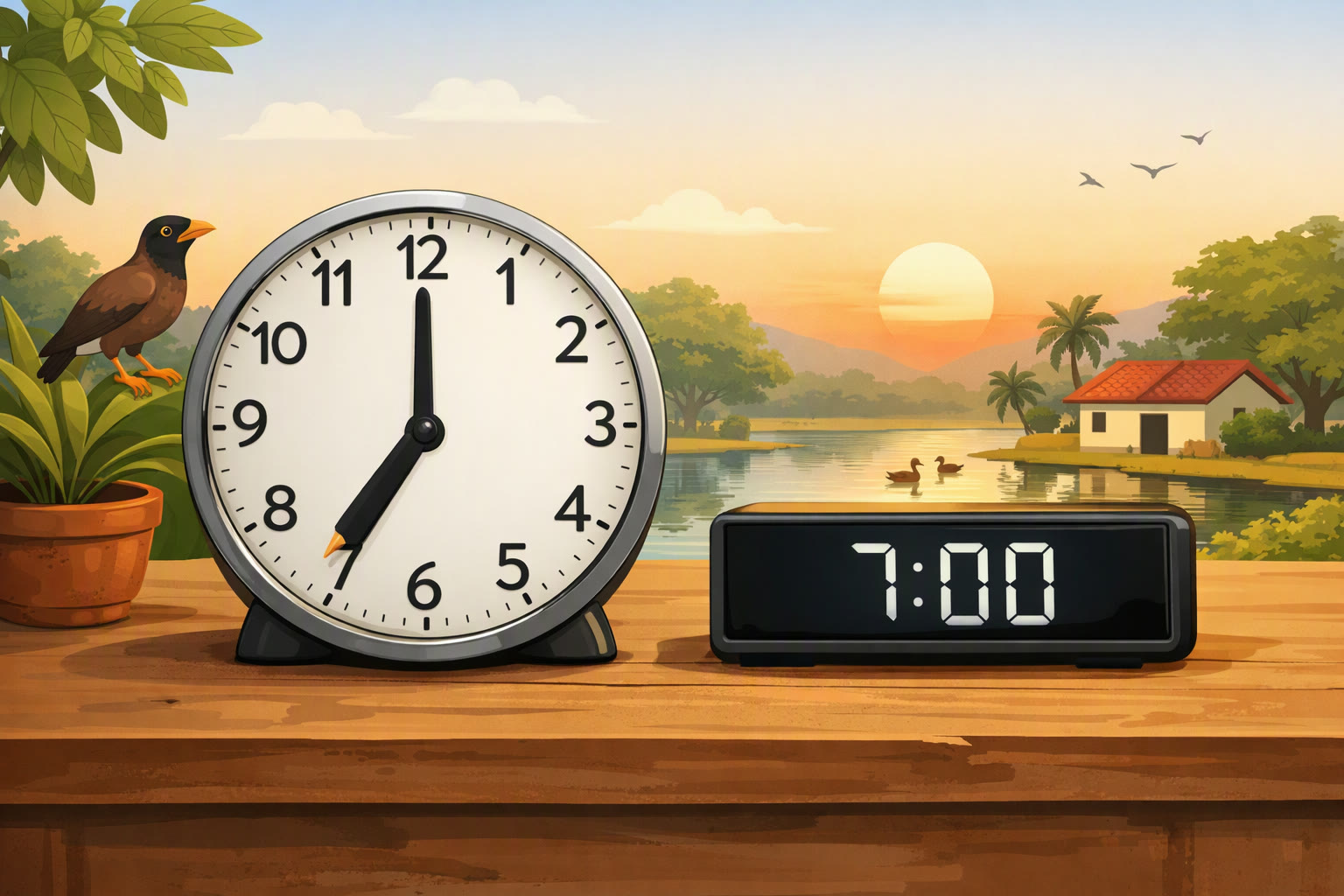
So, 7:00 AM is morning, and 7:00 PM is evening!
Verbal Reasoning with Calendars: Solving Date Puzzles
This is where the fun begins! We'll use our calendar knowledge to solve word problems.
Example 1: If today is Wednesday, what day will it be in 5 days?
- Count forward: Thursday (1), Friday (2), Saturday (3), Sunday (4), Monday (5).
- Answer: It will be Monday.
Example 2: My trip starts on June 20th and lasts for 10 days. What date will my trip end?
- We need to add 10 days to June 20th.
- June has 30 days.
- 20th + 10 days = 30th.
- Answer: The trip will end on June 30th.
Verbal Reasoning with Clocks: Solving Time Puzzles
Now let's use our clock knowledge for time-based word problems!
Example 1: A movie starts at 4:00 PM and lasts for 1 hour and 30 minutes. What time will the movie end?
- Starting time: 4:00 PM
- Add 1 hour: 5:00 PM
- Add 30 minutes: 5:30 PM
- Answer: The movie will end at 5:30 PM.
Example 2: You need to leave for school at 7:45 AM. If it takes you 20 minutes to get ready, what is the latest time you should start getting ready?
- We need to go backward 20 minutes from 7:45 AM.
- 7:45 AM - 20 minutes = 7:25 AM.
- Answer: You should start getting ready by 7:25 AM.
Putting it All Together!
Solving these problems is all about carefully reading the question, knowing your calendar and clock facts, and then counting or adding/subtracting correctly. You've got this!
Keep learning, free
Create a free Syllabax account to unlock practice questions and games for this topic.
Visual Learning Enhanced! 🚀
To help you master this topic, we use Advanced Syllabax AI to generate detailed diagrams and visual models.
Note on Visuals: The AI sometimes makes spelling errors in image labels. Please refer to the lesson text for the correct terminology.