Learning Journey
Watch this topic in 60 seconds
Free preview · Lesson 1
Understanding Food habits[BIOLOGY]
Understanding Food Habits: What Fuels Our Bodies?
Imagine your body is like a super cool car. Just like a car needs fuel to run, move, and do all sorts of amazing things, your body needs food! Food is our fuel. But not all cars use the same kind of fuel, right? Some use gasoline, some use electricity, and some might even run on special kinds of gas. Similarly, different living things have different food habits – they eat different kinds of food to get the energy and nutrients they need to grow, play, and survive.
What are Food Habits?
Food habits, or dietary habits, simply describe what an organism eats. It’s like asking, “What’s on your plate?” or “What does your lunchbox contain?” For humans, our food habits can be influenced by many things: where we live, what our families eat, what we like the taste of, and even what’s available in the grocery store. For animals and plants, their food habits are usually determined by what nature provides for them.
Why Do Living Things Need Food?
Food is essential for life! It provides us with:
- Energy: This is like the electricity that powers your video games or the gasoline that makes your car go. Energy from food helps us run, jump, think, breathe, and even sleep! Without energy, our bodies wouldn't be able to do anything.
- Growth: Think about how a tiny seed grows into a big tree, or how a baby grows into an adult. Food provides the building blocks, like tiny LEGO bricks, that help our bodies grow bigger and stronger.
- Repair: Sometimes we get little bumps and scrapes, or our muscles get tired after playing. Food helps our bodies repair damaged parts and keeps us healthy.
- Staying Healthy: Food contains special things called vitamins and minerals. These are like the special tools that keep our body’s machines working smoothly and protect us from getting sick.
Different Types of Eaters: Classifying Food Habits
Because different living things eat different things, scientists have grouped them into categories based on their food habits. It’s like sorting toys into different bins: cars, dolls, building blocks. Let’s look at the main groups:
1. Herbivores: The Plant-Eaters
Herbivores are living things that only eat plants. Think of them as nature’s vegetarians! Their bodies are usually designed to eat and digest plant matter.
- Examples: Cows, sheep, rabbits, deer, elephants, and even some insects like grasshoppers.
- Analogy: Imagine a lawnmower. It's designed to cut and process grass. Herbivores have specialized teeth and digestive systems for breaking down tough plant parts like leaves, grass, fruits, and seeds.
- Why plants? Plants are packed with energy and nutrients that herbivores need to survive and grow.
2. Carnivores: The Meat-Eaters
Carnivores are living things that only eat other animals (meat). They are the hunters and scavengers of the animal kingdom.
- Examples: Lions, tigers, wolves, sharks, eagles, and spiders.
- Analogy: Think of a super-sharp knife. Carnivores often have sharp teeth, claws, or beaks to catch, kill, and tear apart their prey. Their digestive systems are good at processing meat.
- Why meat? Meat provides them with essential proteins and fats needed for energy and building their bodies.
3. Omnivores: The Everything-Eaters
Omnivores are living things that eat both plants and animals. They are the most flexible eaters!
- Examples: Humans, bears, pigs, chickens, and raccoons.
- Analogy: Imagine a buffet! Omnivores can enjoy a variety of foods. Their teeth and digestive systems are adapted to handle both plant and animal matter.
- Why both? Eating a mix of plants and animals gives omnivores a wider range of nutrients and energy sources, which can be very helpful when food availability changes.
4. Decomposers: The Nature's Recyclers
While not typically thought of as 'eating' in the same way as the others, decomposers play a crucial role in breaking down dead plants and animals. They are essential for recycling nutrients back into the environment.
- Examples: Bacteria and fungi (like mushrooms).
- Analogy: Think of them as tiny clean-up crews. They break down dead leaves, fallen trees, and dead animals, turning them back into soil nutrients that plants can use to grow.
- Why break down dead things? This process is vital for the health of ecosystems, preventing waste from piling up and making sure essential nutrients are available for new life.
Food Habits in Different Environments
The environment where a living thing lives greatly influences its food habits. What food is available depends on the climate, the plants that grow there, and the other animals present.
- In a forest: Bears (omnivores) might eat berries, roots, insects, and fish. Deer (herbivores) will munch on leaves and twigs.
- In the ocean: Sharks (carnivores) hunt fish. Whales (some are filter feeders, eating tiny organisms, and some eat larger prey) have different diets. Sea turtles might eat jellyfish or plants.
- In your backyard: Birds might eat seeds (herbivore-like) or insects (carnivore-like). Squirrels (omnivores) eat nuts and sometimes bird eggs.
Humans and Our Food Habits
As humans, we are omnivores. However, our food habits can vary greatly around the world. Some people choose to be vegetarians (they don't eat meat) or vegans (they don't eat any animal products at all). These are personal choices that affect their food habits.
It's important to eat a balanced diet, which means getting a variety of foods from different groups to ensure our bodies get all the energy, nutrients, and vitamins they need to stay healthy and strong. Think of it as making sure your car gets the right kind of fuel and oil to run its best!
Recap:
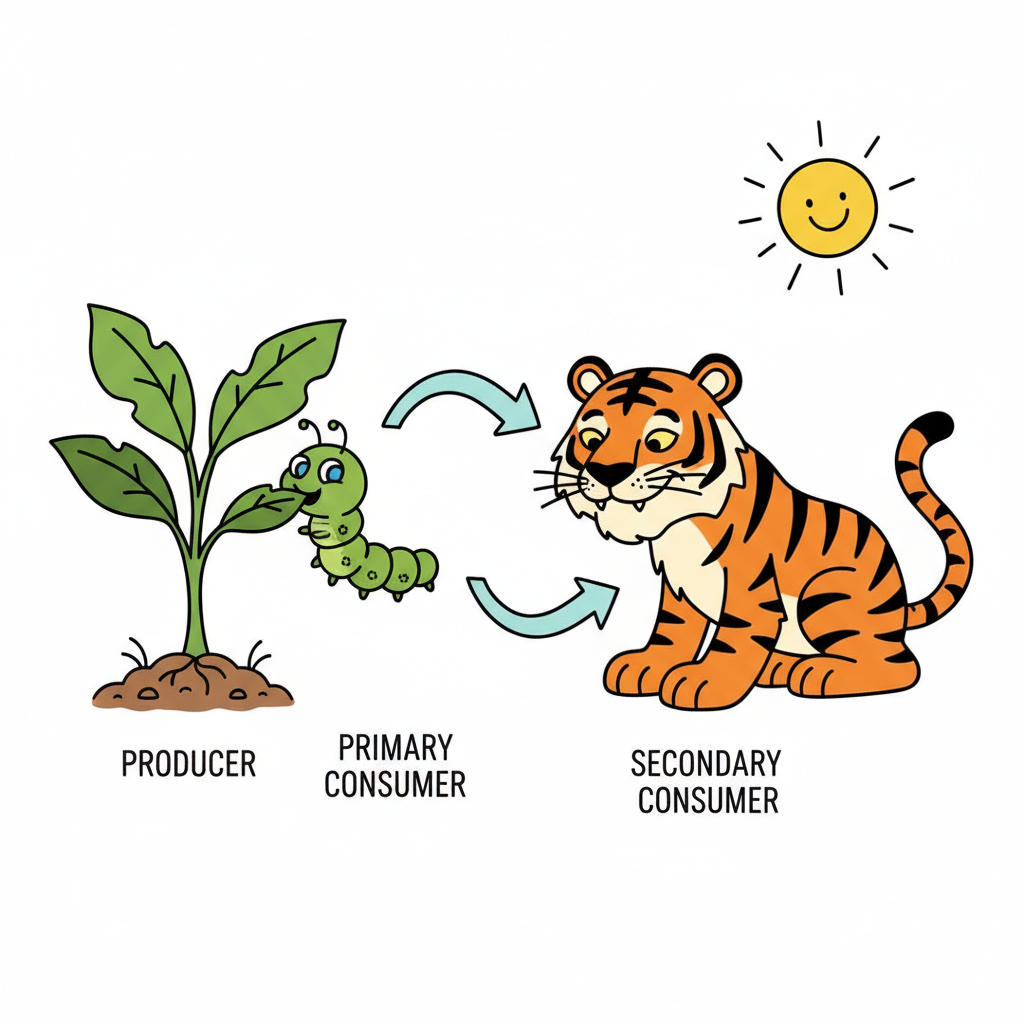
Living things need food for energy, growth, and repair. Their food habits describe what they eat. We can classify them into herbivores (plant-eaters), carnivores (meat-eaters), and omnivores (eat both). Decomposers help recycle dead matter. Our environment and choices influence our own food habits, and eating a balanced diet is key to staying healthy.
Keep learning, free
Create a free Syllabax account to unlock practice questions and games for this topic.
Visual Learning Enhanced! 🚀
To help you master this topic, we use Advanced Syllabax AI to generate detailed diagrams and visual models.
Note on Visuals: The AI sometimes makes spelling errors in image labels. Please refer to the lesson text for the correct terminology.