Simple food chains (Environment )
Watch this topic in 60 seconds
Free preview · Lesson 1
Understanding Simple food chains (Environment )
What's for Dinner? Exploring Simple Food Chains!
Hello, young explorers! Have you ever wondered where your food comes from? Or what animals eat in the wild? It's not just about going to the grocery store! In nature, food works in a special line-up called a food chain. Think of it like a treasure hunt where everyone is looking for food, and one thing leads to another!
A food chain shows how energy (like a superpower boost!) moves from one living thing to another. It's like a game of 'pass the energy' where one living thing eats another to get the energy it needs to grow, move, and play!
The Energy Starter: The Sun!
Before any food chain can start, we need a super important ingredient: sunlight! Think of the sun as the biggest power plant in the sky. It sends down amazing energy that kick-starts almost all food chains on Earth. Without the sun, many living things wouldn't have the energy they need to even begin making food!
Step 1: The Food Makers (Producers)
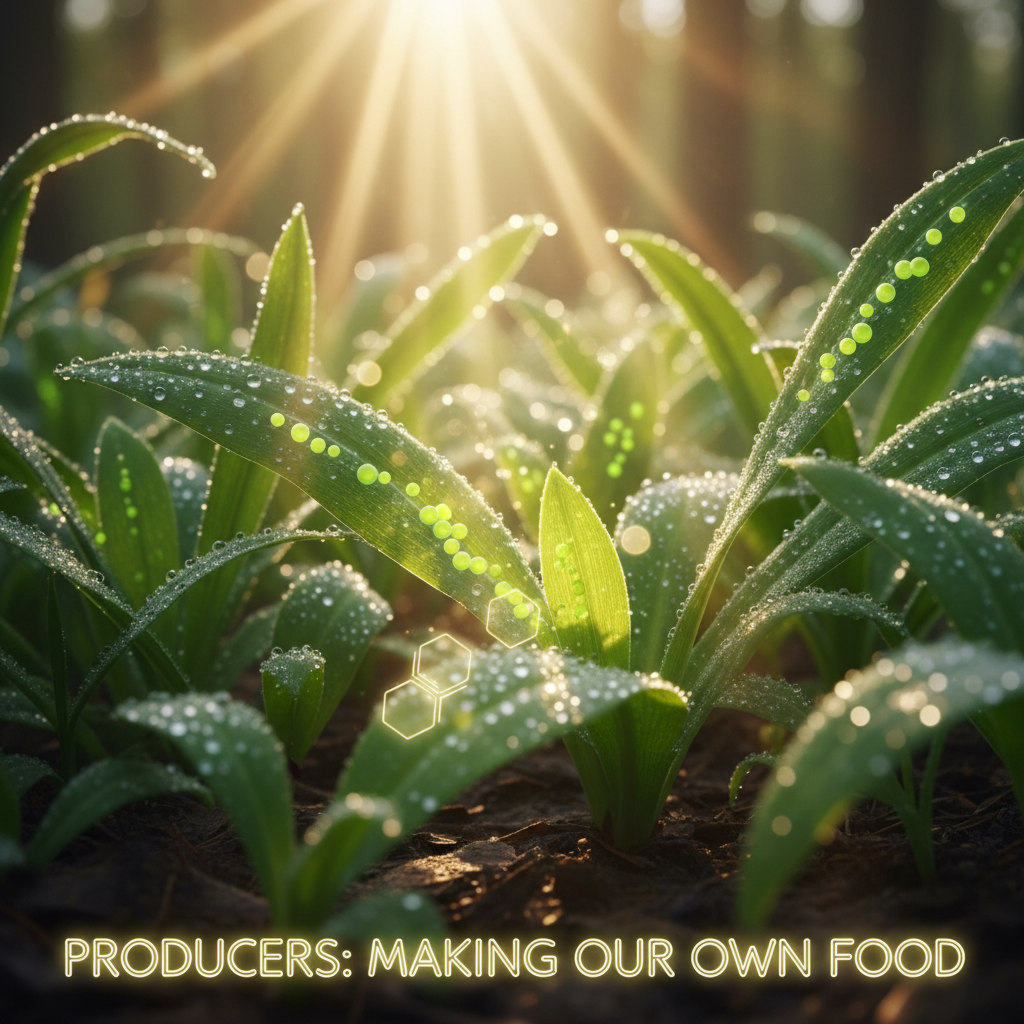
Imagine you're a super chef who can make your own delicious meal out of thin air, water, and sunlight! That's exactly what producers do. Producers are living things, mostly plants like grass, trees, and flowers, that use sunlight, water, and air to make their own food. This amazing process is called photosynthesis.
So, plants are like the world's best bakers! They don't need to eat other living things because they bake their own sugary food right inside their leaves. They are the first link in almost every food chain because they create the original energy-packed 'food' that others will eat.
Step 2: The Food Eaters (Consumers)
Now, not everyone can be a super chef like a plant. Most animals need to eat other living things to get their energy. These animals are called consumers. Think of consumers as the diners at the restaurant, eating the food that's already been made!
a) Herbivores: The Plant Eaters (Primary Consumers)
Some consumers love to eat plants! These animals are called herbivores. Imagine a bunny munching on carrots or a cow happily eating grass. These animals are like vegetarians in the animal kingdom! Because they eat the producers directly, we call them primary consumers. They are the first group of eaters in the food chain.
Examples: Rabbits, deer, caterpillars, cows, sheep.
b) Carnivores: The Meat Eaters (Secondary Consumers)
Other consumers prefer to eat other animals. These are called carnivores. Think of a lion hunting a zebra, or a fox catching a rabbit. Carnivores are like the meat-eaters! If a carnivore eats a herbivore (which ate a plant), we call that carnivore a secondary consumer. They get their energy from eating other consumers.
Examples: Lions, wolves, snakes, eagles, foxes.
c) Omnivores: The "Eat-Both" Eaters
And then there are some consumers who like to eat both plants AND animals! These clever eaters are called omnivores. Humans are a great example of omnivores – we eat vegetables, fruits, and meat! Bears also eat berries (plants) and fish (animals).
Examples: Humans, bears, raccoons, some birds.
Putting It All Together: The Food Chain!
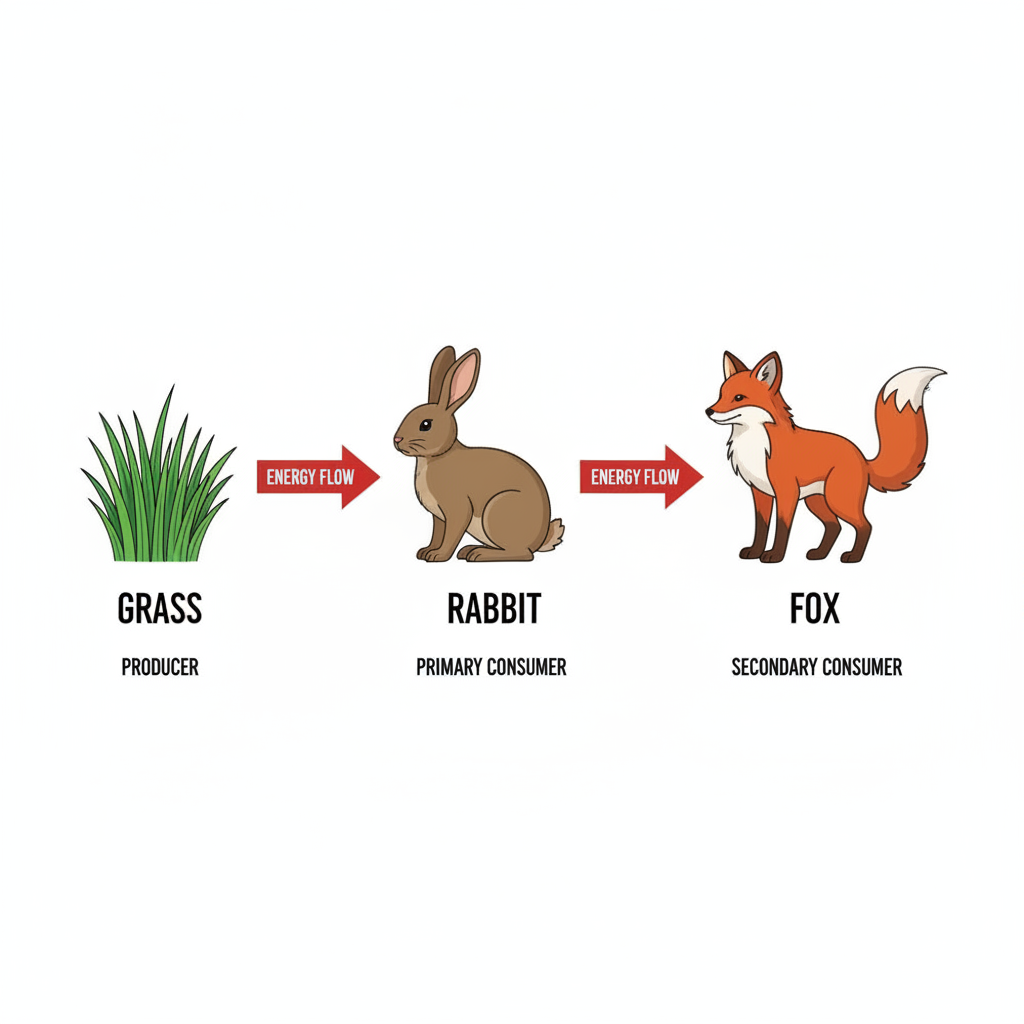
So, a food chain is like a linked chain or a line of dominoes, showing how energy flows from the sun to producers, then to primary consumers, then to secondary consumers, and so on. Each living thing is a 'link' in the chain!
Here's a simple example:
- The Sun gives energy to...
- Grass (a Producer, makes its own food)
- A Rabbit (a Primary Consumer/Herbivore, eats the grass) gets energy from the grass.
- A Fox (a Secondary Consumer/Carnivore, eats the rabbit) gets energy from the rabbit.
So, the energy started with the sun, went into the grass, then into the rabbit, and finally into the fox! If the grass disappears, the rabbit might not have food, and then the fox might not have food either. Every link is important!
 ⚠️ This picture may have spelling mistakes. Trust the words in the lesson.
Why Are Food Chains Important?
Understanding food chains helps us see how everything in nature is connected. It's like a giant puzzle where every piece, every animal, and every plant has an important role. If one part of the chain is broken (like if too many rabbits disappear), it can affect all the other parts (like the foxes might get hungry).
Food chains help keep nature balanced and healthy. They remind us that every living thing, big or small, plays a part in the amazing natural world!
Keep learning, free
Create a free Syllabax account to unlock practice questions and games for this topic.
Visual Learning Enhanced! 🚀
To help you master this topic, we use Advanced Syllabax AI to generate detailed diagrams and visual models.
Note on Visuals: The AI sometimes makes spelling errors in image labels. Please refer to the lesson text for the correct terminology.