Safety rules (Electricity)
Watch this topic in 60 seconds
Free preview · Lesson 1
Understanding Safety rules (Electricity)
Spark Safely! Your Guide to Electricity Rules
Hello, young learners! Have you ever wondered what makes your lights turn on, your TV play cartoons, or your tablet charge up? It's something super amazing called electricity! Electricity is like a powerful, invisible helper that makes so many things in our world work. It's a wonderful tool, but just like a superhero with super strength, it needs to be handled with great care and respect.
Imagine electricity as tiny, super-fast runners called 'electrons' zipping through special paths called wires. These tiny runners carry energy that powers all our gadgets. When they have a clear path, called a circuit, they can make things happen! Think of it like a race track for these tiny racers; if the track is complete, they can run and power your toys.
Why Can Electricity Be Dangerous?
Even though electricity is super helpful, it can also be very dangerous if we don't follow the rules. There are two main dangers to know about:
1. Electric Shock
If you accidentally touch the 'racers' (electricity) when they're not in their safe wires, they can try to run through you! This is called an electric shock. It can feel like a small tingle, a poke, or even a very bad pain. Your body can be a path for electricity, which is why it's so important to keep a safe distance. Imagine if you accidentally stepped onto the tiny racers' track – they would bump right into you!
2. Fires
Sometimes, if too many 'racers' try to squeeze into a wire that's too small, or if a wire is broken, it can get very, very hot. So hot, in fact, that it can start a fire! This is why it's important not to plug too many things into one outlet or use damaged cords. Think of it like trying to fit too many cookies onto one small plate; if you put too many, they'll spill over and make a mess (or in electricity's case, cause a fire!).
Now, let's learn the most important rules to keep ourselves and our homes safe around electricity!
Super Safety Rules to Remember!
Rule 1: Never Touch Outlets or Wires Without an Adult!
Electrical outlets have two little 'eyes' (slots) and sometimes a 'mouth' (hole). These are special openings only for plugs! You should never, ever poke or put anything else into an outlet – not your fingers, not toys, not paperclips, not even a fork! It's like a secret door that only adults know how to use safely. If you try to open it yourself, the tiny racers inside could zap you!

Rule 2: Keep Water Away from Electricity!
Water and electricity are like two naughty friends who team up to cause big trouble when they meet! Water makes it super easy for electricity to travel, especially through your body. That's why you should never touch light switches, plugs, or electrical appliances with wet hands, and keep things like radios, hairdryers, or toasters far away from sinks, bathtubs, or puddles. Imagine electricity trying to cross a river; if you give it a boat (water), it can cross much faster and reach you!
Rule 3: Only Plugs Go Into Outlets!
As we talked about, outlets are like special mouths for electrical plugs. They are not for anything else! Never experiment by sticking anything other than a proper electrical plug into an outlet. This is a very common way that kids get electric shocks.
Rule 4: Don't Overload Outlets!
Each electrical outlet is like a lunchbox – it can only hold so many snacks (plugs) safely. If you try to plug too many things into one outlet using multi-plug adaptors or extension cords, it can get too hot. This is called 'overloading' and can cause fires! Always ask an adult if you need to plug in more than one or two things into a single outlet.
Rule 5: Tell an Adult About Damaged Cords or Outlets!
If you see an electrical cord that looks worn, frayed (like strings coming out), or chewed, or if an outlet is cracked or broken, tell a grown-up immediately! A damaged cord is like a sick animal; it needs help right away before it causes bigger problems. Never try to touch or fix it yourself. Electricity can leak from damaged cords, making them very dangerous.
Rule 6: Stay Away from Downed Power Lines!
Sometimes, after a big storm, you might see electrical wires on the ground. These are called downed power lines, and they are SUPER DANGEROUS! They might still have electricity flowing through them, even if they don't look like it. Think of them as sleeping dragons – you should never go near them, poke them, or try to move them. Always stay far, far away and tell an adult right away. An adult will know to call the power company.
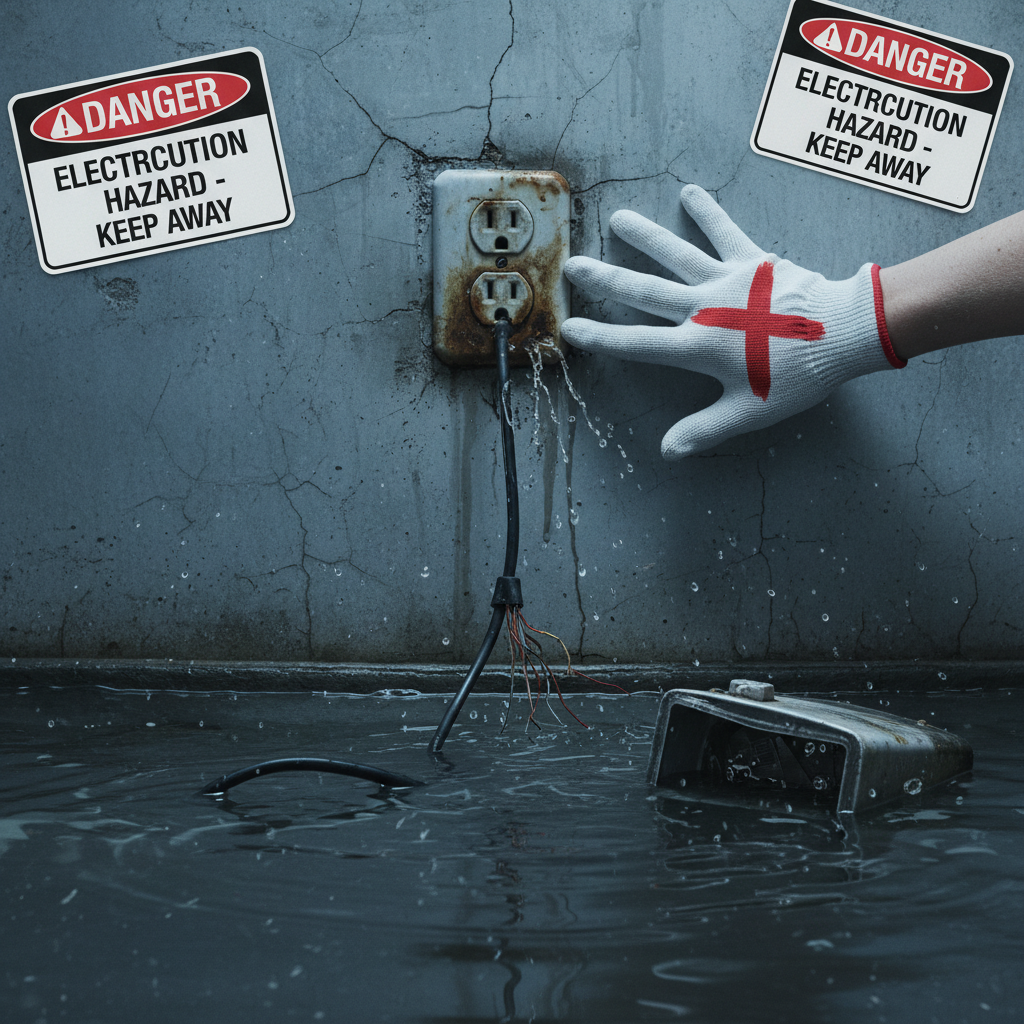 ⚠️ This picture may have spelling mistakes. Trust the words in the lesson.
Rule 7: Always Ask an Adult for Help!
When in doubt, always ask an adult! Grown-ups are your electrical safety superheroes. They know how to handle electricity safely. Whether you need to plug something in, unplug it, or if you just have a question about electricity, always ask for their help or permission first.
What to Do in an Emergency
Even when we're careful, accidents can sometimes happen. If you ever see someone getting an electric shock, or if you see sparks or smell something burning from an electrical device:
- DO NOT TOUCH THE PERSON OR THE DEVICE! You could get shocked too.
- Immediately tell an adult what's happening. Shout for help if you need to!
- If there's no adult nearby, call 911 (or your local emergency number) right away and tell them there's an electrical emergency.
Conclusion
Electricity is an amazing part of our lives, helping us do so many wonderful things. By remembering and following these simple safety rules, you can enjoy all the benefits of electricity while staying safe and sound. Be smart, be safe, and always remember to respect the power of electricity!
Keep learning, free
Create a free Syllabax account to unlock practice questions and games for this topic.
Visual Learning Enhanced! 🚀
To help you master this topic, we use Advanced Syllabax AI to generate detailed diagrams and visual models.
Note on Visuals: The AI sometimes makes spelling errors in image labels. Please refer to the lesson text for the correct terminology.