Points, lines, line segments [Basic Geometry]
Watch this topic in 60 seconds
Free preview · Lesson 1
Understanding Points, lines, line segments [Basic Geometry]
Discovering the Building Blocks of Geometry: Points, Lines, and Line Segments
Welcome, young mathematicians, to the exciting world of geometry! Geometry is like a secret code that helps us understand the shapes and spaces around us, from the tiniest dot to the biggest building. Today, we're going to start with the very, very basics – the fundamental ideas that everything else in geometry is built upon: points, lines, and line segments.
What is a Point? The Tiniest Dot in the Universe!
Imagine you're trying to mark a single, exact spot on a piece of paper. You can't make it too big, or it won't be exact. You need the smallest possible mark. That tiny, precise mark is like a point in geometry!
A point has no size. It doesn't have any length, width, or thickness. It's just a location. Think of it like:
- The tip of a sharp pencil: It shows you exactly where you're touching.
- A star in the night sky: It looks like a dot, representing a specific place far away.
- An address on a map: It tells you exactly where a house or a building is located.
- The dot you make when you press down with a crayon, but an infinitely smaller version!
In geometry, we often label points with capital letters, like point A, point B, or point P. This helps us talk about specific locations.
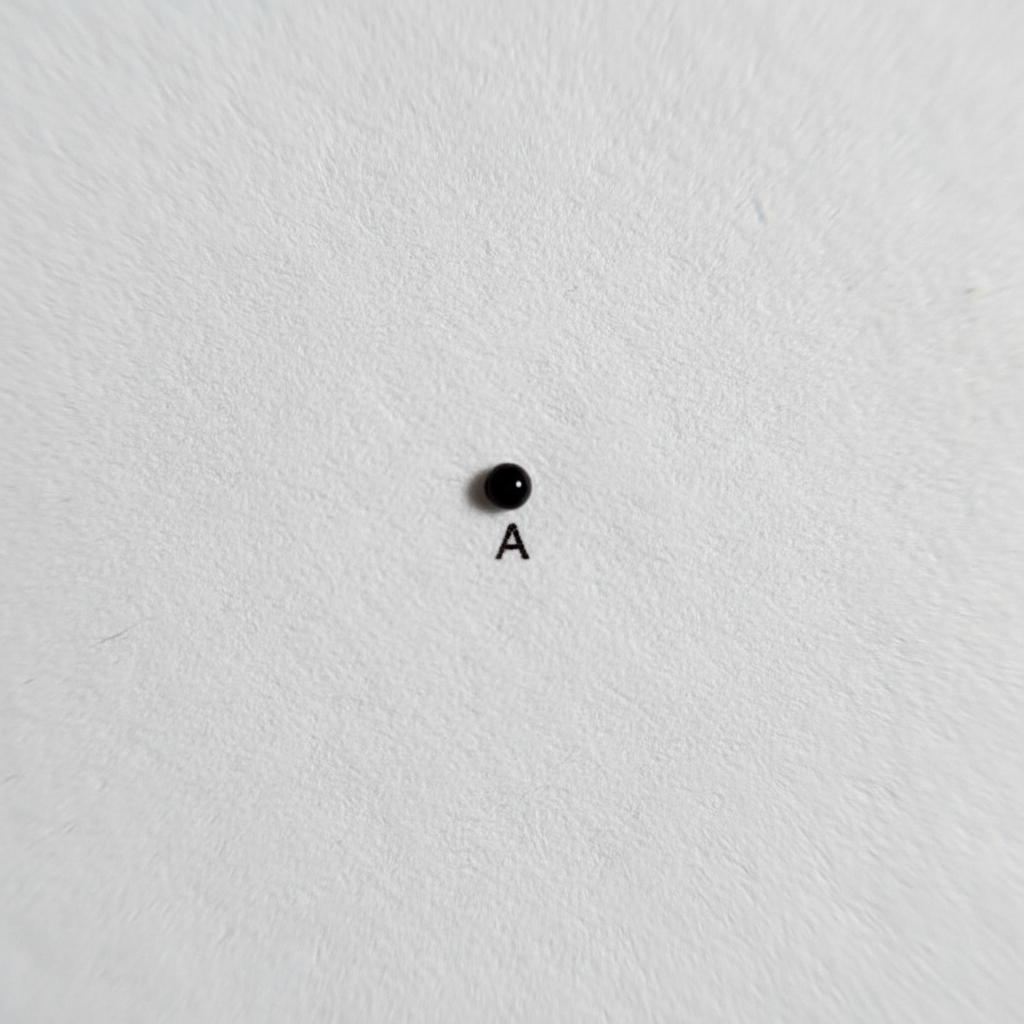
See that little dot labeled 'A'? That's a point! It tells us, 'Right here!'
What is a Line? Stretching Forever and Ever!
Now, imagine taking that tiny point and stretching it out in one direction. Keep stretching... and stretching... and stretching... and imagine it never, ever stops! That's what a line is like in geometry.
A line is a straight path that goes on forever in both directions. It has no endpoints. Think of it like:
- A perfectly straight road that disappears over the horizon in both directions and never ends.
- A ray of light from a flashlight: It travels in a straight path and keeps going.
- The edge of a ruler, if it were infinitely long and perfectly straight.
- A tightrope stretched between two impossibly far-apart poles, going on forever.
Lines have length, but they don't have a specific width or thickness (they are considered to have zero width in geometry). Because they go on forever, we can't measure their total length.
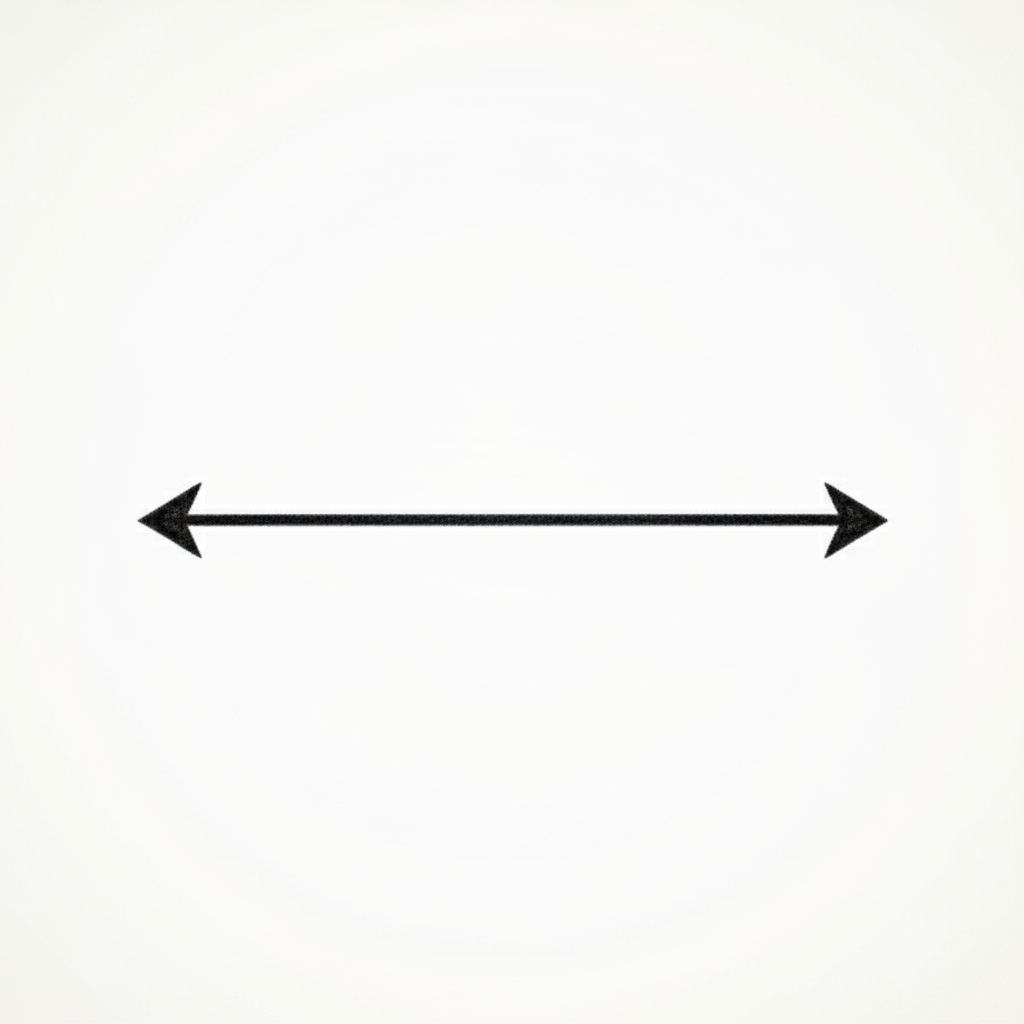
We usually draw lines with arrows on both ends to show that they continue without stopping. We can name a line by using two points that are on the line, or by using a single lowercase letter.
 ⚠️ This picture may have spelling mistakes. Trust the words in the lesson.
Notice the arrows on both ends of the line above? They tell us this line keeps going and going, in both directions!
What is a Line Segment? A Piece of a Line!
Sometimes, we don't want a line that goes on forever. Sometimes, we just want a part of a line. That's where line segments come in!
A line segment is a straight path that has a starting point and an ending point. It's like a small, definite piece of a bigger line. Think of it like:
- A section of a road between two towns.
- The edge of a table: It starts at one corner and ends at another.
- A jump rope when it's laid out straight: It has a beginning and an end.
- A ruler itself! A standard ruler has a definite length from one end to the other.
Line segments have a specific, measurable length. We can measure how long they are!
We name a line segment by using its two endpoints. For example, a line segment with endpoints A and B is called line segment AB (or BA, it's the same segment).
Here's how a line segment looks:
--------------------
A B
In the drawing above, we have a line segment with a starting point labeled 'A' and an ending point labeled 'B'. It's a definite, measurable piece of a straight path.
Putting It All Together: Points, Lines, and Line Segments
Let's review:
- A point is just a location, a tiny dot with no size.
- A line is a straight path that goes on forever in both directions and has no endpoints.
- A line segment is a part of a line, with a specific starting point and ending point, and a measurable length.
You can think of a line segment as being 'cut' from a longer line, and the endpoints of the segment are like the points where you made the cuts. Points are also the 'stops' for a line segment.
Understanding these three basic ideas – points, lines, and line segments – is the first step to exploring all the amazing shapes and patterns in geometry!
Keep learning, free
Create a free Syllabax account to unlock practice questions and games for this topic.
Visual Learning Enhanced! 🚀
To help you master this topic, we use Advanced Syllabax AI to generate detailed diagrams and visual models.
Note on Visuals: The AI sometimes makes spelling errors in image labels. Please refer to the lesson text for the correct terminology.