Learning Journey
Watch this topic in 60 seconds
Free preview · Lesson 1
Decline of the Mughals – Indian History (Foundational)
Decline of the Mughals – Indian History (Foundational)
This lesson provides a basic understanding of the reasons behind the decline of the Mughal Empire, a powerful dynasty that once ruled a significant portion of the Indian subcontinent.
What was the Mughal Empire?
The Mughal Empire was established in 1526 by Babur and reached its peak in the 17th century under rulers like Akbar, Jahangir, Shah Jahan, and Aurangzeb. It was known for its centralized administration, rich culture, and architectural marvels.
The Beginning of the Decline
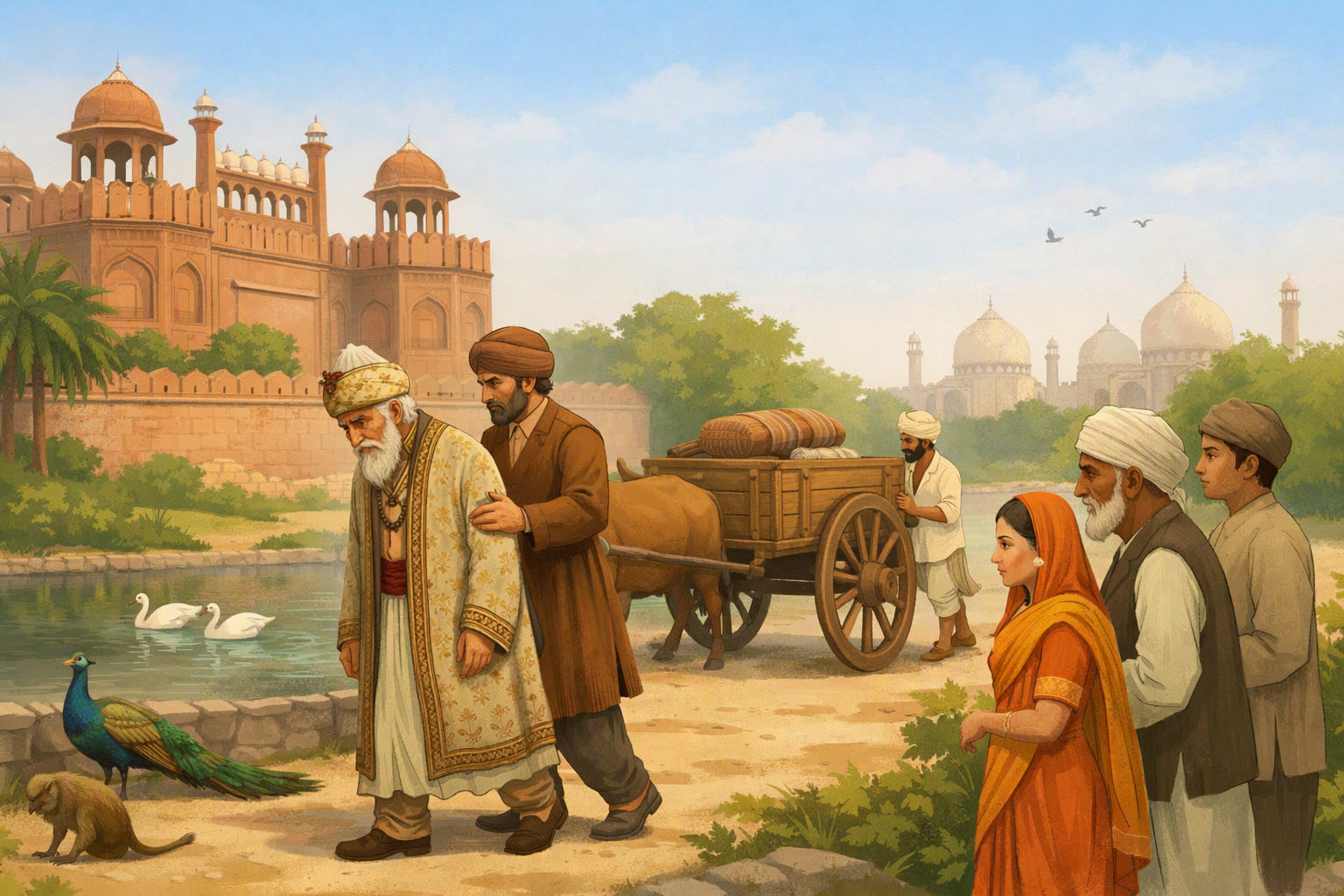
The decline of the Mughal Empire began in the early 18th century. Several factors contributed to this downfall. Understanding these factors is key to understanding Indian history.
Key Reasons for the Decline
1. Weak Successors
After Aurangzeb's death in 1707, the Mughal throne was occupied by weak and ineffective rulers. These rulers lacked the strong leadership qualities needed to control the vast empire. They were often more interested in personal pleasures than in governing effectively. Internal court intrigues and power struggles also weakened the empire from within.
2. Religious Policies of Aurangzeb
Aurangzeb’s strict religious policies alienated many groups within the empire, particularly the Hindus. He reimposed the Jizya (a tax on non-Muslims), destroyed temples, and favored Muslims in government appointments. This led to widespread resentment and revolts by groups like the Rajputs, Sikhs, and Marathas.
3. Economic Problems
The Mughal economy suffered due to excessive taxation and costly wars. Aurangzeb's long wars in the Deccan region drained the treasury. The empire's vast resources were depleted, leading to financial instability. Peasants and traders were burdened with heavy taxes, which stifled economic growth.
4. Rise of Regional Powers
As the central authority weakened, regional powers like the Marathas, Sikhs, and the Nizams of Hyderabad asserted their independence. These powers challenged Mughal authority and carved out their own territories. The Marathas, under leaders like Shivaji and later the Peshwas, became a major force in destabilizing the Mughal Empire.
5. Foreign Invasions
The final blow to the Mughal Empire came in the form of foreign invasions. Nadir Shah, the ruler of Persia, invaded India in 1739 and plundered Delhi, the Mughal capital. This invasion exposed the empire's weakness and further depleted its resources. Later, Ahmad Shah Abdali, the ruler of Afghanistan, launched several invasions, further weakening the Mughal state.
The End of the Mughal Empire
By the mid-18th century, the Mughal Empire had shrunk significantly. The British East India Company, initially a trading company, gradually gained political power and began to control large parts of India. In 1857, after the Sepoy Mutiny, the last Mughal emperor, Bahadur Shah Zafar, was exiled, officially marking the end of the Mughal Empire.
Keep learning, free
Create a free Syllabax account to unlock practice questions and games for this topic.
Visual Learning Enhanced! 🚀
To help you master this topic, we use Advanced Syllabax AI to generate detailed diagrams and visual models.
Note on Visuals: The AI sometimes makes spelling errors in image labels. Please refer to the lesson text for the correct terminology.