Learning Journey
Watch this topic in 60 seconds
Free preview · Lesson 1
Understanding Waste segregation basics (Keeping Surroundings Clean)
Keeping Our Planet Clean: Waste Segregation Basics!
Hello, young helpers! Have you ever wondered what happens to the things we throw away? Like that empty juice box or the apple core you just finished? All these things are called waste, or sometimes we call it trash or garbage. Just like you put your dirty clothes in a laundry basket and your toys back in their toy box, we need to learn how to put our waste in the right places too!
Why is it Important to Keep Our Surroundings Clean?
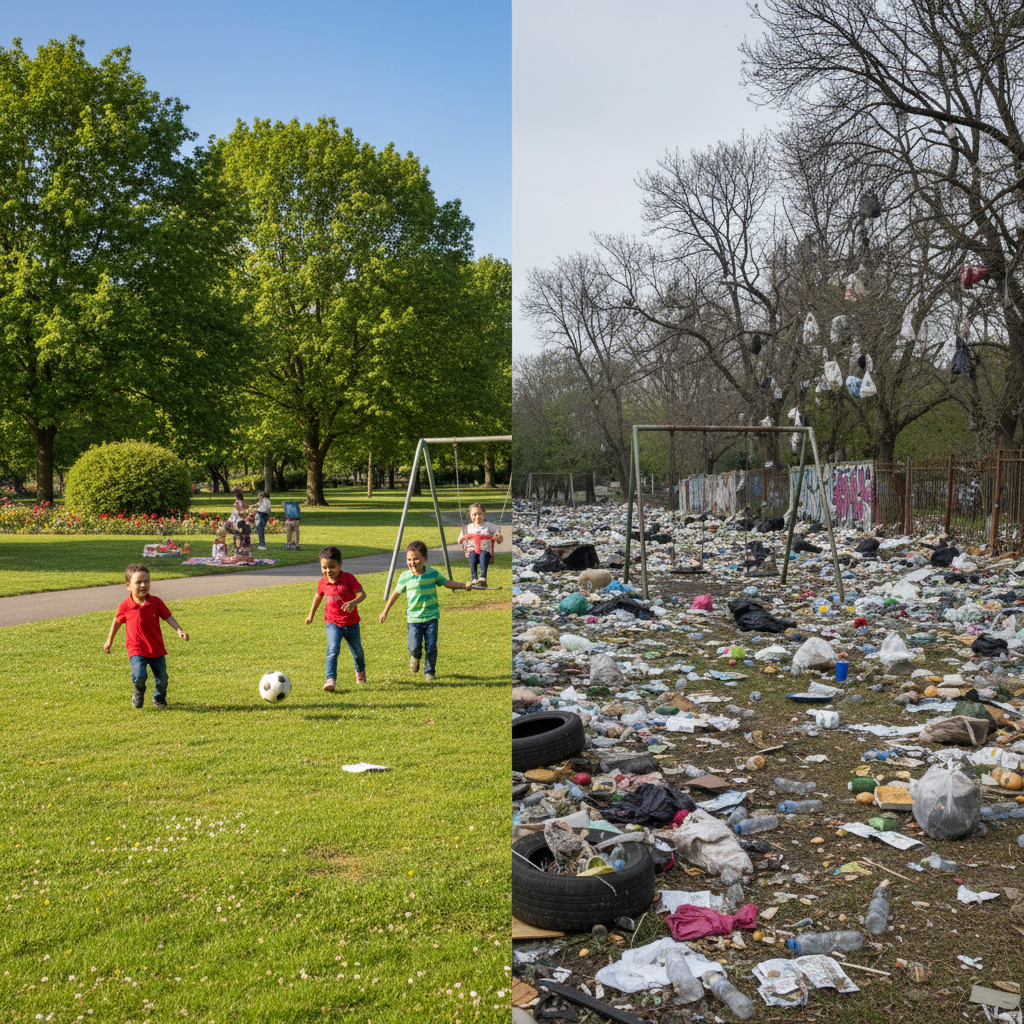
Imagine your room. If it's full of old papers, toy pieces, and food wrappers, it's not a very nice place to play, right? It can even make you feel a little sad or grumpy. Our planet Earth is like a giant home for all of us – people, animals, and plants! If our Earth gets full of trash everywhere, it becomes a very unhealthy and unhappy place.
- For Us: A clean environment keeps us healthy. Germs love dirty places!
- For Animals: Animals can get sick or hurt if they eat trash or get stuck in it. Imagine a bird trying to build a nest with plastic instead of twigs!
- For Plants: Trash can stop plants from growing well, and beautiful flowers might not bloom.
So, keeping our surroundings clean is super important. It makes our world a beautiful and safe place for everyone!
What is Waste Segregation? (It's Like Sorting Your Toys!)
This big word, "waste segregation," just means sorting our trash into different groups. Think about your toy box! You probably don't put your building blocks, your stuffed animals, and your art supplies all in one big pile, do you? No! You keep them separate so it's easy to find them and keep them tidy. Waste segregation is just like that, but for trash!
We sort our waste because different types of trash need to go to different places or be handled in different ways. It helps to keep our Earth healthy and even lets us make new things from old ones!
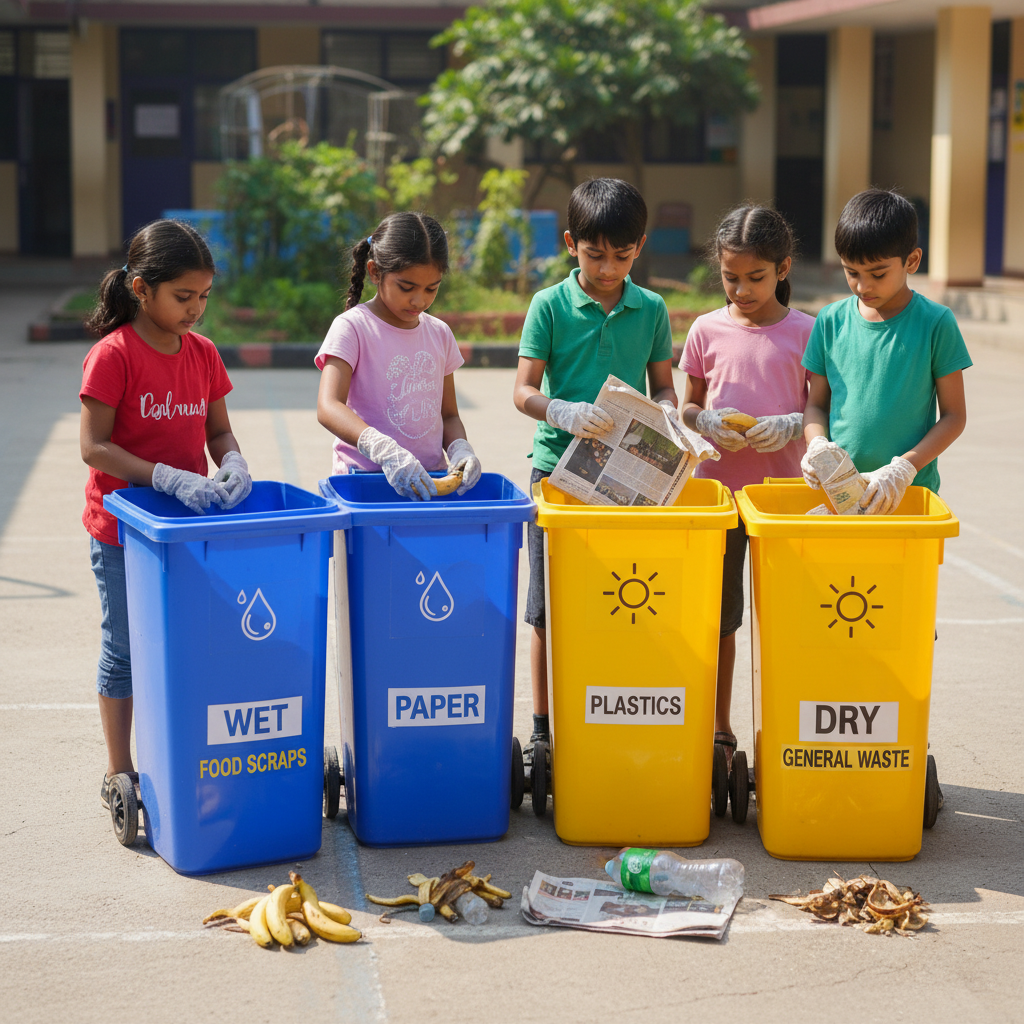
Meet the Two Main Types of Waste!
For now, let's learn about two important groups of waste:
1. Wet Waste (Nature's Snack!)
Imagine you eat a banana. What do you do with the peel? Or when your mommy or daddy cuts vegetables, what's left over? These things are called wet waste. It's often things that come from plants or food.
- What it is: Food scraps (like apple cores, banana peels, leftover rice), fruit and vegetable peels, fallen leaves from trees, small twigs.
- Why it's "wet": It often has some moisture and can rot or break down easily.
- What happens to it: Wet waste is amazing! It can be turned into something called compost, which is like super-food for plants. It helps new plants grow healthy and strong! It goes back to nature, like a snack for the soil.
- Analogy: Think of wet waste as a hungry caterpillar. It eats leaves (like food waste) and then turns into something new (like compost for plants)!
2. Dry Waste (The Rebuildable Bricks!)
Now, what about that empty juice box, or a crumpled paper, or an old plastic bottle? These are examples of dry waste.
- What it is: Paper (newspapers, cardboard boxes), plastic (bottles, containers), metal (empty cans), glass (broken bottles, but be careful!), old clothes.
- Why it's "dry": It usually doesn't rot or break down easily like wet waste.
- What happens to it: Dry waste is also super cool because many parts of it can be recycled! This means we can take old plastic bottles and turn them into new plastic bottles, or old newspapers into new paper! It saves a lot of energy and resources.
- Analogy: Imagine dry waste like your LEGO bricks. Even if you break down a LEGO castle, you can use the same bricks to build a brand new spaceship! Recycling does the same – it takes old materials and builds new things!
There are also some things that are a bit tricky, like old batteries or broken light bulbs. These are called "hazardous" waste and need special care, but for now, let's focus on our wet and dry waste!
How Do We Segregate Waste? (Using Special Bins!)
The easiest way to segregate waste is by using different bins at home, at school, or in public places. You might see bins of different colors:
- Green Bin: Often used for wet waste (food scraps, fruit peels).
- Blue Bin (or sometimes Yellow): Often used for dry waste (paper, plastic, metal).
When you finish eating your snack, stop and think: "Is this a banana peel (wet waste) or a plastic wrapper (dry waste)?" Then, put it in the correct bin! It's like a fun sorting game!
 ⚠️ This picture may have spelling mistakes. Trust the words in the lesson.
Let's Be Super Earth Helpers!
Remember, every little bit helps. When you segregate your waste, you're helping to:
- Keep our Earth clean and beautiful.
- Keep animals and plants safe and healthy.
- Save resources by letting old things become new things.
You are a very important part of keeping our surroundings clean! Start today by sorting your waste at home and at school. Let's make our world a happier, healthier place, one sorted bin at a time!
Keep learning, free
Create a free Syllabax account to unlock practice questions and games for this topic.
Visual Learning Enhanced! 🚀
To help you master this topic, we use Advanced Syllabax AI to generate detailed diagrams and visual models.
Note on Visuals: The AI sometimes makes spelling errors in image labels. Please refer to the lesson text for the correct terminology.