Parts of a plant (Plants)
Watch this topic in 60 seconds
Free preview · Lesson 1
Understanding Parts of a plant (Plants)
Exploring the Amazing Parts of a Plant!
Hello, young plant explorers! Have you ever looked closely at a flower, a tree, or even a tiny blade of grass? Plants are all around us, and they are truly amazing living things! Just like you have different body parts – like your arms, legs, and a head – plants also have many different parts, and each part has a very special job to do to help the plant live and grow. Think of a plant like a team, where every player has an important role!
Let's embark on an exciting journey to discover the secret lives of plant parts!
1. The Roots: The Plant's Anchors and Straws
Imagine a giant ship in the ocean. What keeps it from floating away? A heavy anchor, right? Well, a plant has something similar underground called its roots! Roots are usually hidden beneath the soil, but they are super important.
- What they look like: Roots can look like many tiny strings or thick, sturdy ropes. They spread out deep into the ground.
- Their job (Analogy!):
- Anchoring: Roots act like the plant's anchor, holding it firmly in the ground so it doesn't fall over when the wind blows or animals brush against it.
- Drinking: Roots also work like tiny straws, sucking up water and important nutrients (like plant food!) from the soil. Just like you drink water to stay healthy, plants need water and nutrients to grow big and strong.
- Fun Fact: Sometimes, we even eat roots! Carrots, radishes, and potatoes are all types of roots!
2. The Stem: The Plant's Backbone and Elevator
Now, let's look at the part of the plant that usually stands tall above the ground. This is the stem! Think of your own backbone – it helps you stand up straight and carries messages all over your body. A plant's stem does something very similar!
- What it looks like: Stems can be thin and bendy, like on a flower, or thick and woody, like the trunk of a tree.
- Their job (Analogy!):
- Support: The stem is like the plant's backbone. It holds the leaves, flowers, and fruits up towards the sunlight. Without a strong stem, the plant would just flop onto the ground!
- Transportation: The stem is also like an amazing elevator or a network of tiny pipes. It carries the water and nutrients that the roots soaked up, all the way up to the leaves and flowers. It also carries the food that the leaves make down to the roots and other parts of the plant.
- Fun Fact: Celery and asparagus are examples of stems that we eat!
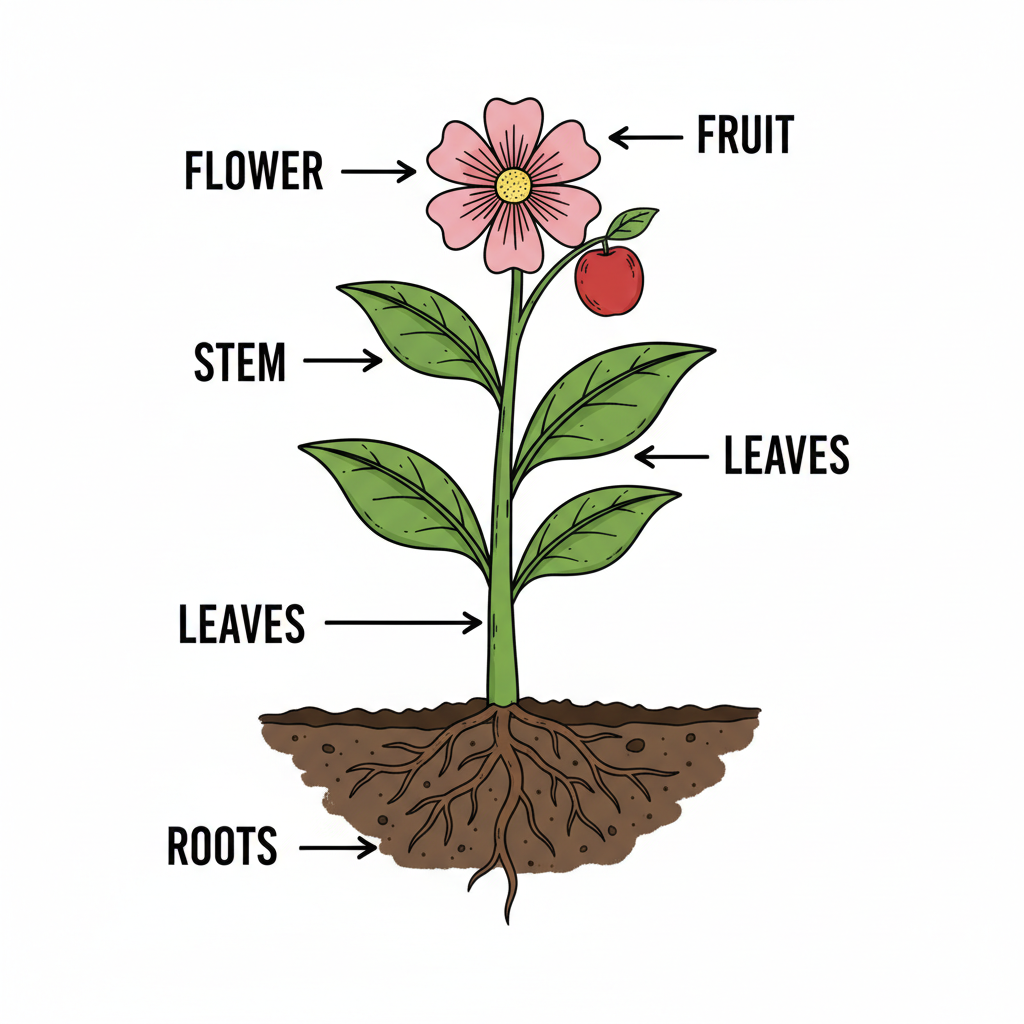
3. The Leaves: The Plant's Food Factories (or Solar Panels!)
Look at the beautiful green parts on a plant – these are the leaves! Leaves are like the plant's super-smart chefs or amazing solar panels.
- What they look like: Leaves come in all shapes and sizes – some are wide and flat, others are thin and spiky. Most leaves are green.
- Their job (Analogy!):
- Making Food: Leaves are the plant's food factories! They use sunlight, water (from the roots), and a gas called carbon dioxide (which is in the air we breathe out) to make their own food, a type of sugar. This process is called photosynthesis, and it’s how plants get their energy!
- Collecting Sunlight: Think of leaves as tiny solar panels that capture energy from the sun. The green stuff in leaves, called chlorophyll, helps them do this special job.
- Fun Fact: Lettuce, spinach, and cabbage are all leaves that we love to eat!
4. The Flowers: The Plant's Beautiful Advertisements
What's the prettiest part of many plants? The flower, of course! Flowers are often colorful and smell sweet, but they have a much bigger job than just looking nice.
- What they look like: Flowers can be tiny or huge, and they come in every color of the rainbow. They often have soft petals.
- Their job (Analogy!):
- Making Seeds: Flowers are like the plant's baby nurseries! Their most important job is to make seeds, which will grow into new plants.
- Attracting Helpers: The bright colors and sweet smells of flowers are like a fancy advertisement to attract pollinators, like bees and butterflies. These helpers carry tiny pollen from one flower to another, which is a super important step in making seeds!
- Fun Fact: Broccoli and cauliflower are actually flower parts that we eat!
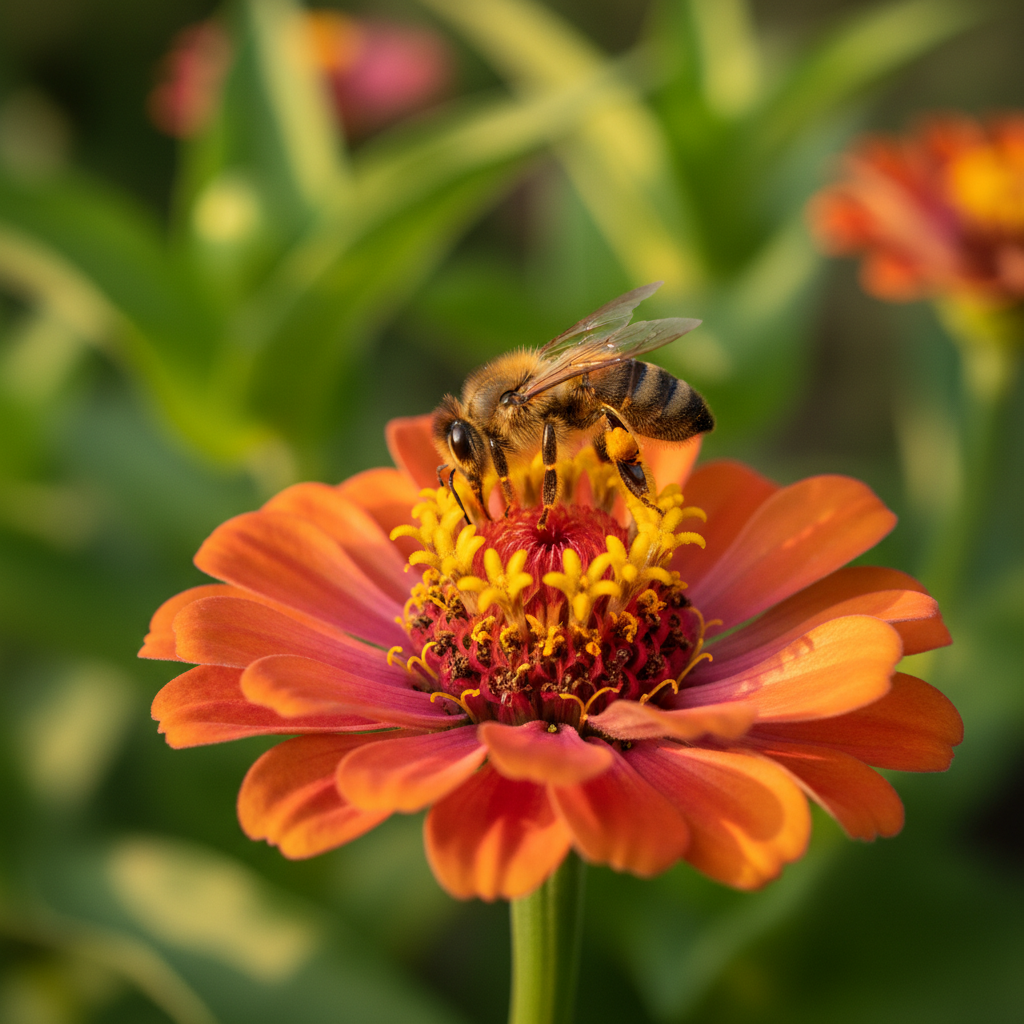 ⚠️ This picture may have spelling mistakes. Trust the words in the lesson.
5. The Fruit: The Plant's Seed Protector
After a flower has been pollinated, it can sometimes turn into a fruit! And no, we're not just talking about apples and oranges.
- What it looks like: Fruits can be soft and juicy, or hard and dry. They can be sweet or not taste like much at all!
- Their job (Analogy!):
- Protecting Seeds: The main job of a fruit is to be a cozy, protective blanket or package for the seeds inside. It keeps the seeds safe as they develop.
- Helping Seeds Travel: Many fruits are tasty, and when animals (or humans!) eat them, they often carry the seeds far away from the parent plant. This helps new plants grow in new places!
- Fun Fact: Did you know that tomatoes, cucumbers, and even pumpkins are technically fruits because they contain seeds?
6. The Seeds: The Plant's Tiny Babies
Inside the fruit (or sometimes hidden in flowers or cones) are the seeds! These are the beginnings of brand new plants.
- What they look like: Seeds come in all sizes, from tiny poppy seeds to large avocado pits. They are usually hard.
- Their job (Analogy!): A seed is like a tiny sleeping baby plant, tucked inside a protective little house, with a packed lunch! When the conditions are just right (enough water, warmth, and sunlight), the seed wakes up and starts to grow into a new plant.
- Fun Fact: We eat many seeds, like beans, peas, corn, and sunflower seeds!
Wow! Isn't it incredible how each part of a plant works together, like a big, happy family, to help the plant survive and make more plants? From the hidden roots to the colorful flowers, every part is a miracle of nature!
Keep learning, free
Create a free Syllabax account to unlock practice questions and games for this topic.
Visual Learning Enhanced! 🚀
To help you master this topic, we use Advanced Syllabax AI to generate detailed diagrams and visual models.
Note on Visuals: The AI sometimes makes spelling errors in image labels. Please refer to the lesson text for the correct terminology.