Introduction to Coding: Algorithms
Watch this topic in 60 seconds
Free preview · Lesson 1
Understanding Introduction to Coding: Algorithms
Introduction to Algorithms: Step-by-Step Magic for 4th Graders!
Hey there, future coders and problem-solvers! Have you ever built a magnificent LEGO castle? Or followed a yummy recipe to bake cookies? If you have, then guess what? You've already been using algorithms without even knowing it! Today, we're going to uncover the secret world of algorithms and see how they help us, and computers, do amazing things.
Imagine your brain is a super-smart computer. Sometimes, to get something done, your brain needs a plan. That plan, broken down into tiny, clear steps, is an algorithm!
What is an Algorithm? Think of it Like a Recipe!
An algorithm is simply a list of clear, step-by-step instructions that tell you exactly how to do something or solve a problem. It’s like a recipe for a cake! If you want to bake a delicious chocolate cake, you can't just throw all the ingredients into a bowl at once and hope for the best, right? You need a recipe that says:
- First, preheat the oven.
- Next, mix the flour and sugar.
- Then, add the eggs and milk.
- After that, pour the batter into the pan.
- Finally, bake for 30 minutes.
If you follow these steps exactly, in the right order, you'll get a wonderful cake! If you mix them up, you might end up with a big mess. That recipe is a perfect example of an algorithm!
Another great analogy: Building with LEGOs! When you open a LEGO set, it comes with an instruction manual. That manual shows you exactly which pieces to use and in what order to put them together to build your awesome spaceship or castle. Each page is a step, and following those steps carefully is an algorithm for building your toy. Without clear steps, you'd just have a pile of bricks!
Why Are Algorithms So Important, Especially for Computers?
Computers are super-fast and can do amazing calculations, but they aren't smart like humans. They can't just figure things out on their own. They need someone (that's you, the coder!) to give them very specific, step-by-step instructions on what to do. These instructions are algorithms!
Imagine you have a friendly robot helper. If you tell the robot, "Make me a sandwich," it won't know what to do! It would just stand there. But if you give it an algorithm:
- Go to the kitchen.
- Open the bread bag.
- Take out two slices of bread.
- Put one slice on the plate.
- Open the peanut butter jar.
- Spread peanut butter on the bread.
- Open the jelly jar.
- Spread jelly on the other slice of bread.
- Put the two slices of bread together.
- Close the bread bag and put away jars.
- Bring the sandwich to me!
Now, your robot friend can follow those steps and make your sandwich perfectly! Computers work the same way. Every game you play, every video you watch, every website you visit – all of it works because computers are following thousands and thousands of tiny algorithms written by smart people like you!
Algorithms in Your Daily Life!
You use algorithms all the time without even thinking about it! They help keep your day organized and make sure you get things done.
- Your Morning Routine: Waking up, brushing your teeth, getting dressed, eating breakfast, packing your backpack. This is an algorithm for getting ready for school! If you skip a step (like brushing your teeth) or do them in the wrong order (like putting your shoes on before your socks!), things get messy.
- Crossing the Street: Look left, look right, look left again, if no cars are coming, then walk. That's an algorithm to stay safe!
- Playing a Game: Think about a game like 'Tag.' The rules of 'Tag' are an algorithm: 'Player 1 chases Player 2. If Player 1 touches Player 2, then Player 2 becomes Player 1 and chases others.'
What Makes a GOOD Algorithm?
For an algorithm to work well, especially for a computer, it needs a few important things:
- Clear Steps: Each step must be easy to understand. No confusing words or tricky instructions. Just like a recipe shouldn't say, 'add some stuff!'
- Ordered Steps: The steps must be in the correct sequence. You can't bake the cake before mixing the ingredients!
- Finite (It Must End!): A good algorithm has a clear stopping point. It can't go on forever and ever. You don't want your robot making sandwiches for all eternity!
- Solves a Problem: An algorithm should have a goal – it should help you achieve something, whether it's making a cake, finding a treasure, or adding two numbers together.
Let's Practice Building an Algorithm!
Imagine you want to tell a friend how to draw a simple happy face. What would your algorithm look like?
- First, draw a big circle for the head.
- Next, draw two small circles inside for the eyes.
- Then, draw a small curve under the eyes for the nose.
- Finally, draw a bigger curved line under the nose for the smile.
See? Clear, ordered, and it gets the job done!
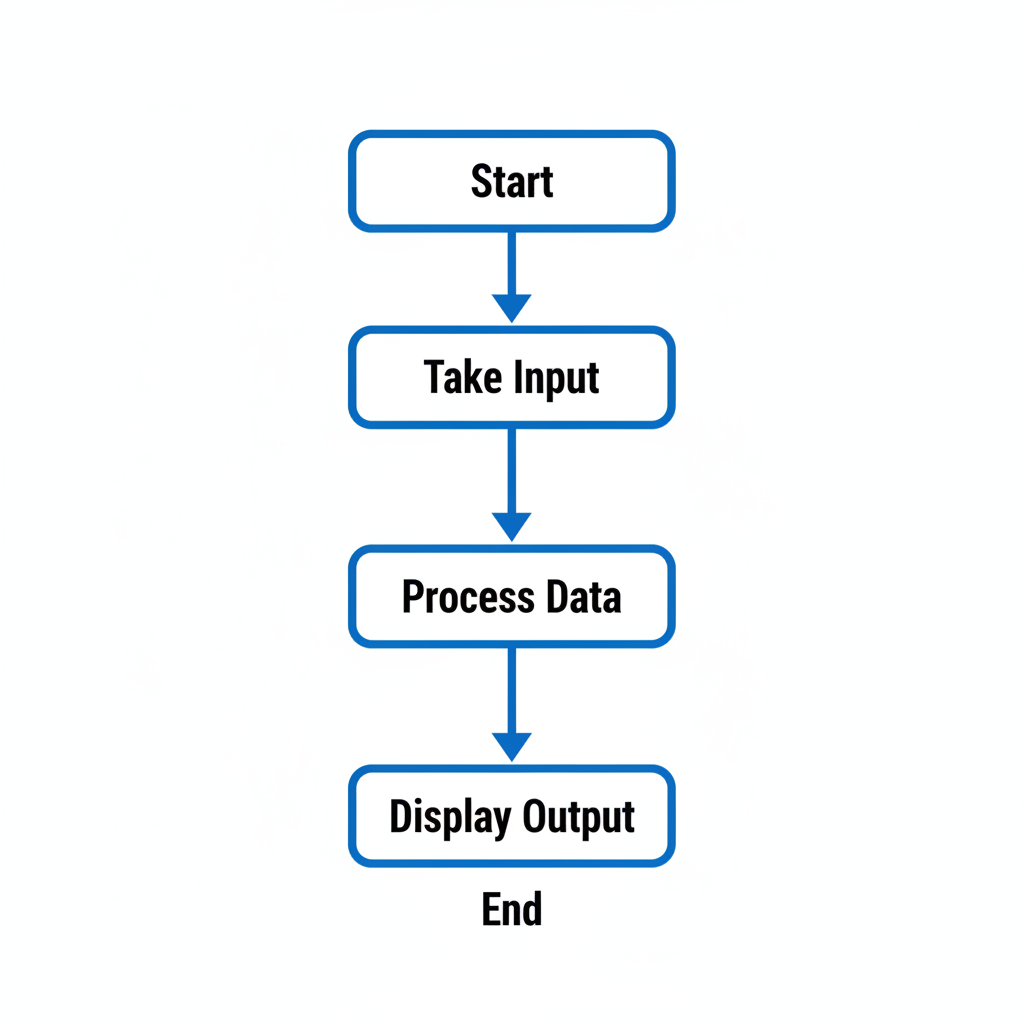
Algorithms and Your Coding Journey!
When you learn to code, you are learning how to write algorithms that computers can understand. Instead of words like 'mix flour and sugar,' you'll use special coding words to tell the computer exactly what to do. Every line of code is a tiny step in a bigger algorithm.
So, the next time you play a video game, think about all the algorithms running behind the scenes: one algorithm tells the character how to jump, another tells the enemies how to move, and another makes sure your score goes up when you collect coins!
Wrapping Up: You're Already an Algorithm Expert!
Algorithms are everywhere, and they are super important for everything we do, especially in the world of computers and coding. By understanding how to break down tasks into clear, step-by-step instructions, you're building a powerful skill that will help you solve problems in coding and in life!
Keep thinking in steps, keep organizing your thoughts, and you'll be a master of algorithms in no time!
Keep learning, free
Create a free Syllabax account to unlock practice questions and games for this topic.
Visual Learning Enhanced! 🚀
To help you master this topic, we use Advanced Syllabax AI to generate detailed diagrams and visual models.
Note on Visuals: The AI sometimes makes spelling errors in image labels. Please refer to the lesson text for the correct terminology.