Predicting Outcomes (Basic)
Watch this topic in 60 seconds
Free preview · Lesson 1
Understanding Predicting Outcomes (Basic)
Predicting Outcomes: What Happens Next?
Hello, super thinkers! Have you ever watched a movie and known exactly what was going to happen next? Or maybe you've played a game and guessed who would win? That's a little bit like predicting outcomes! Predicting outcomes means using clues and what you already know to figure out what will most likely happen next.
What is "Predicting Outcomes"?
Imagine you're a super-smart detective! You're not just guessing; you're looking for tiny pieces of information, like footprints, a dropped hat, or a whispered secret. When you put all those pieces together, you can often figure out what happened or what will happen. Predicting outcomes is just like that: it's making a smart guess based on clues!
It's not magic, and it's not always 100% right. But the more clues you find and the better you think, the closer you get to being right! It’s like knowing if you drop a ball, it will fall down, not up. You've seen it happen before, and you know how gravity works!
Clue #1: Look for Clues!
This is the most important step! Just like a detective, you need to open your eyes and ears and pay attention. What do you see? What do you hear? What do you read? These are all your clues.
Analogy Time: The Cookie Crumbs! Imagine your little brother walks into the kitchen, and there are cookie crumbs all around his mouth. What do you predict he just did? He probably ate a cookie! The crumbs are your clues.
Clue #2: Think About What Happened Before
Our world follows patterns. Things often happen in a certain way. If you've seen something happen many times before, it gives you a big clue about what will happen again.
Analogy Time: The Sunrise! Every morning, the sun rises in the east. You don't just guess it will happen; you predict it will happen because it has happened every single day of your life! That's a very strong pattern.
Analogy Time: The Rainy Day! If you look outside and see dark, grey clouds, and it's been raining all morning, what do you predict will happen next? It will probably keep raining! You're using what's already happened (the morning rain) and the current clues (dark clouds) to predict the outcome.
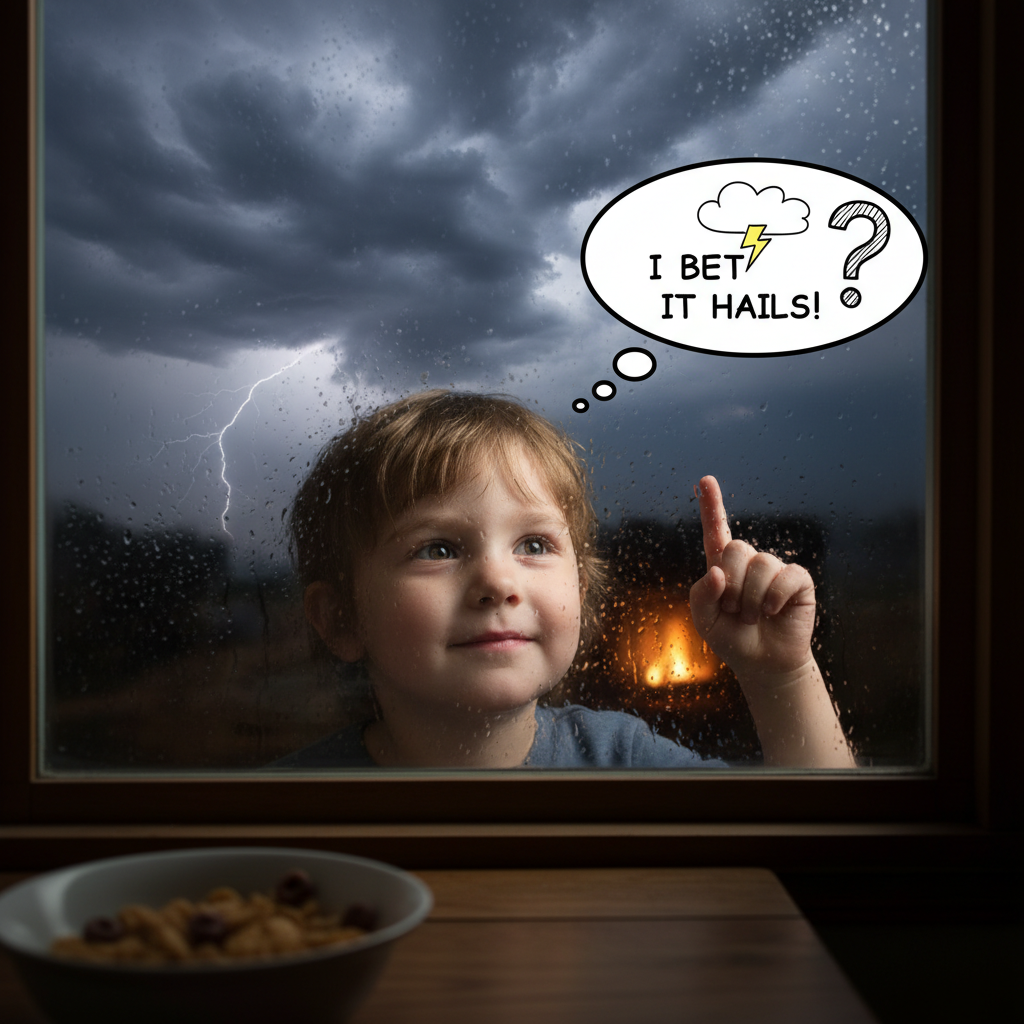 ⚠️ This picture may have spelling mistakes. Trust the words in the lesson.
Clue #3: Use What You Already Know
You have so much knowledge in your brain! Every story you've read, every game you've played, every lesson you've learned – these are all tools for predicting outcomes. Use your brain power!
Analogy Time: The Soccer Game! If you're watching a soccer game and one team is much better, has scored many goals, and the other team hasn't scored any, what do you predict will happen? The better team will probably win! You're using your knowledge of how soccer games work and the skills of the teams to make a prediction.
Let's try a simple example:
You see a boy holding a big, red balloon. He lets go of the string. What do you predict will happen next?
- Clues: He is holding a balloon. He lets go of the string.
- What you know: Balloons filled with air (or helium) float up when you let go.
- Prediction: The balloon will float up into the sky!
Here's another one:
You are reading a story. The main character, a brave knight, is about to face a dragon. He has a magical sword and a shield, and he has trained for many years. What do you predict will happen when he fights the dragon?
- Clues: Brave knight, magical sword, shield, trained for years, facing a dragon.
- What you know (from stories): Heroes often win battles, especially when they are prepared and have special tools.
- Prediction: The knight will probably win the battle against the dragon! (Or at least put up a very good fight!)
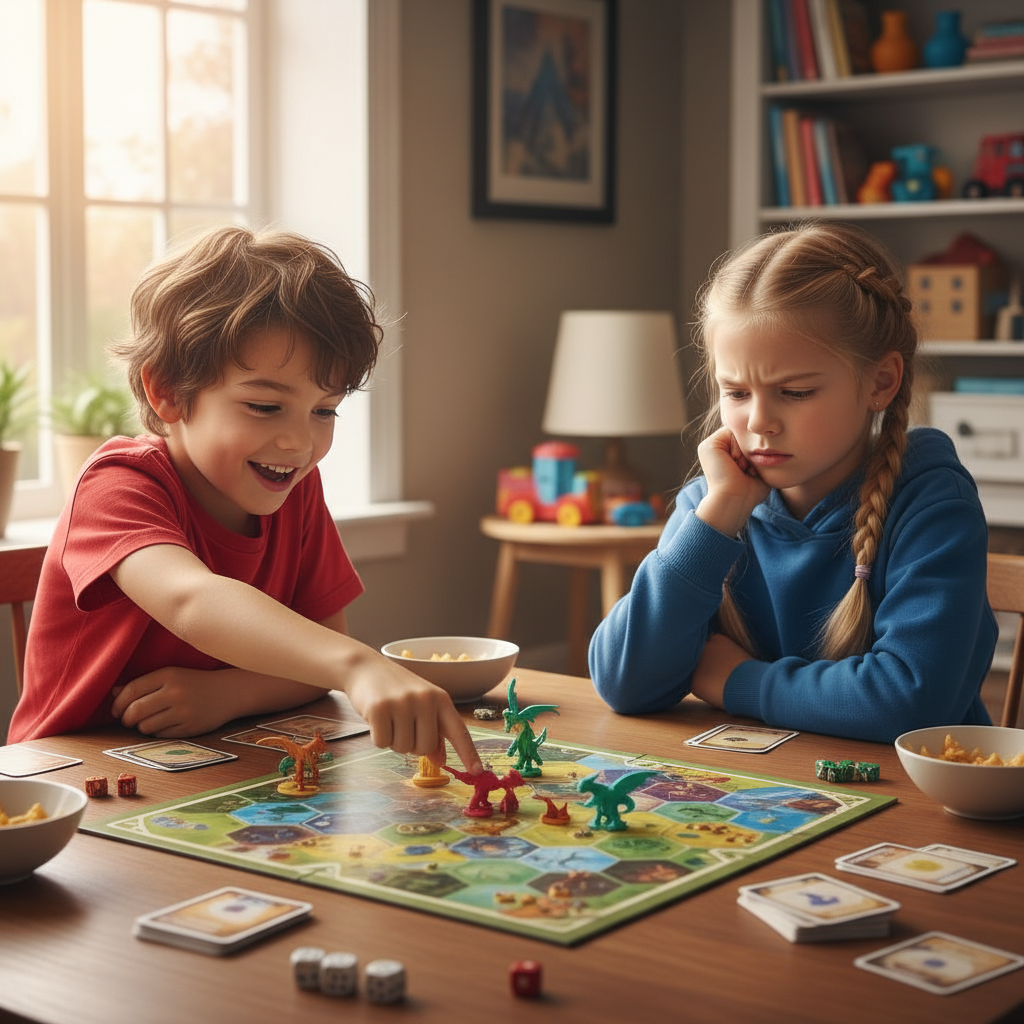
Remember, predicting outcomes isn't just for stories or games. It helps you every day! If you predict it might rain, you'll grab your umbrella. If you predict your friend will be happy to see you, you'll smile when you greet them. It helps you make smart choices!
So, next time something is about to happen, stop and think: What clues do I see? What have I seen happen before? What do I already know? Then, make your smart prediction!
Keep learning, free
Create a free Syllabax account to unlock practice questions and games for this topic.
Visual Learning Enhanced! 🚀
To help you master this topic, we use Advanced Syllabax AI to generate detailed diagrams and visual models.
Note on Visuals: The AI sometimes makes spelling errors in image labels. Please refer to the lesson text for the correct terminology.