Understanding halves, thirds, fourths (Fractions)
Watch this topic in 60 seconds
Free preview · Lesson 1
Understanding Understanding halves, thirds, fourths (Fractions)
Understanding Halves, Thirds, and Fourths: Sharing is Caring!
Welcome, amazing learners, to the exciting world of fractions! Fractions might sound a little tricky at first, but they are all around us, helping us share things fairly and understand parts of a whole. Think of fractions as a way to talk about pieces of something, like a pizza or a candy bar.
What is a Whole?
Before we talk about pieces, we need to understand what a 'whole' is. A whole is the entire thing, undivided. Imagine a whole apple. It's one complete apple. Or a whole chocolate bar – all of it together!
Introducing Halves (1/2)
Let's say you have a delicious cookie, and you want to share it equally with your best friend. What do you do? You cut the cookie right down the middle into two equal pieces! Each of those pieces is called a half.
We write a half like this: 1/2.
The number on the bottom (the denominator) tells us how many equal pieces the whole thing was cut into. In 1/2, the '2' means the whole was cut into 2 equal pieces.
The number on the top (the numerator) tells us how many of those pieces we are talking about. In 1/2, the '1' means we are talking about one of those two pieces.
Analogy Time!
- Pizza Party: If you order a pizza and cut it into 2 equal slices, each slice is 1/2 of the pizza. If you eat one slice, you ate 1/2 of the pizza!
- Sharing a Sandwich: Imagine a sandwich cut exactly in the middle. Each piece is a half.
- A Whole Hour: An hour has 60 minutes. Half an hour is 30 minutes.
So, 1/2 is one out of two equal parts.
Meeting Thirds (1/3)
Now, imagine you have three friends, and you want to share a big chocolate bar equally among all of you (including yourself!). You would need to cut the chocolate bar into three equal pieces. Each of those pieces is called a third.
We write a third like this: 1/3.
Here, the denominator '3' tells us the whole was divided into 3 equal pieces. The numerator '1' tells us we are looking at one of those pieces.
Analogy Time!
- Sharing a Cake: If a cake is cut into 3 equal wedges, each wedge is 1/3 of the cake.
- A Race Track: Sometimes a race is divided into 3 equal laps. Finishing one lap means you've completed 1/3 of the race.
- Musical Notes: In music, a 'dotted quarter note' can sometimes be thought of as a third of a beat in certain rhythms.
So, 1/3 is one out of three equal parts.
Discovering Fourths (1/4)
What if you have a group of four friends, and you want to share a giant cookie perfectly? You would cut the cookie into four equal pieces. Each of these pieces is called a fourth, or sometimes a quarter.
We write a fourth like this: 1/4.
The denominator '4' tells us the whole was cut into 4 equal pieces. The numerator '1' tells us we are talking about one of those pieces.
Analogy Time!
- Cutting an Apple: If you cut an apple into 4 equal wedges, each wedge is 1/4 of the apple.
- Clock Time: A clock face is often divided into four quarters. A quarter of an hour is 15 minutes.
- A Full Jug of Water: If you pour out 1/4 of the water, you have poured out one out of four equal portions.
So, 1/4 is one out of four equal parts.
Putting it Together: Numerator and Denominator
Remember, in a fraction like 1/2, 1/3, or 1/4:
- The bottom number (denominator) tells you how many *total equal pieces* make up the whole.
- The top number (numerator) tells you how many *of those pieces* you have or are talking about.
Visualizing Fractions:
Imagine a chocolate bar.
If it's cut into 2 equal pieces, and you have 1 piece, you have 1/2.
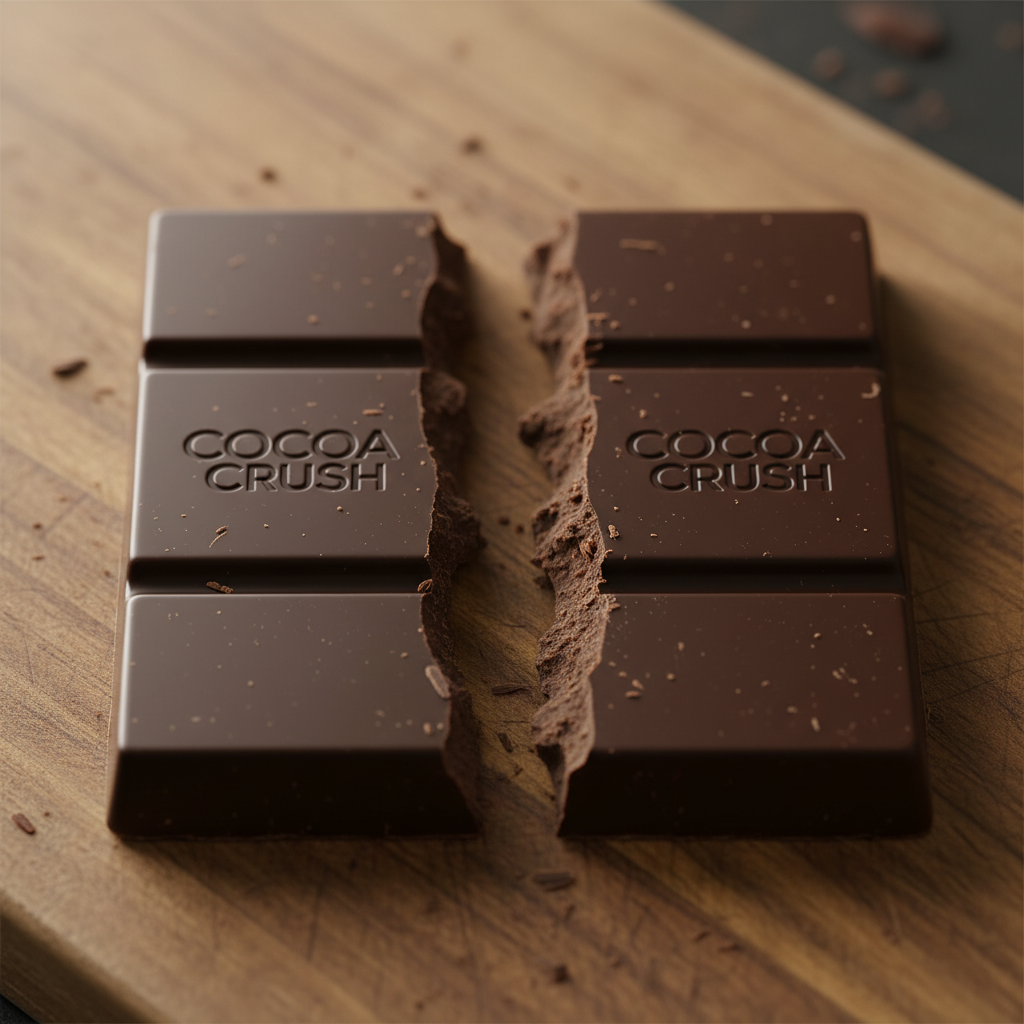
If it's cut into 3 equal pieces, and you have 1 piece, you have 1/3.
If it's cut into 4 equal pieces, and you have 1 piece, you have 1/4.
It's super important that the pieces are equal! If you cut a pizza into two pieces, but one piece is tiny and the other is huge, those aren't halves. Fractions are all about fair shares!
Why are Fractions Useful?
Fractions help us:
- Share fairly: Making sure everyone gets an equal part.
- Measure things: Like measuring ingredients for baking (e.g., 1/2 cup of flour).
- Understand time: A quarter past the hour means 15 minutes have passed.
- Talk about parts: Describing what portion of something we have or need.
Fractions are a fantastic tool for understanding the world around us. Keep practicing, and you'll become a fraction expert in no time!
Keep learning, free
Create a free Syllabax account to unlock practice questions and games for this topic.
Visual Learning Enhanced! 🚀
To help you master this topic, we use Advanced Syllabax AI to generate detailed diagrams and visual models.
Note on Visuals: The AI sometimes makes spelling errors in image labels. Please refer to the lesson text for the correct terminology.