Learning Journey
Free preview · Lesson 1
Major Rivers & Water Resources -Indian Geography (Foundational)
Major Rivers & Water Resources - Indian Geography (Foundational)
Introduction
India, with its diverse topography and climate, is blessed with numerous rivers and water resources. These rivers are not only vital for agriculture and drinking water but also hold significant cultural and economic importance. This lesson will introduce you to the major rivers of India and discuss the importance of water resources.
Major River Systems of India
Indian rivers can be broadly classified into two categories:
- Himalayan Rivers: These rivers originate from the Himalayas and are perennial, meaning they flow throughout the year. This is because they are fed by both rainfall and melting snow from the mountains.
- Peninsular Rivers: These rivers originate from the Peninsular Plateau and are mostly rain-fed. They are seasonal, meaning their water volume fluctuates with the rainfall.
Important Himalayan Rivers
The Indus River System
The Indus River originates near Lake Mansarovar in Tibet and flows through India and Pakistan before draining into the Arabian Sea. Its major tributaries in India are:
- Jhelum
- Chenab
- Ravi
- Beas
- Sutlej
The Ganga River System
The Ganga River is the most important river in India, both economically and culturally. It originates from the Gangotri glacier and flows through several states before emptying into the Bay of Bengal. The main tributaries of the Ganga are:
- Yamuna
- Ghaghra
- Gandak
- Kosi
- Son
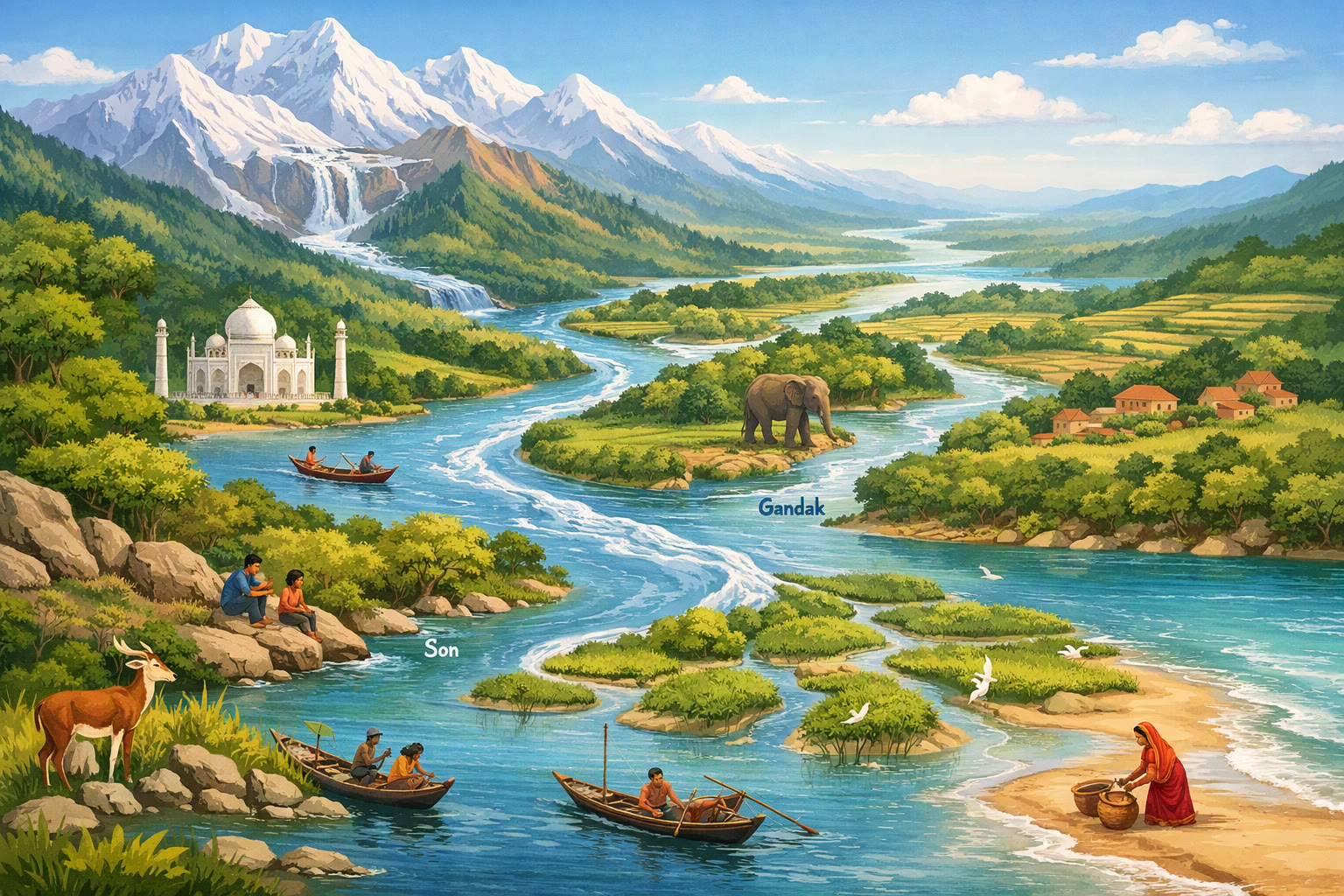
The Brahmaputra River System
The Brahmaputra River, also originating near Lake Mansarovar, is known as Tsangpo in Tibet. It enters India through Arunachal Pradesh and flows through Assam before joining the Ganga in Bangladesh. Its major tributaries in India are:
- Lohit
- Dibang
- Subansiri
- Manas
- Tista
Important Peninsular Rivers
The Narmada River
The Narmada River originates from the Maikala range and flows westwards into the Arabian Sea. It is one of the few rivers in India that flows in a rift valley.
The Tapi River
The Tapi River also flows westwards, parallel to the Narmada River, and drains into the Arabian Sea.
The Godavari River
The Godavari River is the largest Peninsular river and is known as the 'Dakshin Ganga'. It originates in Maharashtra and flows eastwards into the Bay of Bengal.
The Krishna River
The Krishna River originates in Maharashtra and flows eastwards into the Bay of Bengal.
The Kaveri River
The Kaveri River originates in Karnataka and flows into the Bay of Bengal. It is important for irrigation in South India.
Water Resources
Water is a crucial resource for various activities, including agriculture, industry, and domestic use. India's water resources include:
- Surface water: Rivers, lakes, and ponds
- Groundwater: Water stored beneath the earth's surface
Due to increasing population and unsustainable practices, water scarcity is a major concern in India. Therefore, conservation and efficient management of water resources are essential.
Keep learning, free
Create a free Syllabax account to unlock practice questions and games for this topic.
Visual Learning Enhanced! 🚀
To help you master this topic, we use Advanced Syllabax AI to generate detailed diagrams and visual models.
Note on Visuals: The AI sometimes makes spelling errors in image labels. Please refer to the lesson text for the correct terminology.