Surveys: Gathering Information
Watch this topic in 60 seconds
Free preview · Lesson 1
Understanding Surveys: Gathering Information
Surveys: Gathering Information – Becoming a Data Detective!
Hey there, young data detectives! Have you ever wondered how people know what your favorite ice cream flavor is, or what kind of new toys kids want to play with? How do schools decide what clubs to offer, or how libraries pick new books? They often find out by using something called a survey! Think of a survey like being a super curious detective who asks questions to gather clues (information) and solve mysteries (find answers).
What is a Survey?
A survey is simply a way to ask questions to a group of people to collect information about their opinions, experiences, or preferences. Imagine you want to know what game your friends want to play during recess. You wouldn't just guess, right? You'd ask them! That's exactly what a survey does, but often on a bigger scale.
Analogy: Imagine you have a big bowl of mixed candies, and you want to know which color is most popular. You could ask everyone who takes a candy which color they prefer. That's a mini-survey!
Why Do We Use Surveys?
People use surveys for all sorts of reasons. Here are some big ones:
- To Make Decisions: If your teacher wants to pick a new class pet, they might survey students to see if they prefer a hamster, a fish, or a turtle. The survey helps them make a decision that most students will be happy with.
- To Understand What People Think: A toy company might survey kids to find out what features they like best in a new action figure or doll. This helps them design toys that kids will love.
- To Solve Problems: If a cafeteria wants to reduce food waste, they might survey students about their favorite lunch items. This helps them understand what food kids actually want to eat, reducing waste.
Analogy: Think about choosing a movie for a family movie night. If everyone just shouts out their idea, it might be chaotic! A survey (like a quick poll) helps everyone pick a movie together that most people will enjoy.

Who Do We Ask? Population vs. Sample
When you're doing a survey, you need to decide who you're going to ask. There are two important words to know:
- Population: This is the entire group of people or things you are interested in. If you want to know the favorite sport of all kids in your city, then all kids in your city are your population. It's often too big to ask everyone!
- Sample: This is a smaller group chosen from the population that you actually ask questions to. We usually survey a sample because it's much easier and quicker.
Analogy: Imagine you're baking a big batch of cookies, and you want to know if they taste good. You don't eat all the cookies to find out, right? You just taste one or two. That one or two cookies is your 'sample,' and the whole batch is your 'population.' If the sample tastes good, you can guess the whole batch is good!
It's important that your sample is a good representation of the population. If you only ask people who love chocolate if they like chocolate ice cream, your results won't tell you what everyone likes!
Creating Good Survey Questions
The questions you ask are the heart of your survey. Good questions help you get good information. Here are some tips:
- Keep it Simple and Clear: Use words that everyone understands. Don't ask confusing questions.
- Be Specific: Instead of "Do you like sports?" (which is too broad), ask "Which of these sports do you enjoy playing most: soccer, basketball, or swimming?"
- Give Choices (Sometimes): Often, surveys give people options to choose from. This makes it easier to compare answers.
- Be Fair: Don't ask questions that try to make someone pick a certain answer. For example, don't say "You love pizza, don't you? What's your favorite topping?" That's not fair!
Types of Survey Questions (for elementary school):
- Yes/No Questions: Very simple! "Do you enjoy reading?"
- Multiple Choice Questions: Offers specific options. "What is your favorite season? A) Spring B) Summer C) Fall D) Winter"
Gathering and Organizing Your Information
Once you've made your questions, you need to ask them and write down the answers. This is called gathering data. You can do this by:
- Talking to people and writing down their answers.
- Giving people paper forms to fill out.
- Using simple online forms (if allowed and supervised).
After you gather all your answers, it's super important to organize them. You can use tally marks, make lists, or even create simple charts like bar graphs or pictographs to see the information clearly. This helps you understand what the survey is telling you.
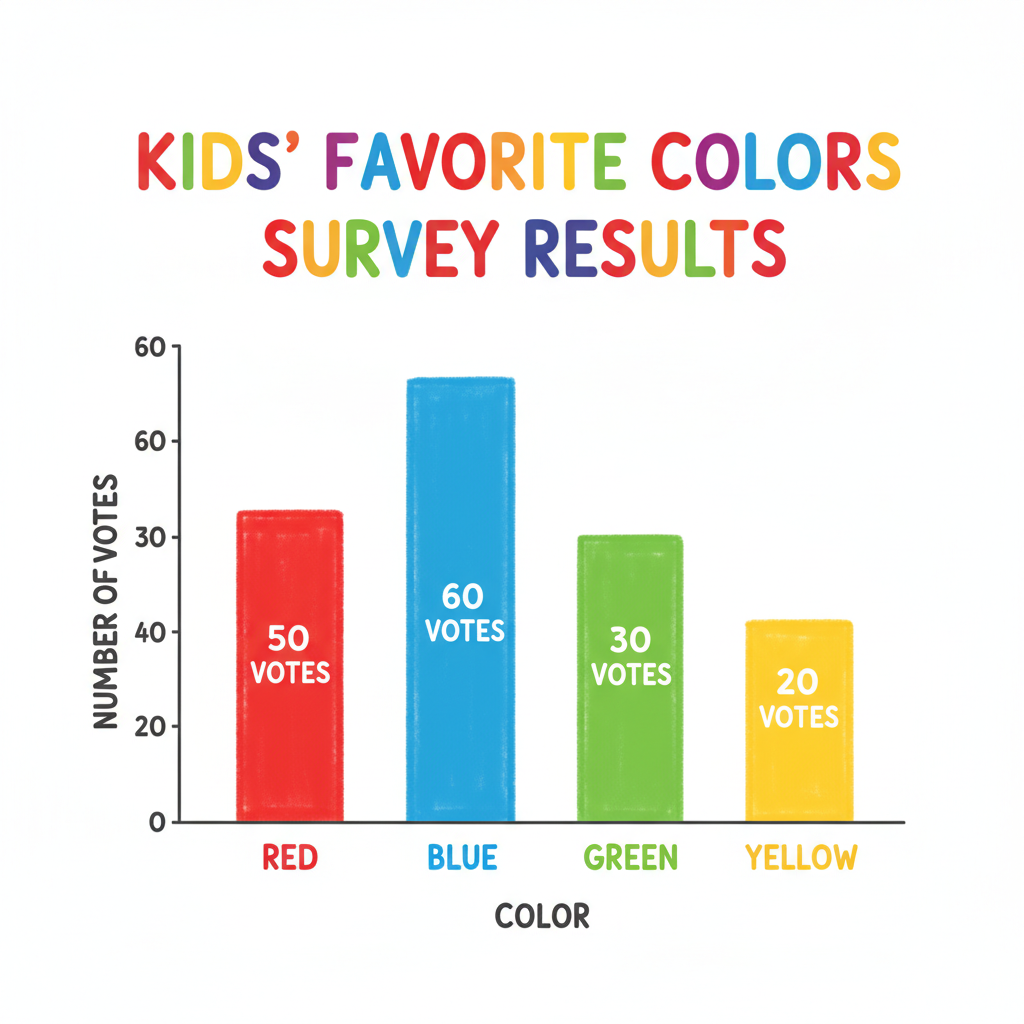
Analogy: Imagine you're collecting different types of leaves for a science project. You wouldn't just dump them all in a pile, right? You'd sort them by shape, size, or color. Organizing survey information is just like sorting those leaves so you can understand them better!
Conclusion: You're a Survey Super-Star!
Surveys are a powerful tool for gathering information, understanding opinions, and making smart decisions. From picking a class pet to designing new toys, surveys help us learn what people think and want. By asking good questions, choosing the right people to ask, and organizing the answers, you can become a fantastic data detective and learn amazing things about the world around you!
Keep learning, free
Create a free Syllabax account to unlock practice questions and games for this topic.
Visual Learning Enhanced! 🚀
To help you master this topic, we use Advanced Syllabax AI to generate detailed diagrams and visual models.
Note on Visuals: The AI sometimes makes spelling errors in image labels. Please refer to the lesson text for the correct terminology.