Learning Journey
Free preview · Lesson 1
Understanding Soft vs loud (Sound)
Exploring Sounds: Soft vs. Loud!
Hello, young sound explorers! Have you ever noticed that some sounds are like a gentle hug, and others are like a big, boisterous clap? Today, we're going on an adventure to discover the wonderful world of sound, focusing on two very important types: soft sounds and loud sounds.
What is Sound?
First, let's remember what sound is. Sound is what we hear! It's made when something vibrates, or wiggles very fast. These vibrations travel through the air to our ears, and our amazing brains turn them into the sounds we recognize, like music, talk, or the crunch of leaves.
Loud Sounds: Big Energy!
Imagine you're playing on a swing. If someone gives you a HUGE push, you go really high and fast, right? That's kind of like a loud sound! Loud sounds happen when something vibrates with a lot of energy. They make big, powerful sound waves that reach our ears very strongly.
- Think of it like this:
- A roaring lion has a very loud sound – it's like a big, strong push!
- When you stomp your feet really hard, that's a loud sound.
- A fire truck siren or a booming thunderclap are super loud sounds. They can even make your chest feel a little rumble!
Loud sounds usually travel further and can be heard from a long distance away. Sometimes, very loud sounds can even be a bit too much for our ears, so it's good to be careful around them.
Soft Sounds: Gentle Energy!
Now, imagine that swing again, but this time, someone gives you just a tiny, gentle push. You still move, but not as high or as fast. That's like a soft sound! Soft sounds happen when something vibrates with just a little bit of energy. They make smaller, gentler sound waves that reach our ears more quietly.
- Think of it like this:
- A purring cat makes a soft, cozy sound – it's like a gentle cuddle!
- When you whisper a secret to a friend, that's a soft sound.
- The gentle rustle of leaves in the wind or the quiet drip of a faucet are soft sounds.
Soft sounds don't travel as far and are harder to hear if you're not close to them. Sometimes, you have to really listen carefully to catch a soft sound!
The Big Difference: Energy!
So, what's the main difference between soft and loud sounds? It's all about the energy! Think of it like a drum: if you hit the drum hard with a lot of energy, it makes a loud "BOOM!" If you tap it gently with less energy, it makes a soft "tap-tap."
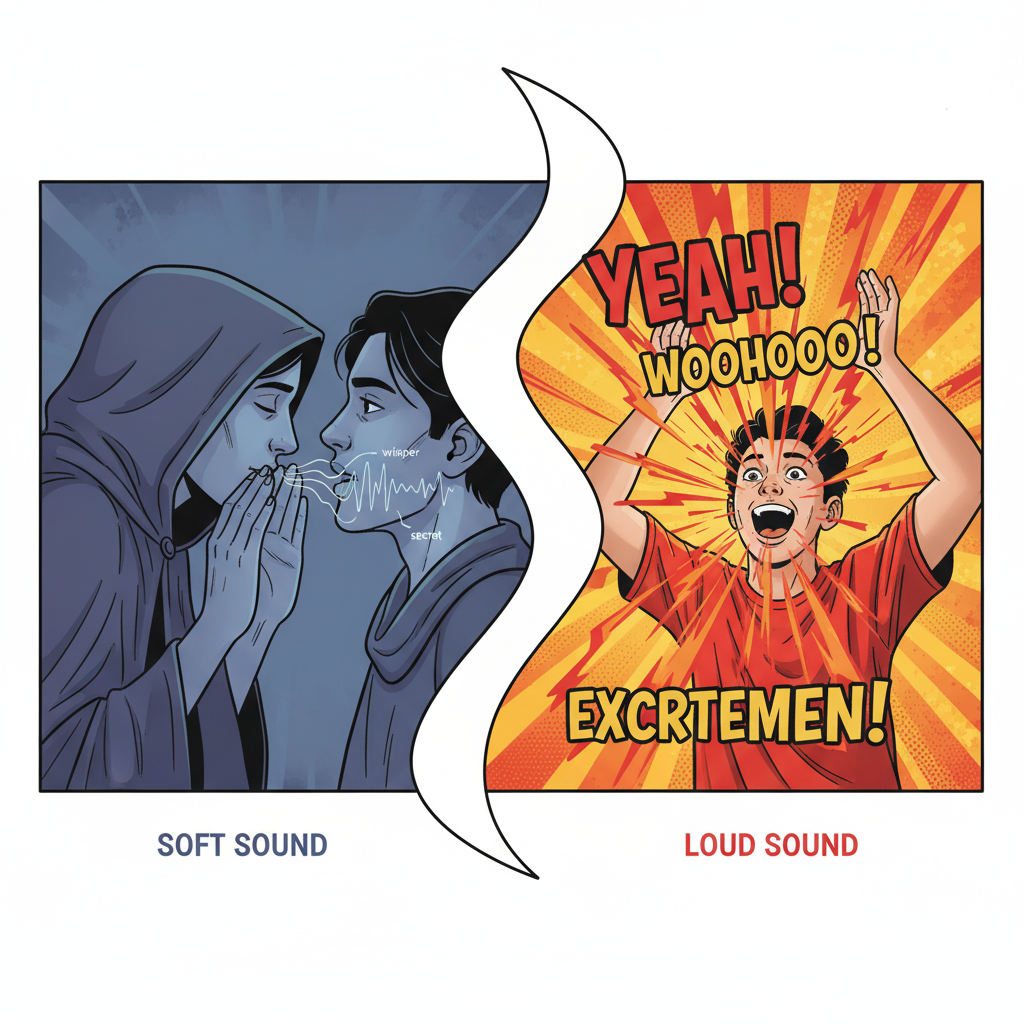
The amount of energy in the vibration makes the sound loud or soft. More energy = louder sound! Less energy = softer sound!
 ⚠️ This picture may have spelling mistakes. Trust the words in the lesson.
Examples of Soft and Loud Sounds:
Let's play a game! Can you think of whether these are usually soft or loud?
- A clock ticking: Usually soft (unless it's a very big clock!).
- A car horn: Usually loud!
- A baby's giggle: Can be both, but often soft and sweet.
- A jet airplane taking off: Definitely LOUD!
- A butterfly flapping its wings: Super soft, almost silent!
- Someone singing a lullaby: Usually soft and gentle.
- A rock concert: Very, very LOUD!
Why Does it Matter?
Knowing the difference between soft and loud sounds helps us understand the world around us. We need soft sounds to relax, to hear secrets, or to listen to quiet music. We hear loud sounds when there's an emergency, during a celebration, or when we need to get someone's attention.
It's also important to protect our ears! Very loud sounds, especially for a long time, can hurt our ears. Just like you wouldn't stare at the sun for too long, you shouldn't listen to very loud noises for too long. If a sound feels too loud, it probably is!

Fun Sound Experiment!
Try this at home:
- Find a pot or a pan and a spoon.
- Gently tap the pot with the spoon. What kind of sound do you hear? Is it soft or loud? (Probably soft!)
- Now, tap the pot much harder. What kind of sound do you hear now? Is it soft or loud? (Much louder!)
You just changed the amount of energy you used, and that changed how loud or soft the sound was!
Remembering Soft and Loud
Think of it like whispering a secret (soft) versus shouting a cheer (loud). Both are sounds, but they use different amounts of energy and have different effects on our ears. Keep exploring the sounds around you, and you'll become a sound expert in no time!
Keep learning, free
Create a free Syllabax account to unlock practice questions and games for this topic.
Visual Learning Enhanced! 🚀
To help you master this topic, we use Advanced Syllabax AI to generate detailed diagrams and visual models.
Note on Visuals: The AI sometimes makes spelling errors in image labels. Please refer to the lesson text for the correct terminology.