Learning Journey
Watch this topic in 60 seconds
Free preview · Lesson 1
Understanding Solid, liquid, gas (simple examples) (States of Matter)
Exploring the Amazing States of Matter!
Hello, young scientists! Have you ever wondered what everything around you is made of? From your bouncy ball to the water you drink, and even the air you breathe, everything is 'matter'! And guess what? Matter can be found in different forms, almost like disguises! Today, we're going to learn about the three main disguises of matter: solids, liquids, and gases.
1. Solids: The Stay-in-Shape Friends
Imagine your favorite toy block. Does it always stay the same shape? Yes! Does it feel hard and take up its own space? Yes! That's because your toy block is a solid.
- What is a Solid? A solid is a type of matter that keeps its own shape. It doesn't spread out or change its form unless you break it or cut it.
- Think of it like this: Imagine a brick wall. Each brick is a solid, and the wall itself keeps its strong, steady shape. Or think about a frozen statue – it stays exactly how it was made.
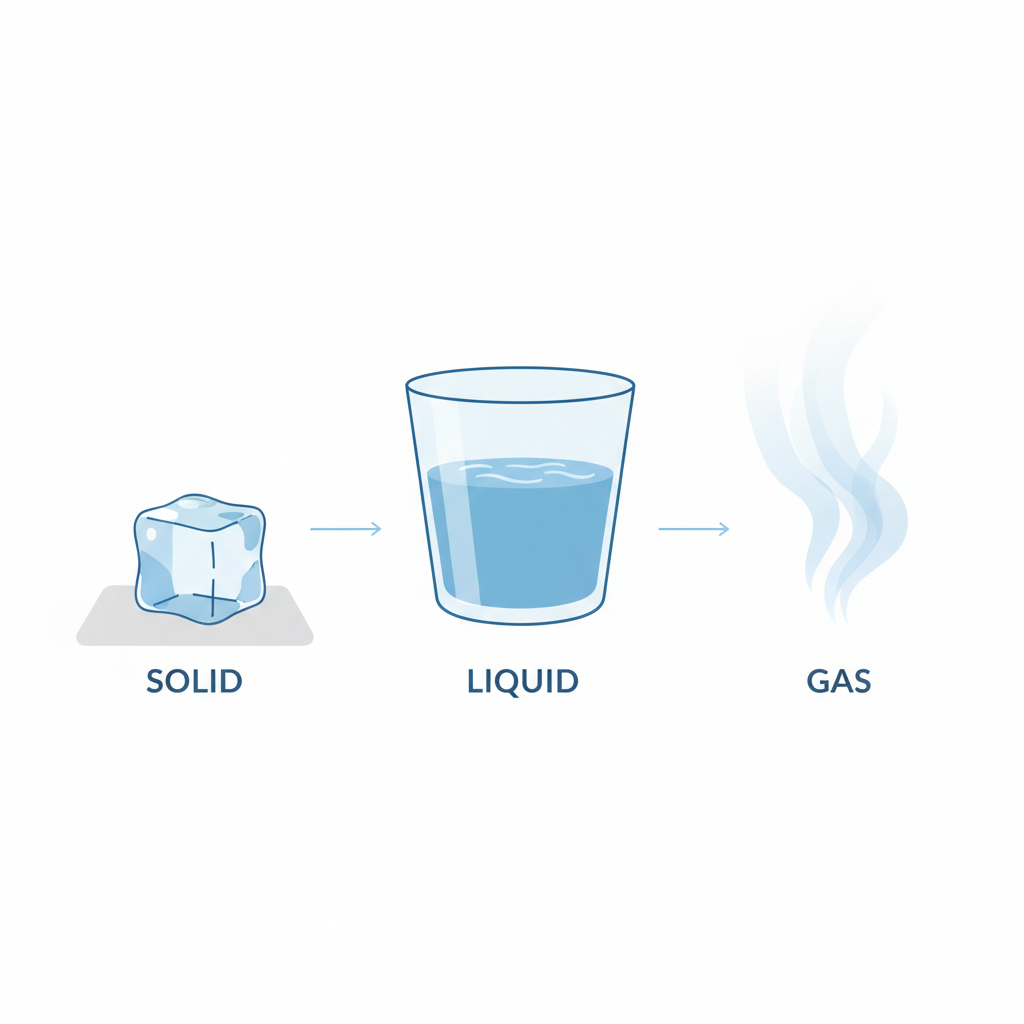
- Examples of Solids: An ice cube (when it's frozen!), a rock, your desk, a pencil, your shoes, a book.
Solids are firm and have a definite shape and size. You can hold them in your hand, and they don't usually move or flow on their own.
2. Liquids: The Flowing, Filling Friends
Now, let's think about a glass of apple juice. If you pour that juice from a tall glass into a wide bowl, what happens? The juice changes its shape to fit the bowl! It flows and can be poured. That's because apple juice is a liquid.
- What is a Liquid? A liquid is a type of matter that doesn't have its own shape. Instead, it takes the shape of whatever container it's in. Liquids can also flow and be poured.
- Think of it like this: Imagine a river. The water in the river flows and curves to fit the riverbanks. Or think about trying to hold water in your hand – it slips right through your fingers because it wants to flow!
- Examples of Liquids: Water, milk, juice, cooking oil, honey, soda.
Liquids are wonderful for drinking and pouring. They fill up the bottom of any container they are in.
3. Gases: The Invisible, Spreading Friends
What about something you can't always see or touch, but you know it's there? Like the air we breathe! Air is a gas.
- What is a Gas? A gas is a type of matter that doesn't have its own shape AND it doesn't stay in one place. It spreads out to fill all the space it's in, even if you can't see it.
- Think of it like this: When your mom is baking cookies, and you can smell them all over the kitchen, those yummy cookie smells are tiny bits of gas spreading out! Or think about blowing up a balloon – the air (a gas) fills up the whole balloon, pushing against its sides.
- Examples of Gases: The air we breathe, steam from boiling water, helium in a balloon, the smell of perfume.
Gases are all around us, even if we can't see them. They are light and bouncy, always trying to fill every nook and cranny!
Matter Can Change! (Water's Amazing Journey)
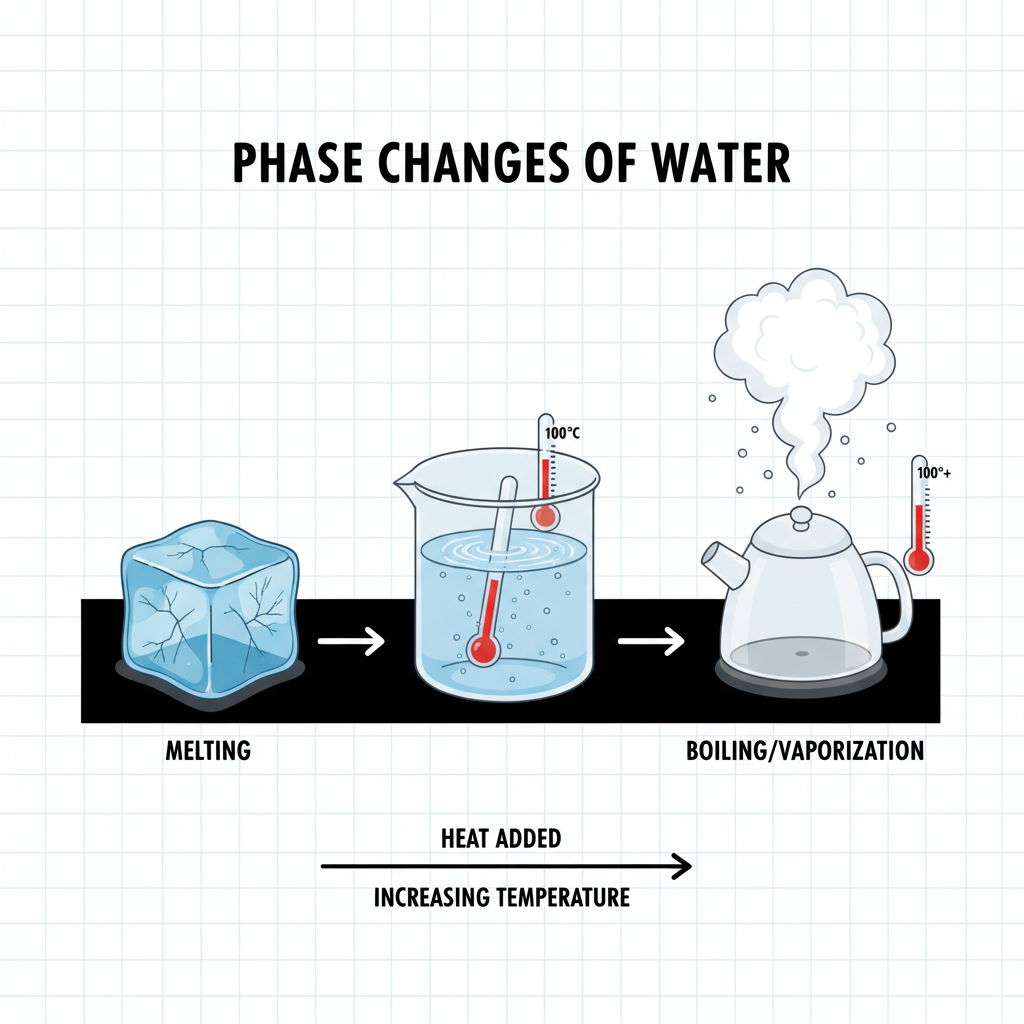
The coolest part is that matter can change its disguise! The best example is water. We often see water as a liquid, right? But water can also be a solid and a gas!
- Ice (Solid): When you put liquid water in a freezer, it gets very cold and turns into a hard, solid ice cube! This is called freezing.
- Water (Liquid): If you take that ice cube out and leave it in a warm place, it will start to melt and turn back into liquid water. This is called melting.
- Steam (Gas): If you heat liquid water on a stove, it gets very hot and turns into a misty cloud you can see rising, called steam. This is water as a gas! This is called evaporation or boiling.
So, an ice cube, a glass of water, and steam are all the same 'stuff' (matter), just in different states!
Let's Review!
Remember, everything around us is matter. And matter has three main states:
- Solid: Keeps its own shape (like a rock or an ice cube).
- Liquid: Takes the shape of its container and can flow (like juice or water).
- Gas: Spreads out to fill all available space and is often invisible (like air or steam).
It's like matter has three different costumes it can wear! Isn't that amazing?
Keep learning, free
Create a free Syllabax account to unlock practice questions and games for this topic.
Visual Learning Enhanced! 🚀
To help you master this topic, we use Advanced Syllabax AI to generate detailed diagrams and visual models.
Note on Visuals: The AI sometimes makes spelling errors in image labels. Please refer to the lesson text for the correct terminology.