Learning Journey
Watch this topic in 60 seconds
Free preview · Lesson 1
Understanding Bundles of tens (Place Value )
Understanding Bundles of Tens: Building Blocks of Numbers!
Welcome, super learners! Today, we're going on an exciting adventure to discover a special way numbers are built. Imagine you have lots and lots of tiny building blocks, like LEGOs. If you want to build something big, it's easier to use bigger pieces, right? Well, numbers work a bit like that! We're going to learn about something called 'bundles of tens'.
What is a Bundle of Ten?
Think about your fingers. You have 10 fingers! That's a very special number. When we have 10 of anything – 10 little blocks, 10 candies, or 10 little dots – we can gather them together and call it a 'bundle of ten'. It's like putting 10 small things into one neat package.
Analogy 1: Candy Sticks
Imagine you have 10 yummy candy sticks. Instead of counting each one separately, wouldn't it be easier to tie them all together with a ribbon? Now, you have one bundle of 10 candy sticks! This bundle represents the same amount as the 10 individual sticks, but it's much easier to see and count.
Analogy 2: Pencils in a Pack
Think about a new pack of pencils. Usually, pencils come in packs of 10. When you see a pack of pencils, you don't count each pencil inside. You know right away, 'That's a pack of 10 pencils!' That pack is a 'bundle of ten'!
Why are Bundles of Tens Important?
Bundles of tens help us count much bigger numbers faster! When we have a lot of things, counting them one by one can take a very long time. But if we group them into bundles of ten, we can count the bundles instead of all the individual items. This is how we build our number system!
Let's look at some blocks.
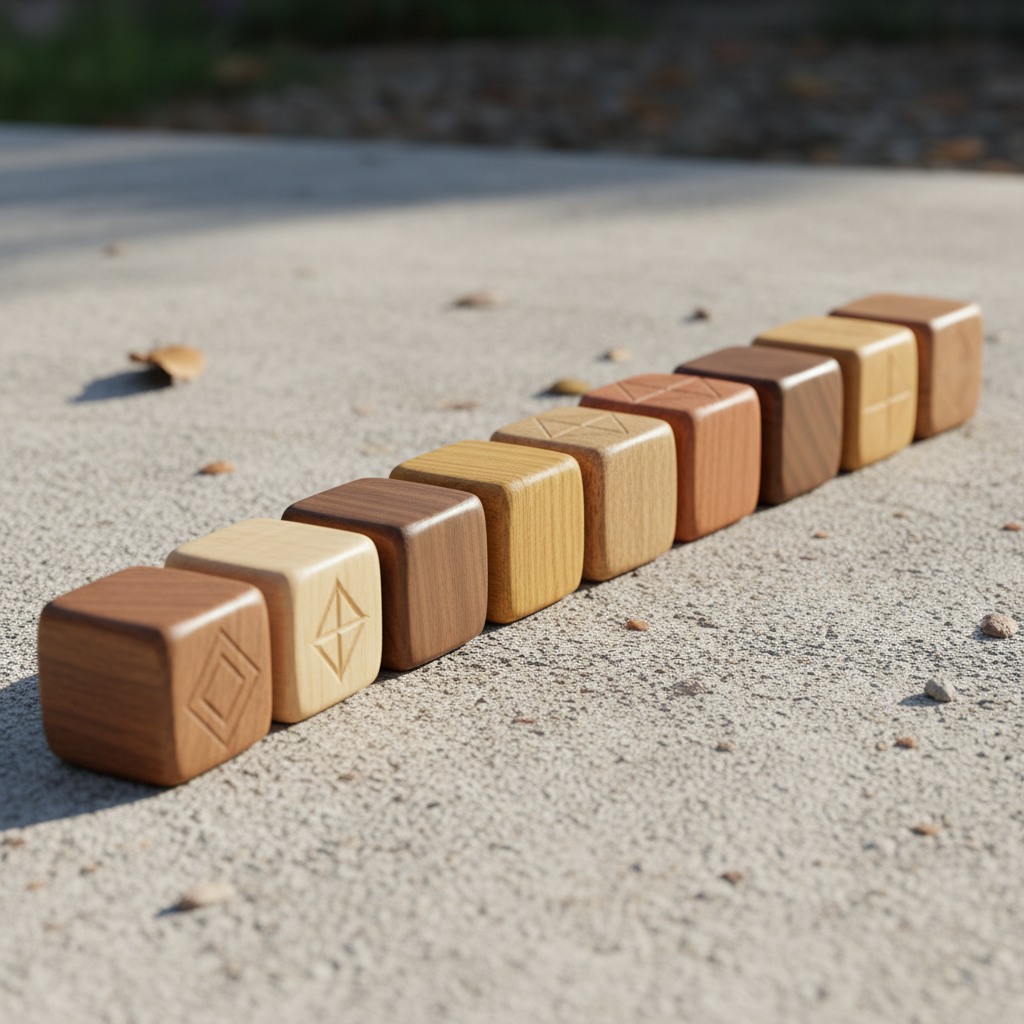
Here are 10 individual little blocks. We can count them: 1, 2, 3, 4, 5, 6, 7, 8, 9, 10. That took us 10 counts!
Now, let's bundle them up!
 ⚠️ This picture may have spelling mistakes. Trust the words in the lesson.
See? Now we have one bundle of ten blocks. We don't need to count all 10 blocks inside anymore. We just say, 'That's one bundle of ten.' It's like saying the number 10!
Connecting Bundles to Numbers
This 'bundle of ten' idea is super important because it's how we get the number 10 itself! And numbers like 20, 30, 40, and so on, are just more bundles of ten.
- 1 bundle of ten is the same as the number 10.
- 2 bundles of ten is the same as the number 20. (Imagine two packs of pencils!)
- 3 bundles of ten is the same as the number 30. (Three tied-up groups of 10!)
- 4 bundles of ten is the same as the number 40.
- And it keeps going! 5 bundles of ten is 50, 6 bundles of ten is 60, and so on, all the way up to 9 bundles of ten is 90.
These numbers (10, 20, 30, 40, 50, 60, 70, 80, 90) are called 'tens'. They are made up of full bundles of ten.
What About Numbers Bigger Than 10?
Sometimes, after making bundles of ten, we might have a few extra things left over. Let's say we have 12 blocks.
We can make one bundle of ten blocks. How many blocks are left over?
12 blocks total - 10 blocks in the bundle = 2 blocks left over.
So, 12 blocks is the same as 1 bundle of ten and 2 extra blocks.
This is where 'place value' comes in! The '1' in the number 12 means '1 bundle of ten', and the '2' means '2 extra blocks' (we call these 'ones').
Analogy 3: A Birthday Party!
Imagine you're planning a birthday party and you have 23 balloons. Instead of counting each balloon, you can group them. You put 10 balloons in one bunch, and 10 balloons in another bunch. You have 2 bunches (bundles) of ten balloons. Then, you see you have 3 balloons left over that didn't make a full bunch.
So, 23 balloons is like 2 bundles of ten balloons and 3 extra balloons.
Key Idea: Tens and Ones
Numbers are built using bundles of ten and leftover ones.
- The digit in the 'tens' place tells you how many bundles of ten you have.
- The digit in the 'ones' place tells you how many extra things you have left over after making all the bundles of ten.
For example, in the number 34:
- The digit 3 is in the tens place, meaning we have 3 bundles of ten (like 3 packs of pencils).
- The digit 4 is in the ones place, meaning we have 4 extra ones (like 4 single pencils not in a pack).
So, 34 is made of 3 tens and 4 ones. It's the same as 30 + 4.
Let's Practice!
Remember, a bundle of ten is like a group of 10 items. It helps us count faster and understand bigger numbers!
Keep learning, free
Create a free Syllabax account to unlock practice questions and games for this topic.
Visual Learning Enhanced! 🚀
To help you master this topic, we use Advanced Syllabax AI to generate detailed diagrams and visual models.
Note on Visuals: The AI sometimes makes spelling errors in image labels. Please refer to the lesson text for the correct terminology.